
基于 MTA3 从海洋来源天然产物中发现 Jaspa 霉素抑制肝癌进展。
Discovery of Jaspamycin from marine-derived natural product based on MTA3 to inhibit hepatocellular carcinoma progression.
机构信息
Graduate School, Heilongjiang University of Chinese Medicine, Harbin, Heilongjiang, 150001, China.
Medical Technology Department, Qiqihar Medical University, Qiqihar, Heilongjiang, 161006, China.
出版信息
Sci Rep. 2024 Oct 25;14(1):25294. doi: 10.1038/s41598-024-75205-7.
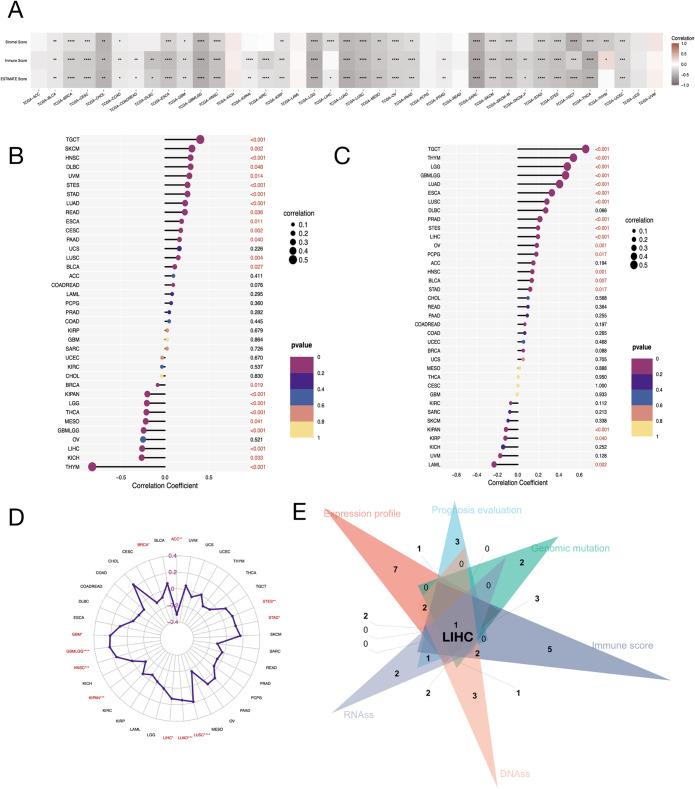
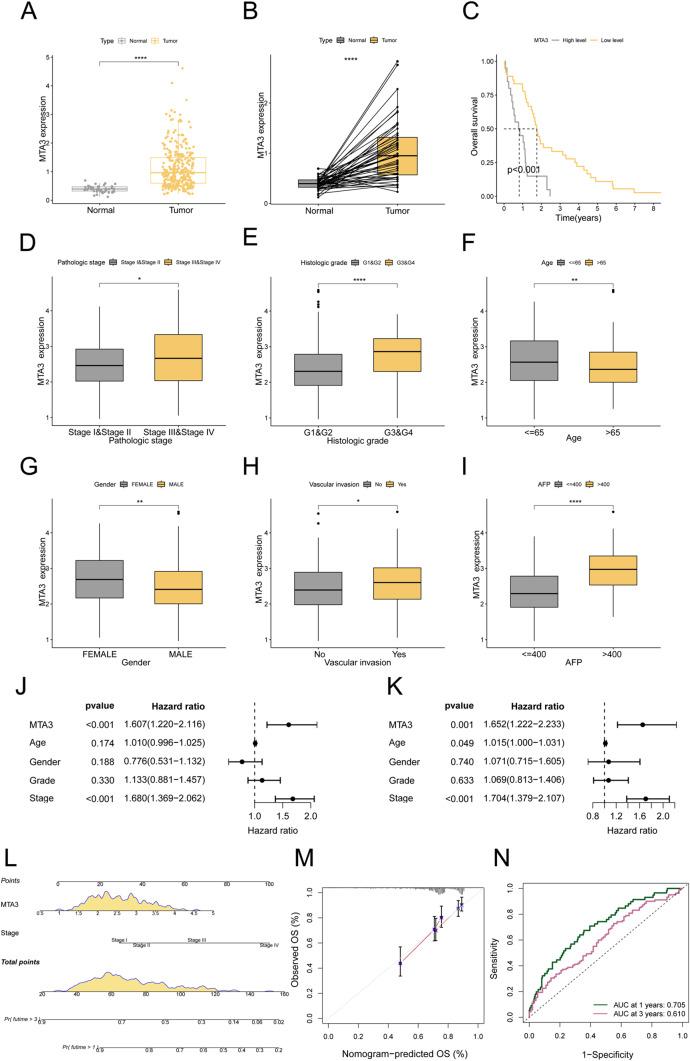
Studies have underscored the pivotal role of metastasis-associated protein 3 (MTA3) as a cancer regulator, yet its potential as a drug target across cancers necessitates comprehensive evaluation. In this study, we analyzed MTA3 expression profiles to ascertain its diagnostic and prognostic value in pan-cancers, probing associations with genetic variations and immunological characteristics. Notably, liver hepatocellular carcinoma (LIHC) exhibited the most significant correlation with MTA3. By transfection of siRNA, interference of MTA3 affected HepG2 and Hepa1-6 cell viability and migration. Through drug screening and drug-likeness evaluation among marine-derived natural products, Jaspamycin was identified as a potential hepatocellular carcinoma treatment by targeting MTA3. By applying in vitro and in vivo experiment, the inhibitory effects of Jaspamycin on hepatocellular carcinoma viability, migration, and tumor progression were observed. To assess the potential of MTA3 as an anticancer drug target, MTA3 overexpression plasmid was transfected together with Jaspamycin treatment, and observed that MTA3 upregulation counteracted the inhibitory effects of Jaspamycin on hepatocarcinoma cell proliferation and migration, underscoring the efficacy of MTA3 as a drug target in hepatocellular carcinoma drug screening. This study highlights the clinical significance of MTA3 in pan-cancer, particularly in hepatocellular carcinoma. Additionally, it identifies Jaspamycin, a marine-derived compound with promising pharmacological properties, as an effective inhibitor of MTA3 activity, suggesting its potential for hepatocellular carcinoma treatment.
研究强调了转移相关蛋白 3(MTA3)作为癌症调节剂的关键作用,但它作为癌症药物靶点的潜力需要全面评估。在这项研究中,我们分析了 MTA3 的表达谱,以确定其在泛癌中的诊断和预后价值,并探讨了与遗传变异和免疫特征的关联。值得注意的是,肝癌(LIHC)与 MTA3 的相关性最为显著。通过转染 siRNA,干扰 MTA3 影响 HepG2 和 Hepa1-6 细胞活力和迁移。通过对海洋来源天然产物进行药物筛选和药物相似性评价,发现 Jaspamycin 通过靶向 MTA3 成为一种有潜力的肝癌治疗药物。通过应用体外和体内实验,观察到 Jaspamycin 对肝癌细胞活力、迁移和肿瘤进展的抑制作用。为了评估 MTA3 作为抗癌药物靶点的潜力,我们将 MTA3 过表达质粒与 Jaspamycin 治疗一起转染,并观察到 MTA3 的上调抵消了 Jaspamycin 对肝癌细胞增殖和迁移的抑制作用,这突显了 MTA3 作为肝癌药物筛选中药物靶点的疗效。本研究强调了 MTA3 在泛癌中的临床意义,特别是在肝癌中。此外,它还确定了海洋来源的化合物 Jaspamycin 是 MTA3 活性的有效抑制剂,这表明它可能用于肝癌治疗。




 Zotero 插件