
低收入和中等收入国家公众非处方使用抗生素的影响因素:定性证据的系统评价与综合分析
Influences on use of antibiotics without prescription by the public in low- and middle-income countries: a systematic review and synthesis of qualitative evidence.
作者信息
Cabral Christie, Zhang Tingting, Oliver Isabel, Little Paul, Yardley Lucy, Lambert Helen
机构信息
Centre for Academic Primary Care, Bristol Medical School, University of Bristol, 39 Whatley Road, Bristol BS8 2PS, UK.
United Kingdom Health Security Agency, Chief Scientific Officer's Group, London, UK.
出版信息
JAC Antimicrob Resist. 2024 Oct 25;6(5):dlae165. doi: 10.1093/jacamr/dlae165. eCollection 2024 Oct.
OBJECTIVES
Self-medication with antibiotics is common practice in many low- and middle-income countries (LMIC). This review synthesizes the qualitative evidence on influences on perceptions and practices in relation to self-medication by the public with antibiotics in LMIC.
METHODS
A systematic search was conducted of relevant medical, international and social science databases. Searching, screening, data extraction and quality appraisal followed standard methods. A meta-ethnographic approach was used for synthesis, starting with translation of studies and using a line-of-argument approach to develop the final themes.
RESULTS
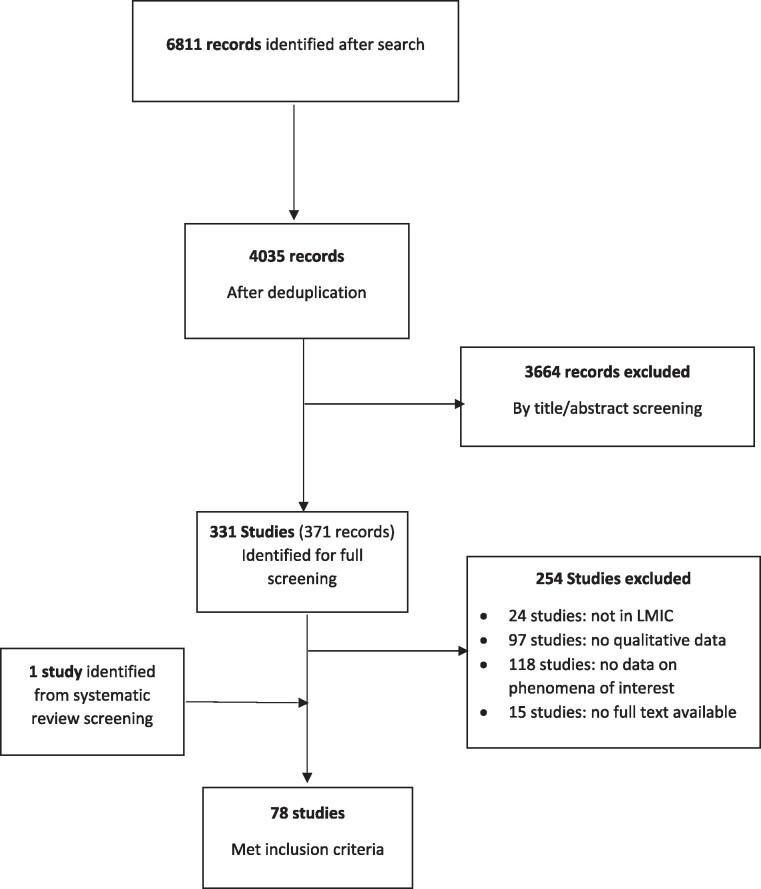
The search identified 78 eligible studies. Antibiotics were understood as a powerful, potentially dangerous but effective medicine for treating infections. This perception was strongly influenced by the common experience of being prescribed antibiotics for infections, both individually and collectively. This contributed to an understanding of antibiotics as a rational treatment for infection symptoms that was sanctioned by medical authorities. Accessing antibiotics from medical professionals was often difficult logistically and financially. In contrast, antibiotics were readily available over the counter from local outlets. People viewed treating infection symptoms with antibiotics as rational practice, although they were concerned about the risks to the individual and only took them when they believed they were needed.
CONCLUSIONS
A new model to explain self-medication with antibiotics is presented. This uses the socio-ecological model to integrate influences that operate at individual, community and wider socioeconomic levels, drawing on theories of medical authority and the medicalization and commercialization of health. Interventions to reduce overuse of antibiotics in LMIC need to address both clinical practice and community self-medication practices together.
目的
在许多低收入和中等收入国家(LMIC),抗生素自我药疗是一种常见做法。本综述综合了关于低收入和中等收入国家公众抗生素自我药疗的认知和行为影响因素的定性证据。
方法
对相关医学、国际和社会科学数据库进行系统检索。检索、筛选、数据提取和质量评估均遵循标准方法。采用元民族志方法进行综合分析,首先对研究进行翻译,然后使用论证线方法得出最终主题。
结果
检索确定了78项符合条件的研究。抗生素被视为治疗感染的一种强效、潜在危险但有效的药物。这种认知受到个人和集体感染时使用抗生素处方的共同经历的强烈影响。这促成了将抗生素理解为医疗当局认可的治疗感染症状的合理方法。从医疗专业人员处获取抗生素在后勤和经济方面往往存在困难。相比之下,抗生素在当地药店很容易买到非处方药。人们认为用抗生素治疗感染症状是合理的做法,尽管他们担心对个人的风险,并且只在认为有必要时才服用。
结论
提出了一种解释抗生素自我药疗的新模型。该模型利用社会生态模型整合在个人、社区和更广泛社会经济层面起作用的影响因素,借鉴医疗权威以及健康医学化和商业化的理论。在低收入和中等收入国家减少抗生素过度使用的干预措施需要同时解决临床实践和社区自我药疗实践问题。

 Zotero 插件