
基于神经网络的德国气候变化对死亡率影响的估算:在故事情节气候模拟中的应用。
Neural network based estimates of the climate impact on mortality in Germany: application to storyline climate simulations.
机构信息
Helmholtz Centre Potsdam GFZ German Research Centre for Geosciences, Telegrafenberg, 14473, Potsdam, Germany.
Alfred Wegener Institute, Helmholtz Centre for Polar and Marine Research, Am Handelshafen 12, 27570, Bremerhaven, Germany.
出版信息
Sci Rep. 2024 Oct 30;14(1):26074. doi: 10.1038/s41598-024-77398-3.
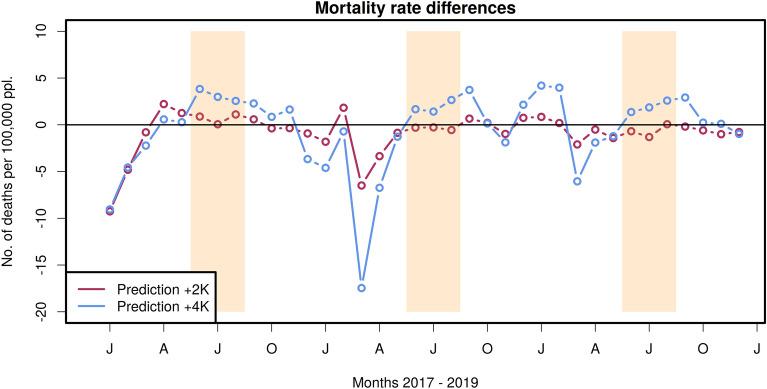
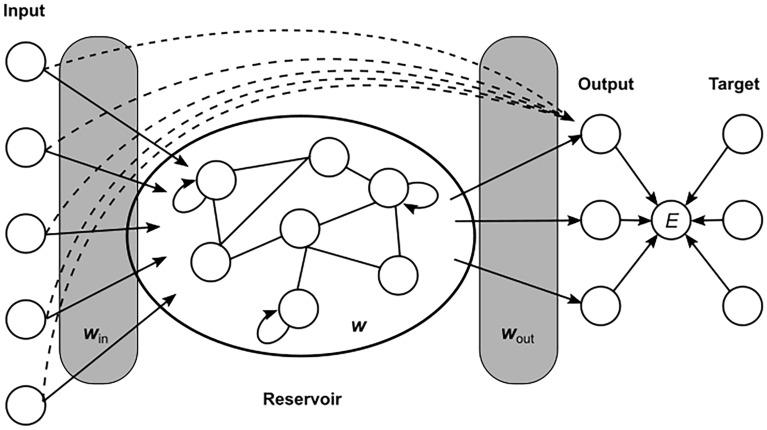
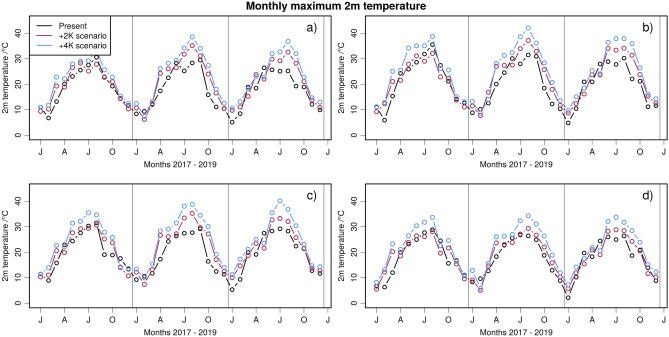
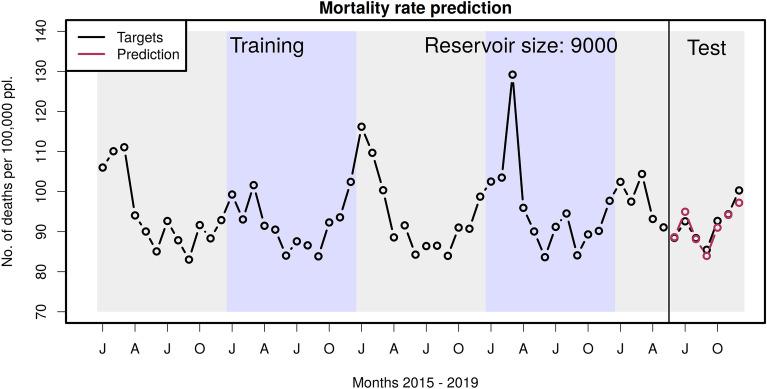
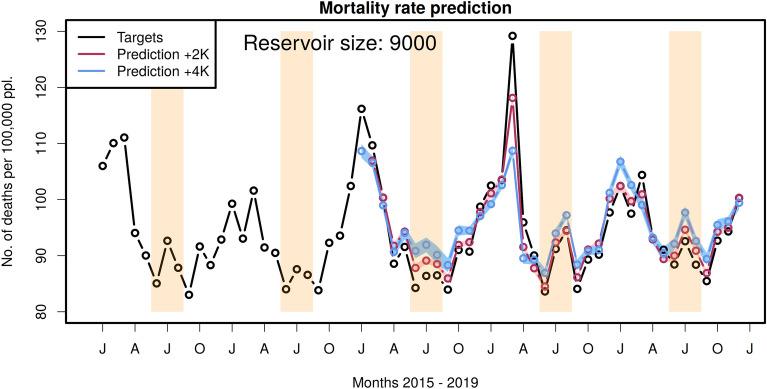
The aim of this work is the prediction of heat-related mortality for Germany under future, i.e. hotter, climate conditions. The prediction is made based on 2m temperature data from climate storyline simulations using machine learning techniques. We use an echo state network for linking the outputs of storyline climate simulations to the target data. The target data are all-cause mortality rates of Germany for all ages. The network is trained with present day climate model outputs. Model outputs of future, i.e. 2K and 4K warmer, storylines are used to predict mortality rates under such climatic conditions. We find that we can train an echo state network with recent temperature data and mortality and make plausible predictions about expected developments of mortality in Germany based on future climate storylines. The trained network can successfully predict mortality rates for future climate conditions. We find increased mortality during the summer months which is attributed to the presence of more severe heat waves. The mortality decrease found during winter can be explained milder winters leading to fewer deaths caused by respiratory diseases. However, mortality in winter is largely influenced by other factors such as influenza waves or vaccination rate and explainability due to temperature is limited.
本研究旨在预测未来(即更热)气候条件下德国的热相关死亡率。预测是基于使用机器学习技术的气候情景模拟的 2m 温度数据进行的。我们使用回声状态网络将情景气候模拟的输出与目标数据联系起来。目标数据是德国所有年龄段的全因死亡率。该网络使用当今气候模型的输出进行训练。使用未来(即 2K 和 4K 更暖)情景的模型输出来预测此类气候条件下的死亡率。我们发现,我们可以用最近的温度数据和死亡率来训练回声状态网络,并根据未来的气候情景对德国死亡率的预期发展做出合理的预测。经过训练的网络可以成功预测未来气候条件下的死亡率。我们发现夏季的死亡率会增加,这归因于更严重的热浪的存在。冬季死亡率的下降可以解释为更温和的冬季导致由呼吸道疾病引起的死亡人数减少。然而,冬季的死亡率在很大程度上受到其他因素的影响,如流感波或疫苗接种率,而由于温度的可解释性有限,因此对死亡率的解释能力有限。

 Zotero 插件