
评估一部关于卒中知识的教育视频在黎巴嫩的效果:一项单臂干预性研究。
Assessing the efficacy of an educational video on stroke knowledge in Lebanon: a single-arm interventional study.
机构信息
School of Pharmacy, Lebanese International University, Beirut, Lebanon.
INSPECT-LB (Institut National de Santé Publique, d'Épidémiologie Clinique et de Toxicologie-Liban), Beirut, Lebanon.
出版信息
BMC Public Health. 2024 Oct 31;24(1):3019. doi: 10.1186/s12889-024-20552-3.
OBJECTIVE
This study aimed to assess the public's knowledge of stroke before and after viewing an educational video about stroke risk factors, preventive measures, and alarming signs.
METHODS
A single-arm interventional study was conducted in Lebanon using a 3-minute video-based education about stroke. A pre- and post-structured questionnaire compared the level of knowledge about stroke.
RESULTS
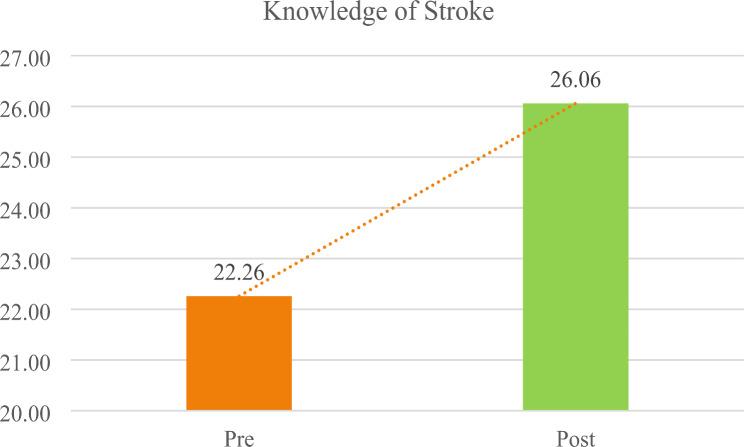
The study included 685 participants. Knowledge of stroke, risk factors, warning signs, treatment, and preventive measures significantly increased post-educational video sessions. A higher baseline knowledge score was associated with a family history of stroke (Beta = 1.76) and being a healthcare professional (Beta = 3.35). Participants between 25 and 34 years (Beta=-1.39) and those with a high risk of stroke (Beta=-1.03) were significantly associated with a lower knowledge score.
CONCLUSION
This study demonstrated the effectiveness of a video-based educational tool to raise awareness about stroke. Short, targeted audio-visual resources using lay language can convey health education messages and influence behavioral changes. The community can benefit from a large-scale educational campaign that targets different socio-economic statuses to enhance knowledge of stroke and save lives.
目的
本研究旨在评估公众在观看有关中风风险因素、预防措施和警报信号的教育视频前后对中风的了解程度。
方法
在黎巴嫩进行了一项单臂干预研究,使用了 3 分钟的基于视频的中风教育。一个预先和后结构化的问卷比较了中风知识的水平。
结果
该研究纳入了 685 名参与者。中风、风险因素、警告信号、治疗和预防措施的知识在教育视频课程后显著增加。较高的基线知识得分与中风家族史(β=1.76)和医疗保健专业人员(β=3.35)相关。25-34 岁的参与者(β=-1.39)和中风高危人群(β=-1.03)与较低的知识得分显著相关。
结论
本研究证明了基于视频的教育工具在提高中风意识方面的有效性。使用通俗语言的简短、针对性的视听资源可以传达健康教育信息并影响行为改变。针对不同社会经济地位的大规模教育活动可以使社区受益,提高对中风的认识并拯救生命。
 Zotero 插件