
自闭症谱系障碍(ASD)中生化标志物与炎症细胞因子的相关性。
Correlation of biochemical markers and inflammatory cytokines in autism spectrum disorder (ASD).
机构信息
Department of Biology, Faculty of Science, Arak University, Arak, 38156-8-8349, Iran.
Department of Psychiatry, School of Medicine, Arak University of Medical Sciences, Arak, Iran.
出版信息
BMC Pediatr. 2024 Nov 1;24(1):696. doi: 10.1186/s12887-024-05182-3.
INTRODUCTION
Autism Spectrum Disorder (ASD) is a disorder that severely affects neurodevelopment, and its underlying causes are not yet entirely understood. Research suggests that there may be a connection between the occurrence of ASD and changes in immune responses. This study aims to know if some biochemical and inflammatory cytokines are promising biomarkers for ASD and whether they are involved in the pathogenesis of ASD.
METHODS
The serum levels of CRP, TNF-α, TGF-β, IL-1β, IL-10, 1 L-8, and IL-6 were measured in all of the patients (n = 22) and in the healthy (n = 12) children using ELISA method.
RESULTS
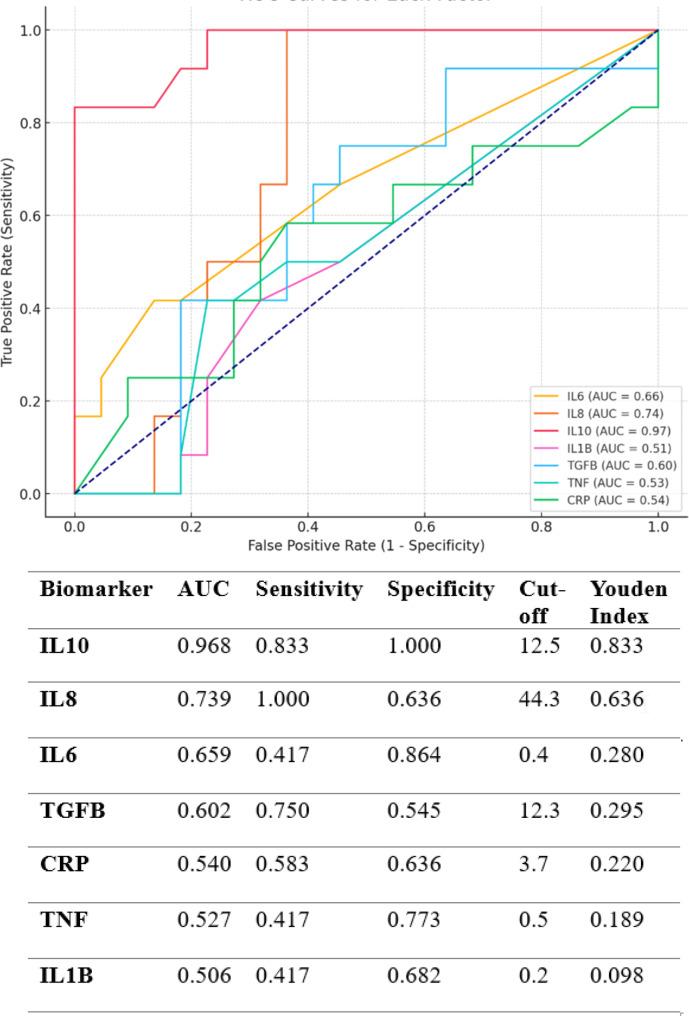
The serum concentrations of IL-10 and IL-8 were significantly lower in the ASD patients compared to the control group (p < 0.05) and there were not significant differences between CRP, TNF-α, TGF-β, IL-6 and IL-1β levels in two groups. There were positive correlations between CRP and IL-10, also CRP and IL-8, in ASD group. In contrast to the ASD patients, the correlations of IL-8, IL-10, and CRP were not significant in the control group.
CONCLUSION
In conclusion, this study highlights the potential role of certain biochemical markers and inflammatory cytokines in ASD. Specifically, the lower levels of IL-10 and IL-8 in ASD patients, along with the significant correlations between CRP and these cytokines, suggest an altered immune response in individuals with ASD. These findings support the hypothesis that immune dysregulation may be involved in ASD pathogenesis. Further research is needed to explore these biomarkers and their mechanistic links to ASD, which could lead to improved diagnostics or therapeutic strategies.
介绍
自闭症谱系障碍(ASD)是一种严重影响神经发育的疾病,其根本原因尚未完全了解。研究表明,ASD 的发生与免疫反应的变化之间可能存在联系。本研究旨在了解一些生化和炎症细胞因子是否是 ASD 的有前途的生物标志物,以及它们是否参与 ASD 的发病机制。
方法
使用 ELISA 法测量所有患者(n=22)和健康儿童(n=12)的 CRP、TNF-α、TGF-β、IL-1β、IL-10、IL-8 和 IL-6 的血清水平。
结果
与对照组相比,ASD 患者的血清 IL-10 和 IL-8 浓度显着降低(p<0.05),两组之间 CRP、TNF-α、TGF-β、IL-6 和 IL-1β 水平无显着差异。ASD 组中 CRP 与 IL-10 之间存在正相关,CRP 与 IL-8 之间也存在正相关。与 ASD 患者相反,对照组中 IL-8、IL-10 和 CRP 之间的相关性不显着。
结论
总之,本研究强调了某些生化标志物和炎症细胞因子在 ASD 中的潜在作用。具体来说,ASD 患者中 IL-10 和 IL-8 水平较低,以及 CRP 与这些细胞因子之间的显着相关性,表明 ASD 患者的免疫反应发生改变。这些发现支持免疫失调可能参与 ASD 发病机制的假说。需要进一步研究来探讨这些生物标志物及其与 ASD 的机制联系,这可能导致改进的诊断或治疗策略。


 Zotero 插件