Department of Radiation Oncology, Fujian Cancer Hospital, Clinical Oncology School of Fujian Medical University, No. 420 Fuma Road, Fuzhou, 350014, Fujian, China.
Department of Medical Oncology, Fujian Cancer Hospital, Clinical Oncology School of Fujian Medical University, No. 420 Fuma Road, Fuzhou, 350014, Fujian, China.
Sci Rep. 2024 Nov 3;14(1):26523. doi: 10.1038/s41598-024-77797-6.
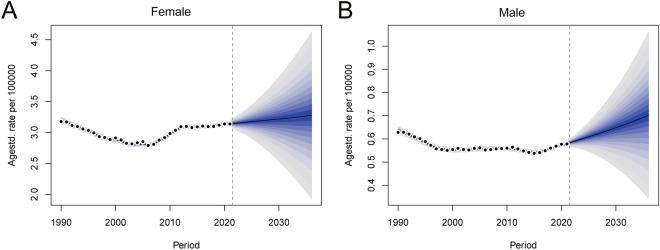
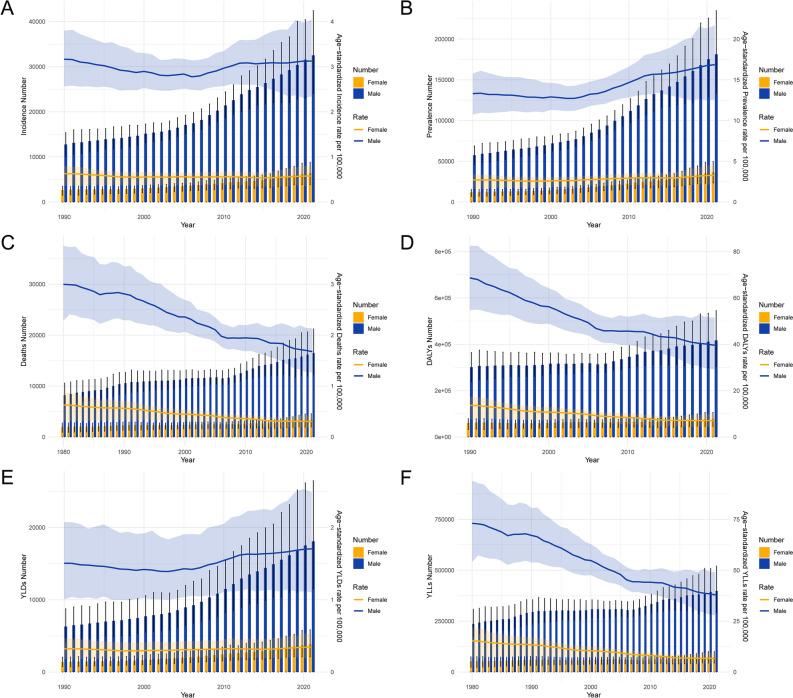
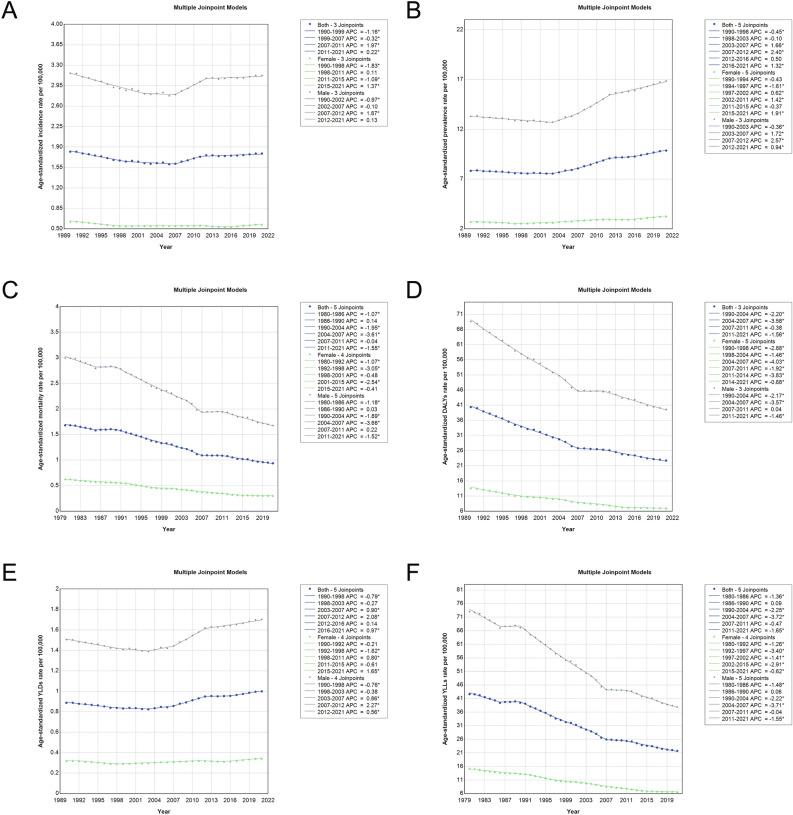
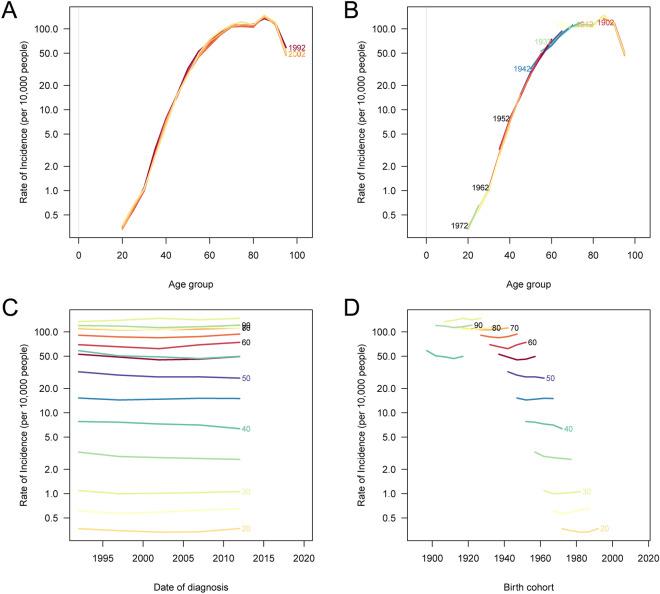
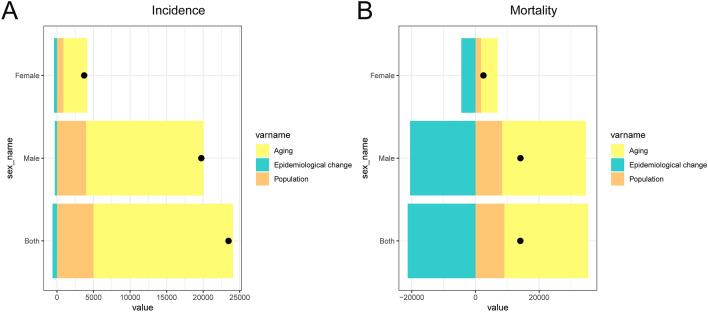
Larynx cancer poses a significant public health challenge in China, with rising incidence and mortality rates over the past decades. Understanding the long-term trends and underlying factors is crucial for effective intervention and policy formulation. Data were utilized from the global burden of disease (GBD) Study 2021 to analyze the incidence, prevalence, mortality, disability-adjusted life years (DALYs), years lived with disability (YLDs), and years of life lost (YLLs) due to larynx cancer in China from 1990 to 2021. Joinpoint regression analysis identified key changes in trends, while age-period-cohort (APC) analysis and decomposition analysis quantified the contributions of aging, epidemiological changes, and population growth to these trends. Our study found a significant increase in the incidence and prevalence of larynx cancer in China, particularly among males. The age-standardized incidence rate (ASIR) and age-standardized mortality rate (ASMR) for males were substantially higher than those for females. Decomposition analysis revealed that aging was the primary driver of increasing incidence and mortality rates, while epidemiological changes had a mitigating effect. Joinpoint analysis identified periods of rapid urbanization and economic growth as key turning points for increased incidence. Bayesian APC models projected a continued upward trend in incidence rates up to 2030. The rising burden of larynx cancer in China underscores the need for targeted public health interventions, including smoking cessation programs, environmental pollution control, and early detection strategies. Addressing gender disparities and implementing effective prevention measures are crucial to mitigating the impact of larynx cancer in China.
在中国,喉癌是一个重大的公共卫生挑战,其发病率和死亡率在过去几十年中呈上升趋势。了解长期趋势和潜在因素对于有效干预和政策制定至关重要。本研究利用全球疾病负担(GBD)研究 2021 年的数据,分析了 1990 年至 2021 年中国喉癌的发病率、患病率、死亡率、伤残调整生命年(DALYs)、伤残所致生命年损失(YLDs)和因病损失的生命年(YLLs)。Joinpoint 回归分析确定了趋势变化的关键转折点,而年龄-时期-队列(APC)分析和分解分析量化了人口老龄化、流行病学变化和人口增长对这些趋势的贡献。我们的研究发现,中国喉癌的发病率和患病率显著增加,尤其是在男性中。男性的年龄标准化发病率(ASIR)和年龄标准化死亡率(ASMR)明显高于女性。分解分析表明,人口老龄化是发病率和死亡率上升的主要驱动因素,而流行病学变化则起到了缓解作用。Joinpoint 分析确定了城市化和经济增长快速发展的时期是发病率上升的关键转折点。贝叶斯 APC 模型预测,到 2030 年,发病率仍将呈上升趋势。中国喉癌负担的增加突显出需要采取有针对性的公共卫生干预措施,包括戒烟计划、环境污染控制和早期检测策略。解决性别差异和实施有效的预防措施对于减轻中国喉癌的影响至关重要。


 Zotero 插件