
利用中麻黄提取物生物合成氧化铜-银纳米颗粒及其对肝癌细胞系(HepG2)抗癌作用的研究:凋亡相关基因分析及一氧化氮水平检测
Biosynthesis of Copper Oxide-Silver Nanoparticles from Ephedra Intermedia Extract and Study of Anticancer Effects in HepG2 Cell Line: Apoptosis-Related Genes Analysis and Nitric Oxide Level Investigations.
作者信息
Naderi Nazanin, Mohammadgholi Azadeh, Asghari Moghaddam Nastaran
机构信息
Department of Biology, Central Tehran Branch, Islamic Azad University, Tehran, Iran.
出版信息
Int J Mol Cell Med. 2024;13(3):303-324. doi: 10.22088/IJMCM.BUMS.13.3.303.
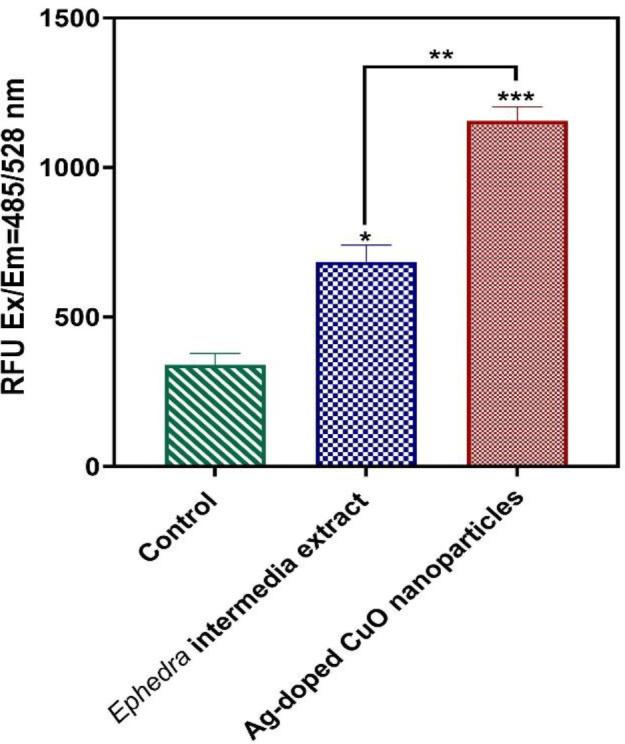
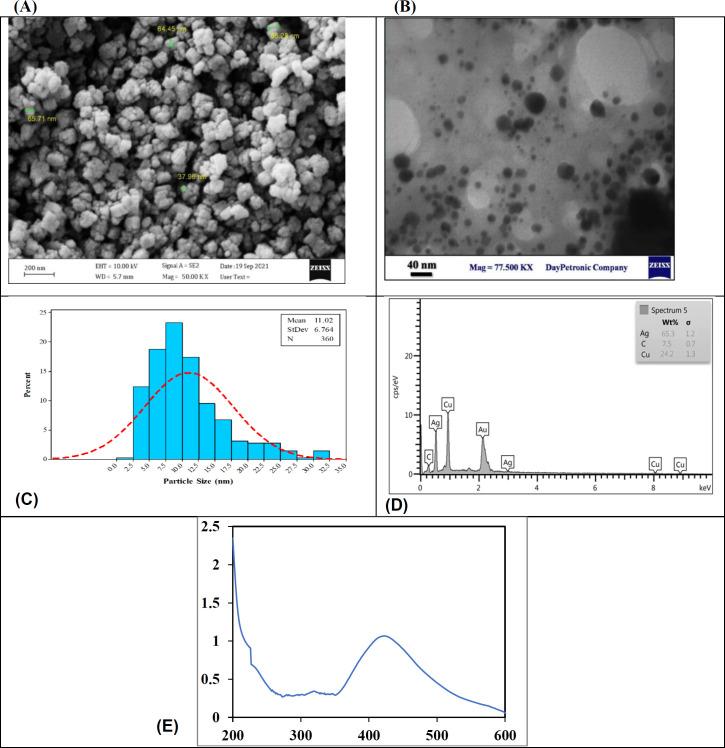
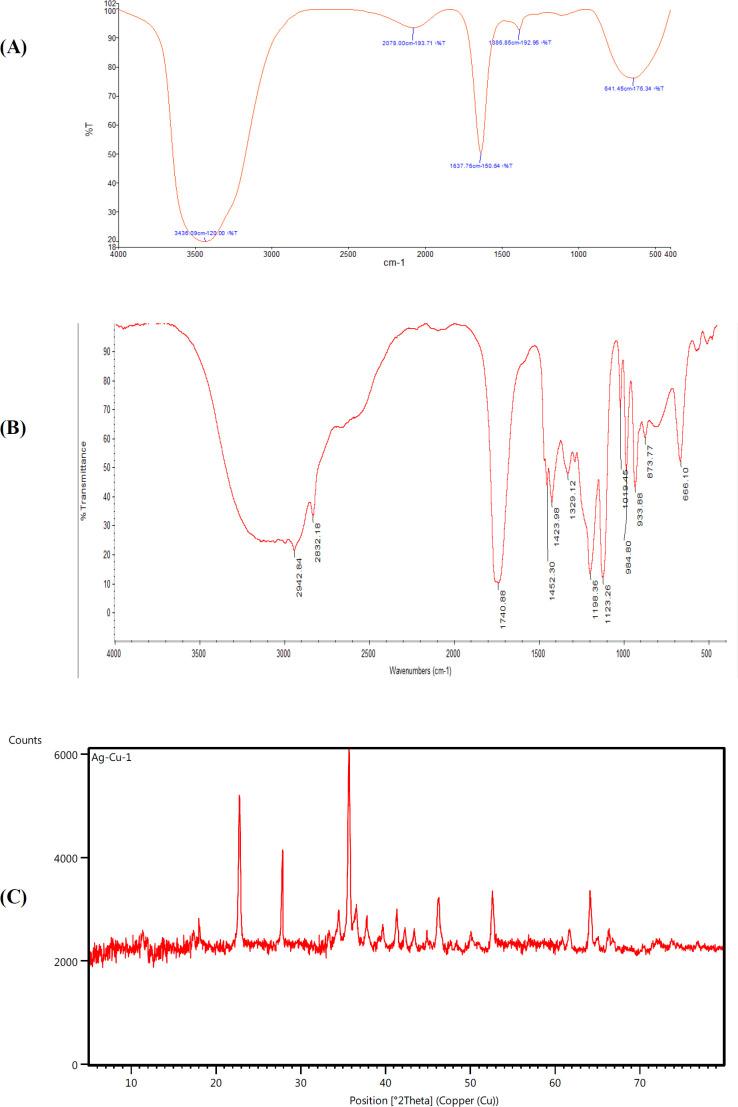
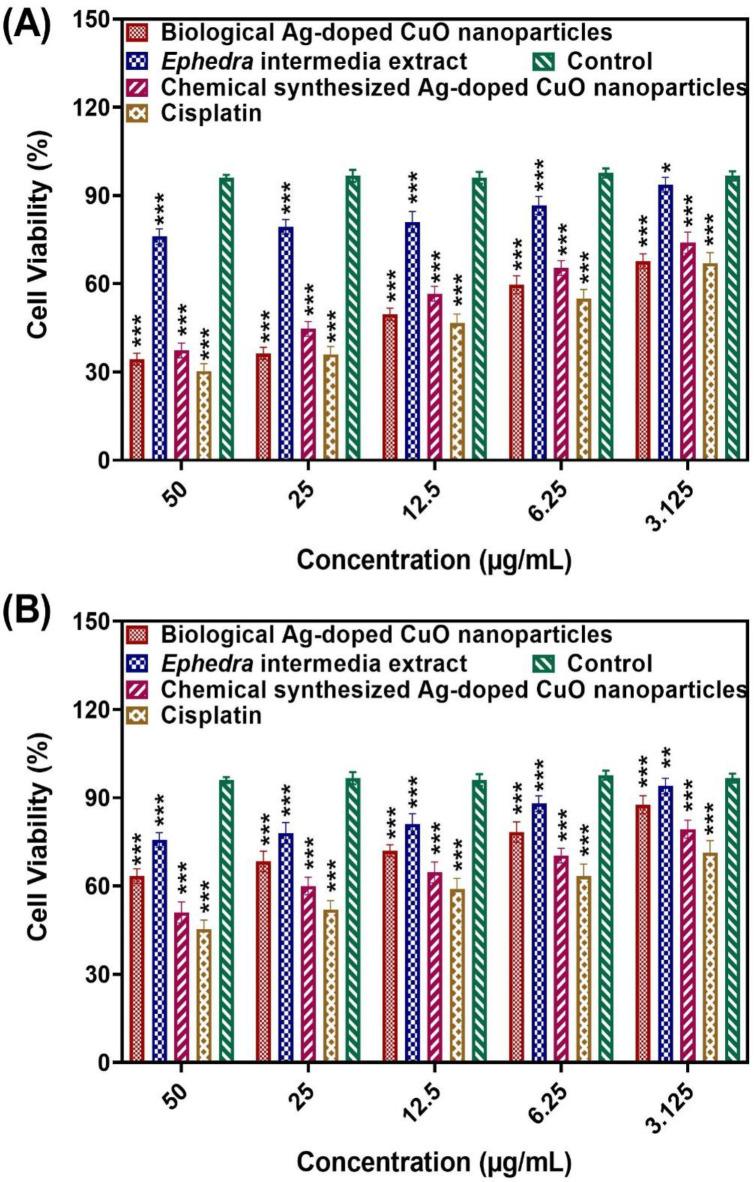
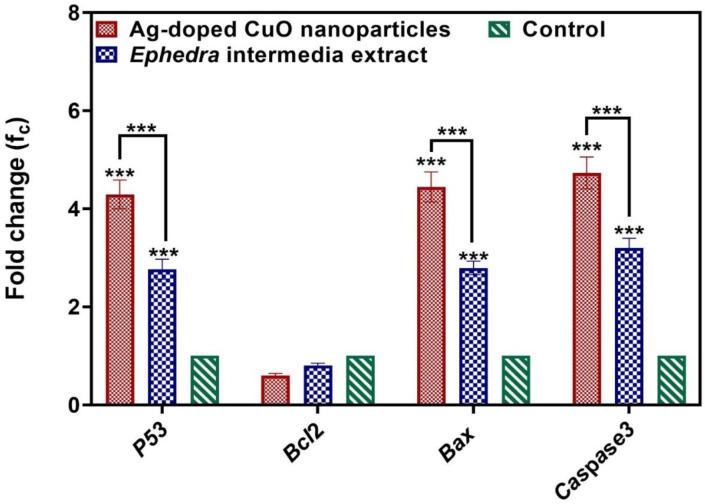
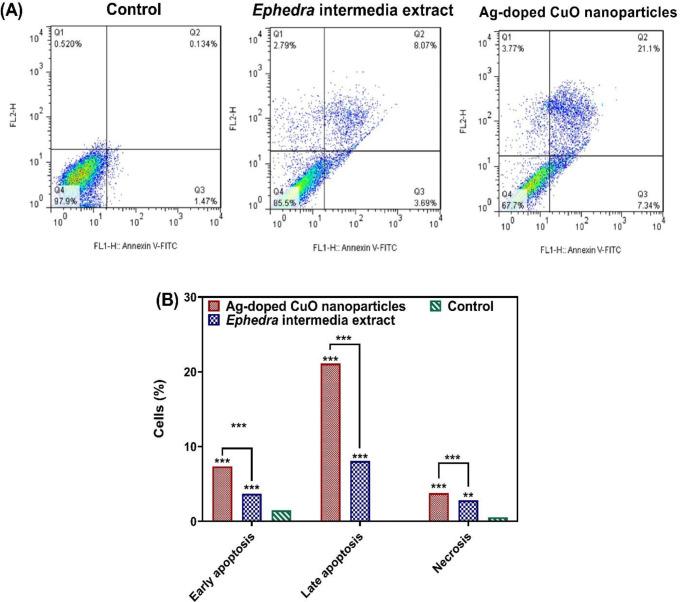
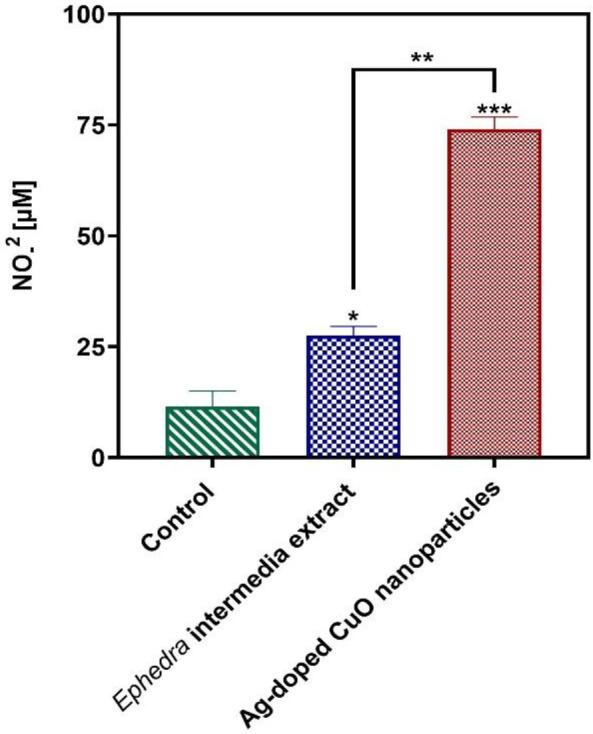
Liver cancer treatment faces significant obstacles such as resistance, recurrence, metastasis, and toxicity to healthy cells. Biometallic nanoparticles (NPs) have emerged as a promising approach to address these challenges. In this study, copper oxide-silver (Ag-doped CuO) NPs were prepared using a reduction method with intermedia extract. The physicochemical properties of the NPs were evaluated using various techniques such as Field emission scanning electron microscopy (FESEM), Transmission Electron Microscope (TEM), X-ray diffraction (XRD), and Fourier-transform infrared spectroscopy (FTIR). Additionally, this study has evaluated nitric oxide levels (NO), reactive oxygen species (ROS) production, , , , and genes expression, as well as cell viability within 24 hours in liver cancer cell line HepG2. FESEM and TEM imaging confirmed the nanostructural nature of the synthesized particles with sizes ranging from 31.27 to 88.98 nanometers. XRD analysis confirmed the crystal structure of the NPs. Comparative analysis showed that the IC values of the Ag-doped CuO NPs were significantly lower than that of the plant extracts. Molecular studies showed significantly increased expression of , , and genes, inducing apoptosis in cancer cells, and downregulation of as a pro-metastasis gene. Additionally, the presence of Ag-doped CuO NPs significantly increased NO activity enzyme and ROS generation compared to the plant extract. The biosynthesized Ag-doped CuO NPs demonstrated the ability to induce apoptosis, increase ROS production, and enhance NO enzyme activity in HepG2 cancer cells, suggesting their potential as a therapeutic agent for liver cancer.
肝癌治疗面临着诸如耐药性、复发、转移以及对健康细胞的毒性等重大障碍。生物金属纳米颗粒(NPs)已成为应对这些挑战的一种有前景的方法。在本研究中,采用中间提取物还原法制备了氧化铜 - 银(Ag掺杂的CuO)纳米颗粒。使用各种技术对纳米颗粒的物理化学性质进行了评估,如场发射扫描电子显微镜(FESEM)、透射电子显微镜(TEM)、X射线衍射(XRD)和傅里叶变换红外光谱(FTIR)。此外,本研究还评估了肝癌细胞系HepG2在24小时内的一氧化氮水平(NO)、活性氧(ROS)生成、……以及……基因表达,以及细胞活力。FESEM和TEM成像证实了合成颗粒的纳米结构性质,其尺寸范围为31.27至88.98纳米。XRD分析证实了纳米颗粒的晶体结构。比较分析表明,Ag掺杂的CuO纳米颗粒的IC值显著低于植物提取物。分子研究表明,……、……和……基因的表达显著增加,诱导癌细胞凋亡,而作为促转移基因的……表达下调。此外,与植物提取物相比,Ag掺杂的CuO纳米颗粒的存在显著增加了NO活性酶和ROS的生成。生物合成的Ag掺杂的CuO纳米颗粒显示出在HepG2癌细胞中诱导凋亡、增加ROS生成和增强NO酶活性的能力,表明它们作为肝癌治疗剂的潜力。

 Zotero 插件