
NLRP3 炎性小体激活导致 CVA6 感染引起的小鼠急性肝损伤。
NLRP3 inflammasome activation contributes to acute liver injury caused by CVA6 infection in mice.
机构信息
Department of Infectious Diseases, Children's Hospital Affiliated to Zhengzhou University, Zhengzhou, 450018, China.
College of Public Health, Zhengzhou University, Zhengzhou, 450001, China.
出版信息
BMC Infect Dis. 2024 Nov 5;24(1):1251. doi: 10.1186/s12879-024-10136-2.
BACKGROUND
Coxsackievirus (CV) A6 has emerged as an important causative agent in global outbreaks of hand, foot, and mouth disease (HFMD), which typically presents as a mild illness with a large generalized rash, herpes. However, some patients can develop encephalitis, pneumonia, myocarditis and liver injury. Our previous study took the view that CVA6 could replicate in mouse liver, leading to acute liver injury; however, the precise underlying mechanism remains elusive.
METHODS
10-day-old wild-type (WT, C57BL/6J) and NLRP3 knock-out (KO) mice were intraperitoneal (i.p.) inoculated with a lethal dose of the CVA6 strain. The muscle homogenate supernatant from normal mice was used to inoculate mock-infected mice. At 5 days post infection (dpi), the mouse liver was taken out for histopathological analyses and molecular biology experiments.
RESULTS
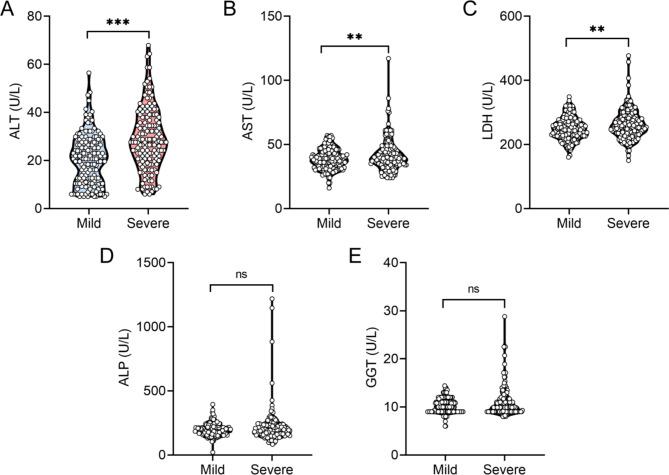
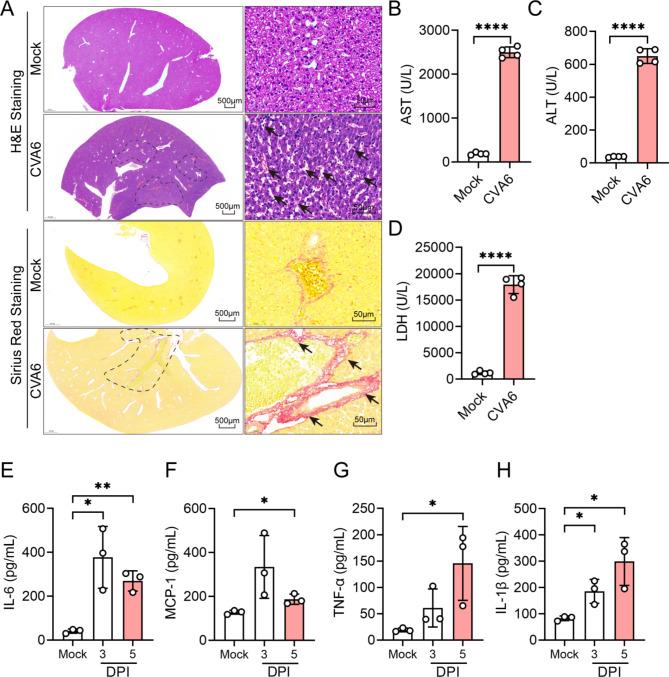
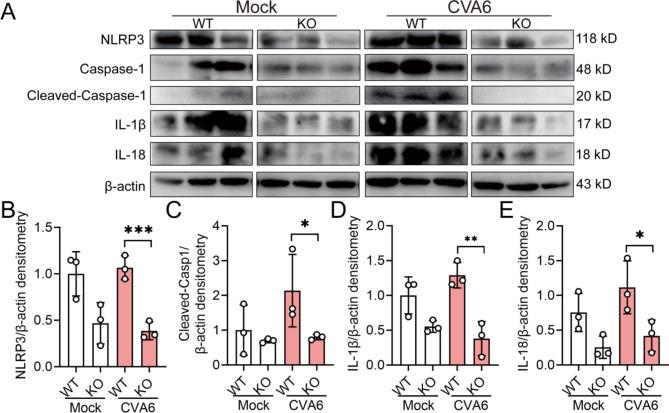
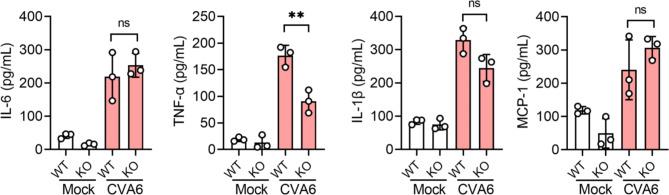
Our in vivo experiments demonstrated that CVA6 caused severe liver injury in mice, as evidenced by pathological changes in liver slices, elevated liver injury markers (e.g., AST, ALT, LDH) and pro-inflammatory cytokines (e.g., IL-6, MCP-1, TNF-α, IL-1β). Further results revealed the activation of NLRP3 inflammasome characterized by the increase in the expression of NLRP3, Cleaved-Casp-1 (p20), mature IL-1β and IL-18. Importantly, upon CVA6 infection, NLRP3 KO mice exhibited attenuated pathological damage and reduced levels of pro-inflammatory cytokines production (e.g., TNF-α and IL-1β) compared with WT mice. Finally, increased levels of blood ALT, AST, LDH were strongly correlated with the severity of CVA6 patients.
CONCLUSION
Collectively, our findings suggest that the activation of NLRP3 inflammasome is involved in CVA6 infection-induced acute liver injury, providing novel insights into CVA6 infection associated adverse clinical outcomes.
背景
柯萨奇病毒 A6(Coxsackievirus A6,CVA6)已成为手足口病(hand, foot, and mouth disease,HFMD)全球暴发的重要病原体,通常表现为轻度疾病,伴有全身性皮疹疱疹。然而,一些患者可能会发展为脑炎、肺炎、心肌炎和肝损伤。我们之前的研究认为 CVA6 可以在小鼠肝脏中复制,导致急性肝损伤;然而,其确切的潜在机制仍不清楚。
方法
将 10 天大的野生型(WT,C57BL/6J)和 NLRP3 敲除(KO)小鼠经腹腔(i.p.)接种致死剂量的 CVA6 株。将正常小鼠的肌肉匀浆上清液用于接种 mock 感染的小鼠。在感染后 5 天(dpi),取出小鼠肝脏进行组织病理学分析和分子生物学实验。
结果
我们的体内实验表明,CVA6 导致小鼠肝脏严重损伤,肝切片的病理变化、肝损伤标志物(如 AST、ALT、LDH)和促炎细胞因子(如 IL-6、MCP-1、TNF-α、IL-1β)升高证实了这一点。进一步的结果揭示了 NLRP3 炎性小体的激活,其特征在于 NLRP3、Cleaved-Casp-1(p20)、成熟的 IL-1β 和 IL-18 的表达增加。重要的是,与 WT 小鼠相比,在 CVA6 感染后,NLRP3 KO 小鼠表现出减轻的病理损伤和降低的促炎细胞因子产生水平(如 TNF-α 和 IL-1β)。最后,血液 ALT、AST、LDH 水平的升高与 CVA6 患者的严重程度密切相关。
结论
综上所述,我们的研究结果表明,NLRP3 炎性小体的激活参与了 CVA6 感染诱导的急性肝损伤,为 CVA6 感染相关不良临床结局提供了新的见解。


 Zotero 插件