
大麻二酚对骨骼肌损伤中AMPKα2/HIF-1α/BNIP3/NIX信号通路的影响。
Effects of cannabidiol on AMPKα2 /HIF-1α/BNIP3/NIX signaling pathway in skeletal muscle injury.
作者信息
Hou Zhiquan, Wang Zhifang, Zhang Jun, Liu Yunen, Luo Zhonghua
机构信息
Shenyang Medical College, Shenyang, China.
College of physical education, Yanshan University, Qinhuangdao, China.
出版信息
Front Pharmacol. 2024 Oct 22;15:1450513. doi: 10.3389/fphar.2024.1450513. eCollection 2024.
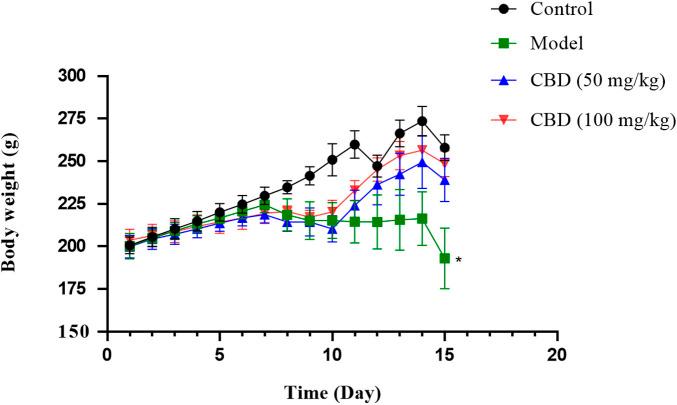
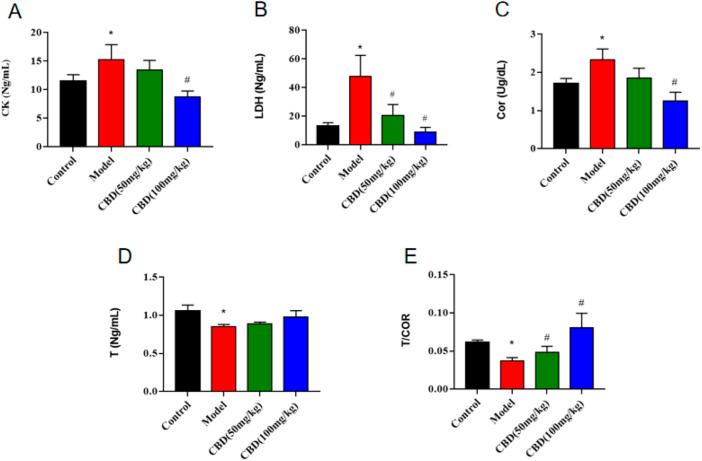
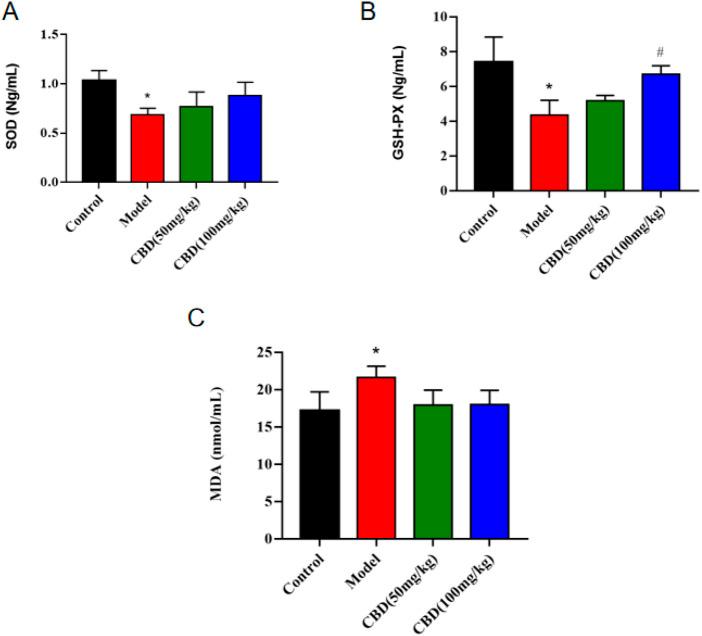
Cannabidiol: (CBD) is a non-psychoactive natural active ingredient from cannabis plant, which has many pharmacological effects, including neuroprotection, antiemetic, anti-inflammatory and anti-skeletal muscle injury. However, the mechanism of its effect on skeletal muscle injury still needs further research. In order to seek a scientifically effective way to combat skeletal muscle injury during exercise, we used healthy SD rats to establish an exercise-induced skeletal muscle injury model by treadmill training, and systematically investigated the effects and mechanisms of CBD, a natural compound in the traditional Chinese medicine Cannabis sativa L., on combating skeletal muscle injury during exercise. CBD effectively improved the fracture of skeletal muscle tissue and reduced the degree of inflammatory cell infiltration. Biochemical indexes such as CK, T, Cor, LDH, SOD, MDA, and GSH-Px in serum of rats returned to normal. Combining transcriptome and network analysis results, CBD may play a protective role in exercise-induced skeletal muscle injury through HIF-1 signaling pathway. The experimental results implied that CBD could down-regulate the expression of IL-6, NF-κB, TNF-α, Keap1, AMPKα2, HIF-1α, BNIP3 and NIX, and raised the protein expression of IL-10, Nrf2 and HO-1. These results indicate that the protective effect of CBD on exercise-induced skeletal muscle injury may be related to the inhibition of oxidative stress and inflammation, thus inhibiting skeletal muscle injury through AMPKα2/HIF-1α/BNIP3/NIX signal pathways.
大麻二酚
(CBD)是一种来自大麻植物的非精神活性天然活性成分,具有多种药理作用,包括神经保护、止吐、抗炎和抗骨骼肌损伤。然而,其对骨骼肌损伤的作用机制仍需进一步研究。为了寻找一种科学有效的方法来对抗运动过程中的骨骼肌损伤,我们使用健康的SD大鼠通过跑步机训练建立运动诱导的骨骼肌损伤模型,并系统地研究了传统中药大麻中的天然化合物CBD对对抗运动过程中骨骼肌损伤的作用及机制。CBD有效改善了骨骼肌组织的断裂情况,并减少了炎症细胞浸润程度。大鼠血清中的CK、T、Cor、LDH、SOD、MDA和GSH-Px等生化指标恢复正常。结合转录组和网络分析结果,CBD可能通过HIF-1信号通路在运动诱导的骨骼肌损伤中发挥保护作用。实验结果表明,CBD可下调IL-6、NF-κB、TNF-α、Keap1、AMPKα2、HIF-1α、BNIP3和NIX的表达,并上调IL-10、Nrf2和HO-1的蛋白表达。这些结果表明,CBD对运动诱导的骨骼肌损伤的保护作用可能与抑制氧化应激和炎症有关,从而通过AMPKα2/HIF-1α/BNIP3/NIX信号通路抑制骨骼肌损伤。



 Zotero 插件