
基于雌激素受体状态的炎症性肠病与乳腺癌因果关系的双向孟德尔随机化分析。
A bidirectional Mendelian randomization analysis of the causal relationship between inflammatory bowel disease and breast cancer based on estrogen receptor status.
作者信息
Ma Xindi, Wu Shang, Zhang Xiangmei, Du Kaiye, Yang Chenhui, Gao Sinuo, Liu Yunjiang
机构信息
The Fourth Hospital of Hebei Medical University, Shijiazhuang, China.
Hebei Provincial Key Laboratory of Tumor Microenvironment and Drug Resistance, Hebei Medical University, Shijiazhuang, China.
出版信息
Discov Oncol. 2024 Nov 7;15(1):628. doi: 10.1007/s12672-024-01514-y.
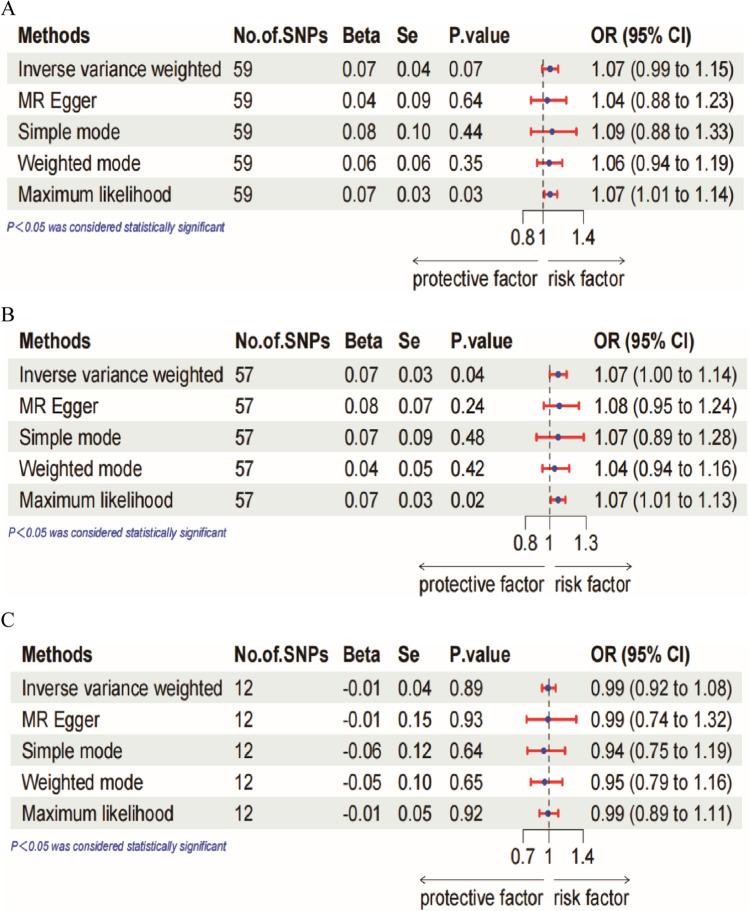
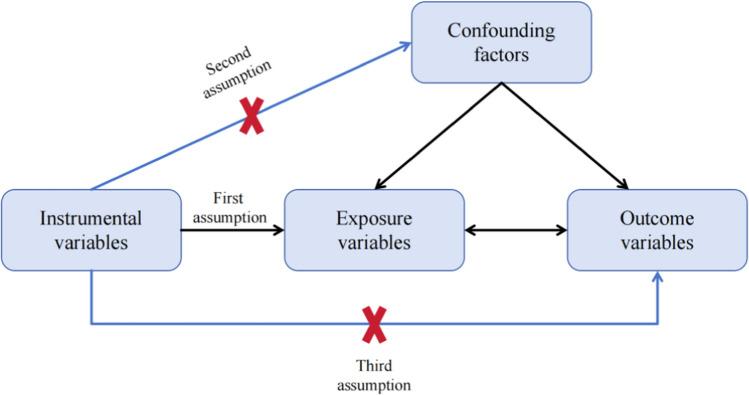
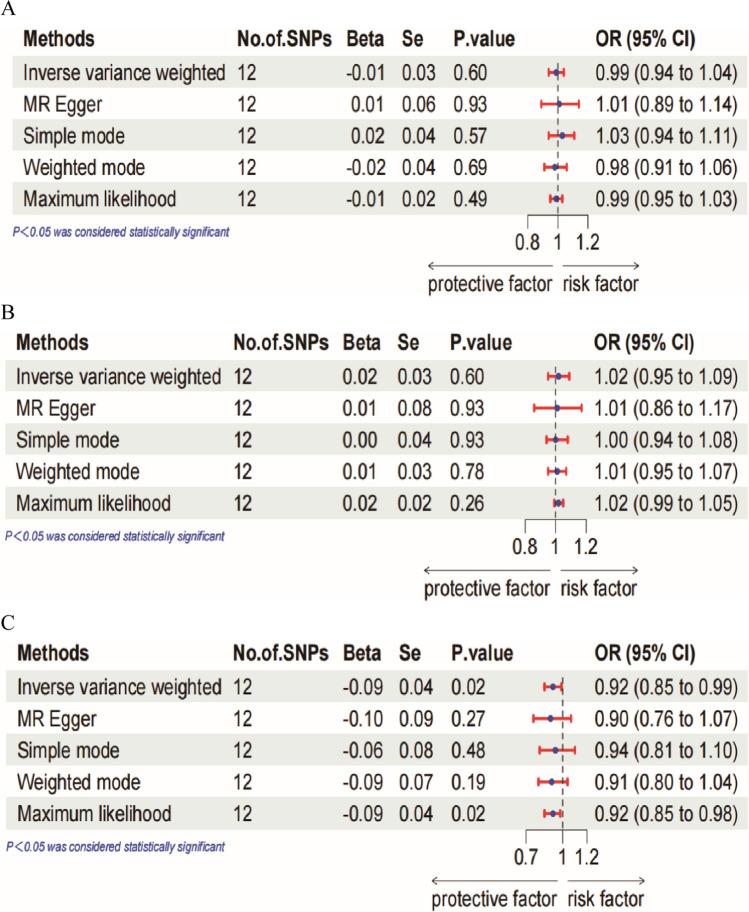
The incidence of patients diagnosed with either breast cancer (BC) or inflammatory bowel disease (IBD) is increasing each year. IBD has been shown to be strongly associated with the development of a variety of solid tumors, but the relationship with breast cancer is not yet definitive. We explored the causative relationship between IBD and BC using a Mendelian randomization (MR) strategy. MR-Egger regression, weighted median (WM), simple median (SM), maximum likelihood (ML), and inverse variance weighting (IVW) methods were among the analytical techniques used in this work. The examination of heterogeneity was conducted by the use of Cochran's Q test and Rucker's Q test. The sensitivity analysis in this study used the IVW and MR-Egger methodologies. The results of our investigation suggested that IBD had a beneficial impact on estrogen receptor-negative (ER-) breast cancer (odds ratio (OR) = 0.92, P = 0.02). The study did not find a significant association between IBD and the risk of developing overall breast cancer (OR = 0.99, P = 0.60), as well as estrogen receptor-positive (ER+) breast cancer (OR = 1.02, P = 0.60) specifically. In addition, our study findings indicated that there was a detrimental association between ER+ breast cancer and IBD as determined using reverse MR analysis (OR = 1.07, P = 0.04). Furthermore, this analysis failed to observe any significant association between overall breast cancer (OR = 1.07, P = 0.07) or ER- breast cancer (OR = 0.99, P = 0.89) and IBD. Our bidirectional MR study yielded a correlation between IBD and some specific hormone receptor status of BC.
被诊断患有乳腺癌(BC)或炎症性肠病(IBD)的患者发病率逐年上升。IBD已被证明与多种实体瘤的发生密切相关,但与乳腺癌的关系尚不明确。我们使用孟德尔随机化(MR)策略探讨了IBD与BC之间的因果关系。MR-Egger回归、加权中位数(WM)、简单中位数(SM)、最大似然(ML)和逆方差加权(IVW)方法是本研究中使用的分析技术。通过使用 Cochr an's Q检验和Rucker's Q检验进行异质性检验。本研究中的敏感性分析使用了IVW和MR-Egger方法。我们的调查结果表明,IBD对雌激素受体阴性(ER-)乳腺癌有有益影响(优势比(OR)=0.92,P=0.02)。该研究未发现IBD与总体乳腺癌发生风险(OR=0.99,P=0.60)以及雌激素受体阳性(ER+)乳腺癌(OR=1.02,P=0.60)之间存在显著关联。此外,我们的研究结果表明,使用反向MR分析确定ER+乳腺癌与IBD之间存在有害关联(OR=1.07,P=0.04)。此外,该分析未观察到总体乳腺癌(OR=1.07,P=0.07)或ER-乳腺癌(OR=0.99,P=0.89)与IBD之间存在任何显著关联。我们的双向MR研究得出了IBD与BC某些特定激素受体状态之间的相关性。
 Zotero 插件