
成人肾移植受者的特定病原体感染:一项系统评价与荟萃分析
spp. Infection in Adult Kidney Transplant Patients: A Systematic Review and Meta-Analysis.
作者信息
Kosik-Bogacka Danuta, Łanocha-Arendarczyk Natalia, Korzeniewski Krzysztof, Mularczyk Maciej, Kabat-Koperska Joanna, Ziętek Paweł, Marchelek-Myśliwiec Małgorzata
机构信息
Independent Laboratory of Pharmaceutical Botany, Pomeranian Medical University in Szczecin, Powstańców Wielkopolskich 72, 70-111 Szczecin, Poland.
Department of Biology and Medical Parasitology, Pomeranian Medical University in Szczecin, Powstańców Wielkopolskich 72, 70-111 Szczecin, Poland.
出版信息
J Clin Med. 2024 Oct 25;13(21):6395. doi: 10.3390/jcm13216395.
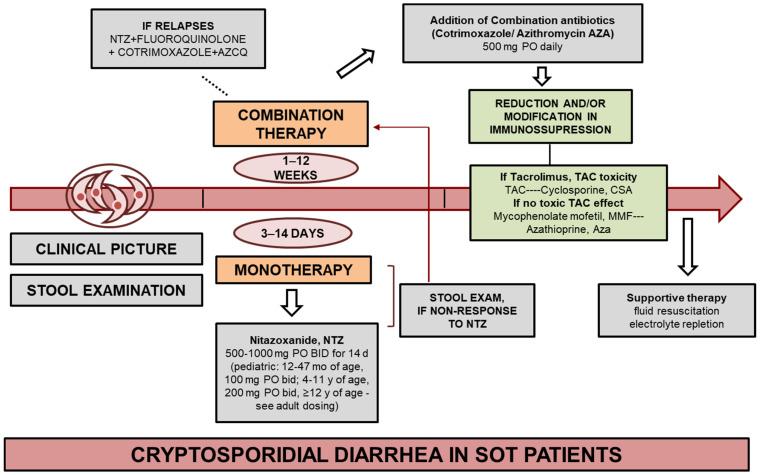
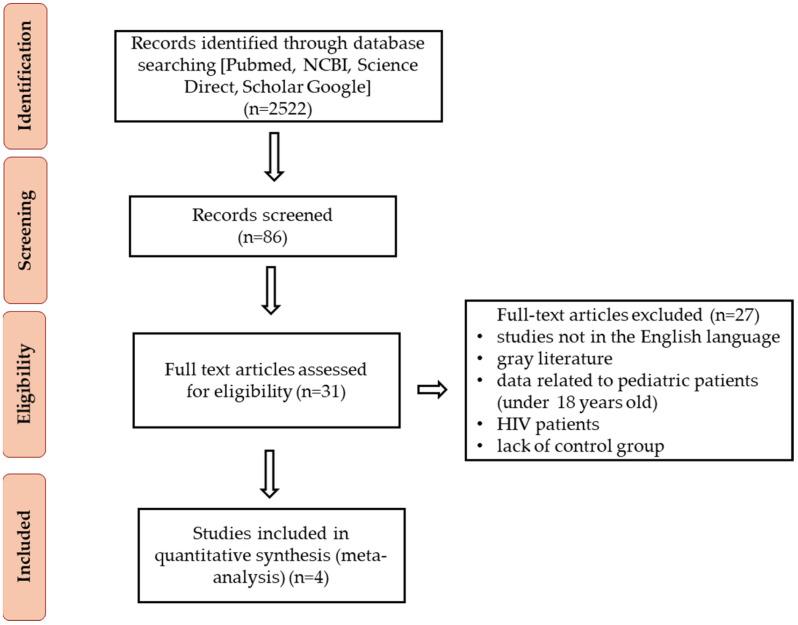
Diarrhea frequently occurs after vascular organ transplantation, including kidney transplants. This may result from non-infectious factors, adverse effects of immunosuppressive medications, or infections caused by various pathogens, including viruses, bacteria, fungi, or parasites, for example, intestinal protozoan parasites such as spp., which are particularly dangerous for immunocompromised patients. This review is based on scientific articles sourced from validated databases such as PubMed, the National Center for Biotechnology Information (NCBI), ScienceDirect, and Google Scholar. The primary search was conducted on 12-13 July 2024, using the keywords '' AND 'cryptosporidiosis' AND 'kidney' AND 'transplant' AND 'adult'. Inclusion criteria encompassed human studies, case reports, peer-reviewed journal publications, review articles, and research articles in English. Exclusion criteria included studies not in English, gray literature (e.g., conference proceedings and abstracts), and data related to pediatric patients (under 18 years old) and HIV patients. This systematic review and meta-analysis have highlighted an often-overlooked connection between spp. infections in adult kidney transplant recipients (KTR). Furthermore, it includes an analysis of the clinical presentation, diagnosis, and treatment of spp. infection in these patients, based on available case reports. Our study demonstrates that adult kidney transplant patients are at a significantly higher risk of acquiring spp. compared to healthy participants. spp. infections can be asymptomatic, making it essential to screen both symptomatic and asymptomatic kidney transplant recipients. The clinical presentation of cryptosporidiosis typically involves digestive symptoms and can be complicated by biliary tract involvement. In KTR patients presenting with diarrhea, it is crucial to not only test for spp. but also to rule out bacterial and viral etiologies, including infections such as , , spp., and rotavirus. The diagnosis of spp. infections primarily relies on microscopic methods, which are known for their low sensitivity. Therefore, diagnostic approaches should include both direct methods and, where possible, molecular techniques. Based on the analyzed cases, the most effective treatment results were achieved with reduction in immunosuppression if possible (strong, very low) and nitazoxanide at a dose of 500 mg twice daily for 14 days. Considering the public health implications of our findings, the current epidemiological data underscore the need for further research to develop effective prevention and intervention strategies against cryptosporidiosis. Preventive measures, regular screening programs, and the treatment of spp. infections should be integrated into the clinical care of transplant patients. It is also important that patients are informed about environmental risk factors.
腹泻在包括肾移植在内的血管器官移植后经常发生。这可能由非感染性因素、免疫抑制药物的不良反应或各种病原体引起的感染导致,这些病原体包括病毒、细菌、真菌或寄生虫,例如肠道原生动物寄生虫,如 spp.,对免疫功能低下的患者尤其危险。本综述基于从经过验证的数据库(如PubMed、美国国家生物技术信息中心(NCBI)、ScienceDirect和谷歌学术)获取的科学文章。初步搜索于2024年7月12日至13日进行,使用关键词“”以及“隐孢子虫病”、“肾脏”、“移植”和“成人”。纳入标准包括人类研究、病例报告、同行评审的期刊出版物、综述文章以及英文的研究文章。排除标准包括非英文研究、灰色文献(如会议论文和摘要)以及与儿科患者(18岁以下)和HIV患者相关的数据。 本系统综述和荟萃分析突出了成人肾移植受者(KTR)中 spp. 感染之间一种经常被忽视的联系。此外,它还基于现有病例报告,对这些患者中 spp. 感染的临床表现、诊断和治疗进行了分析。我们的研究表明,与健康参与者相比,成人肾移植患者感染 spp. 的风险显著更高。 spp. 感染可能无症状,因此对有症状和无症状的肾移植受者进行筛查至关重要。隐孢子虫病的临床表现通常涉及消化症状,并且可能因胆道受累而复杂化。在出现腹泻的KTR患者中,不仅要检测 spp.,还必须排除细菌和病毒病因,包括诸如 spp.、 spp. 和轮状病毒等感染。 spp. 感染的诊断主要依靠显微镜检查方法,而这些方法的灵敏度较低。因此,诊断方法应包括直接方法以及在可能的情况下采用分子技术。根据分析的病例,如果可能,通过降低免疫抑制(强效、非常低)以及每天两次服用500毫克硝唑尼特,持续14天,可取得最有效的治疗效果。考虑到我们研究结果对公共卫生的影响,当前的流行病学数据强调需要进一步研究以制定针对隐孢子虫病的有效预防和干预策略。预防措施、定期筛查计划以及 spp. 感染的治疗应纳入移植患者的临床护理中。告知患者环境危险因素也很重要。


 Zotero 插件