
PD-L1 阈值可预测免疫检查点抑制在晚期胃食管腺癌一线治疗中的疗效。对七项 III 期随机试验的系统评价和荟萃分析。
PD-L1 thresholds predict efficacy of immune checkpoint inhibition in first-line treatment of advanced gastroesophageal adenocarcinoma. A systematic review and meta-analysis of seven phase III randomized trials.
机构信息
Medical Oncology Unit, Department of Systems Medicine, University of Rome 'Tor Vergata', Rome, Italy.
Medical Oncology Unit, Department of Systems Medicine, University of Rome 'Tor Vergata', Rome, Italy.
出版信息
ESMO Open. 2024 Nov;9(11):103967. doi: 10.1016/j.esmoop.2024.103967. Epub 2024 Nov 13.
BACKGROUND
High expression of programmed death-ligand 1 (PD-L1) has been recognized as a marker of improved efficacy of immunotherapy in gastroesophageal adenocarcinoma (GEA); however, the optimal PD-L1 cut-off is still debated. The aim of the present review was to analyze available phase III trials and to identify the appropriate PD-L1 expression cut-off for GEA.
METHODS
Phase III trials investigating the efficacy of anti-programmed cell death protein 1 (PD-1) therapies in addition to standard chemotherapy versus standard chemotherapy in the first-line setting were selected. Progression-free survival (PFS), overall survival (OS) and objective response rate (ORR) were the analyzed outcome measures. Pooled treatment effects were assessed in the unselected population and in subpopulations with different levels of PD-L1 expression.
RESULTS
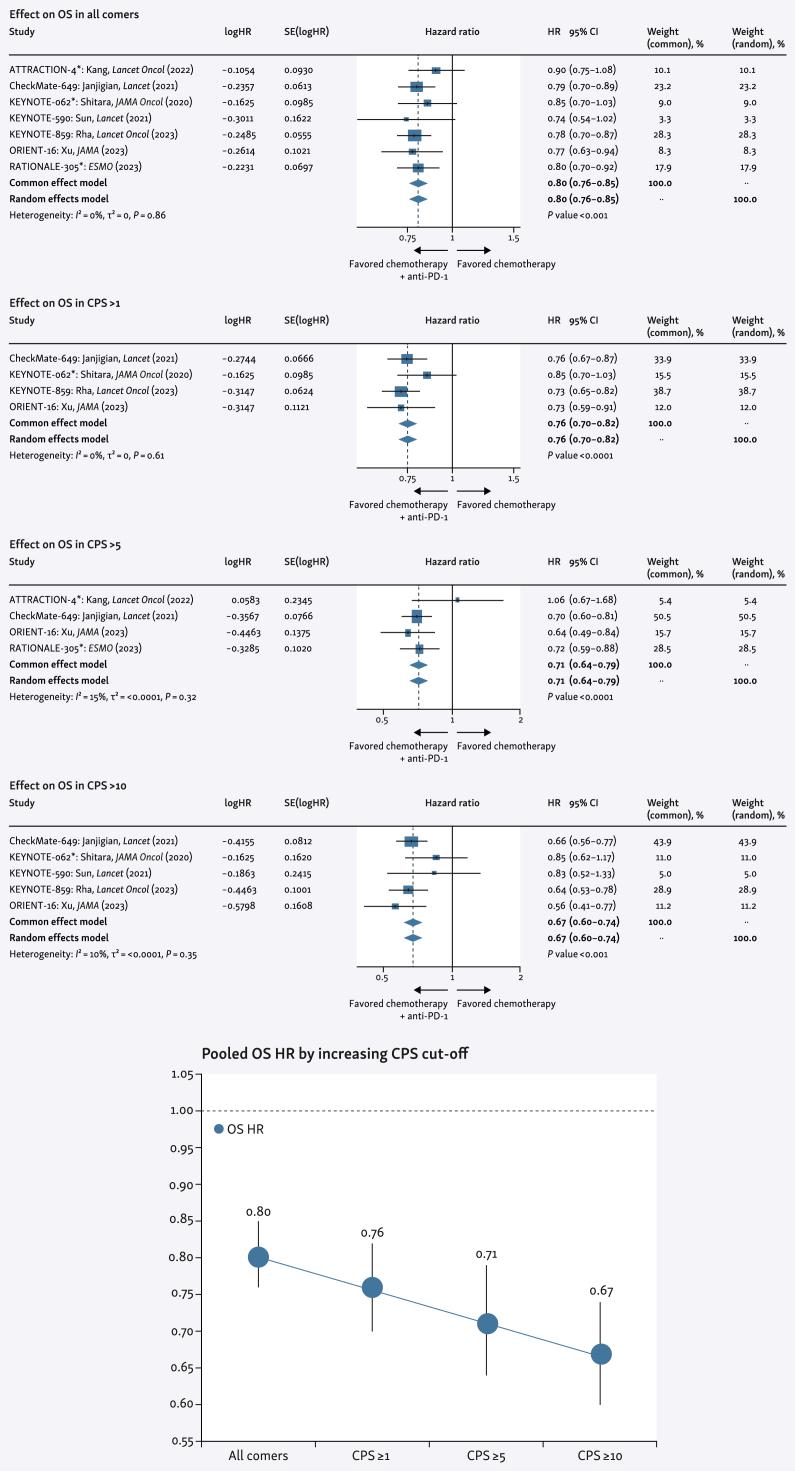
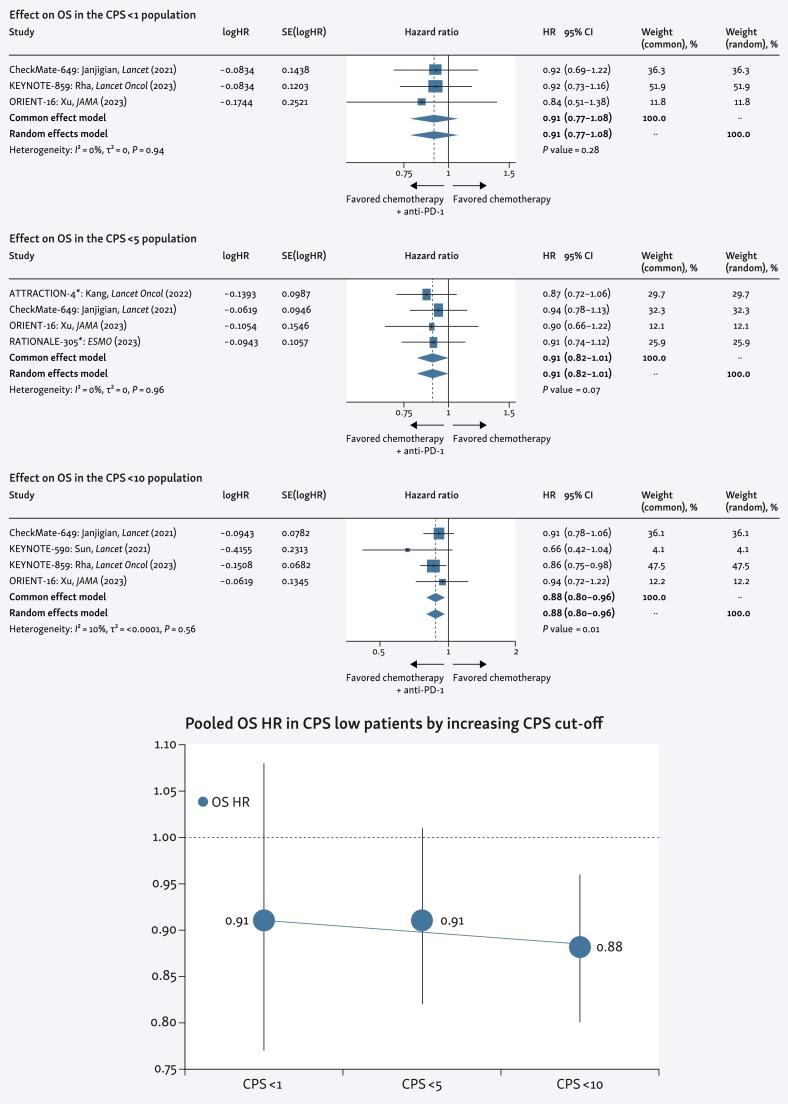
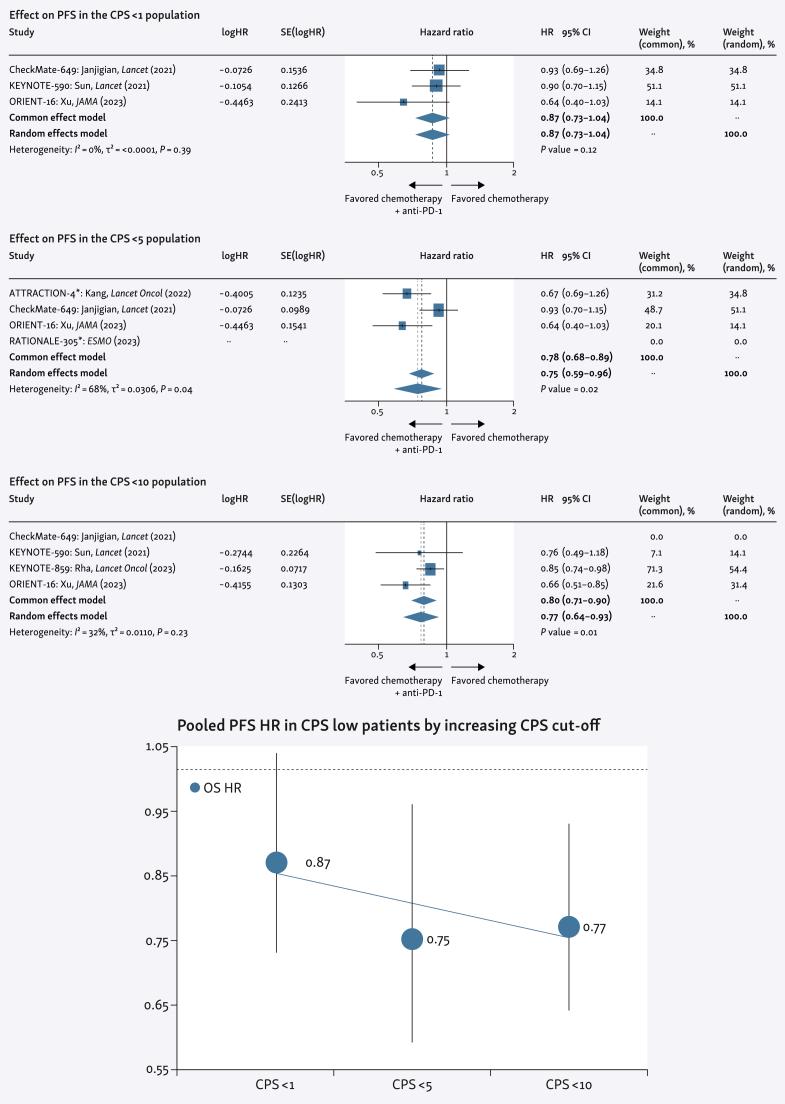
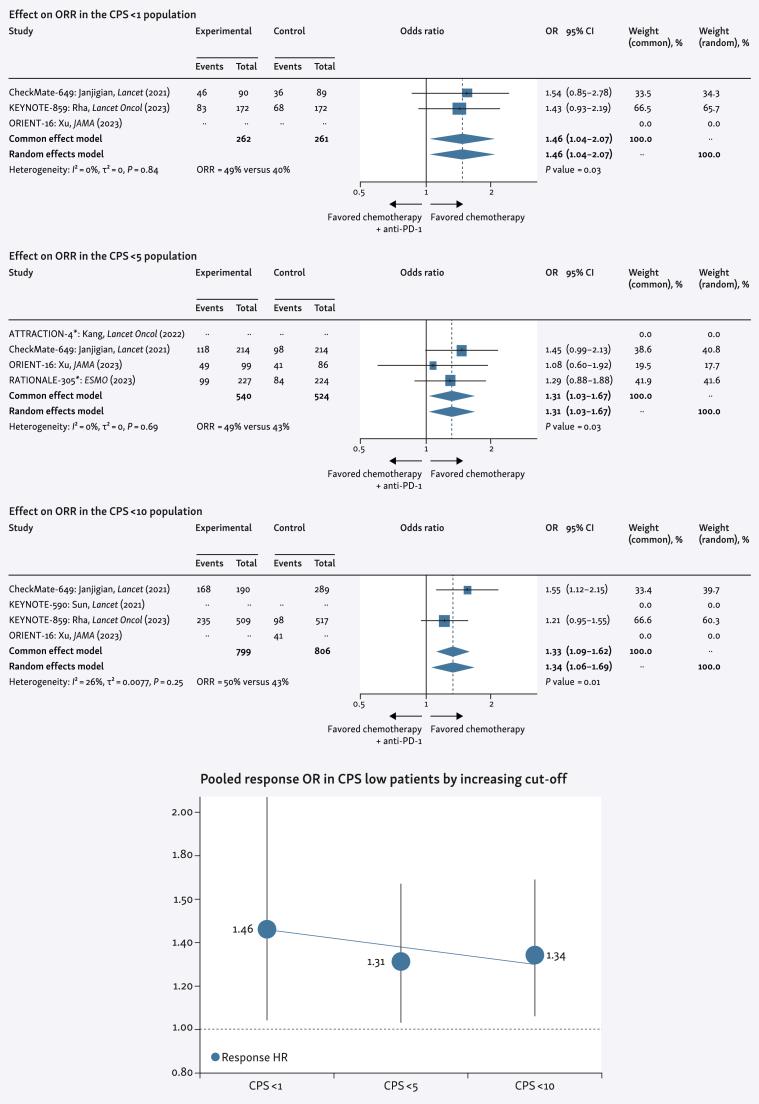
PD-1 blockade efficacy was found to consistently increase in a linear manner with higher combined positive score (CPS) of PD-L1 expression: pooled hazard ratio (HR) for OS and PFS and pooled odds ratio (OR) for ORR of 0.80, 0.75 and 1.51, respectively, in the unselected population versus 0.67, 0.63 and 1.90, respectively, in the CPS ≥10 population (all P values < 0.0001). In the PD-L1-negative population (CPS <1) a significant benefit of anti-PD-1 agents could not be demonstrated in terms of OS and PFS (P = 0.28 and 0.12, respectively), but it was seen in terms of ORR (P = 0.03). PD-1 blockade was effective in the CPS <10 population (P value for pooled OS HR, PFS HR and response OR are all 0.01), while in the CPS <5 population the effect was of borderline significance for OS (P = 0.07) and significant for PFS and ORR (P = 0.02 and 0.03, respectively).
CONCLUSION
The present meta-analysis confirmed that the benefit of PD-1 blockade in GEA patients is related to PD-L1 CPS, with increased benefit observed for higher CPS cut-offs and no OS benefit in the CPS <1 subset. Overall, data indicate that PD-L1 CPS ≥5 could represent an acceptable cut-off to optimize the risk/benefit ratio of such agents. Our data suggest a potential clinical benefit of immunotherapy in selected patients within the CPS 1-4 population which needs further investigation.
背景
程序性死亡配体 1(PD-L1)高表达已被认为是免疫疗法在胃食管腺癌(GEA)中提高疗效的标志物;然而,最佳 PD-L1 截断值仍存在争议。本综述的目的是分析现有的 III 期试验,并确定 GEA 合适的 PD-L1 表达截断值。
方法
选择了评估抗程序性死亡蛋白 1(PD-1)治疗联合标准化疗与标准化疗一线治疗在胃食管腺癌中的疗效的 III 期试验。无进展生存期(PFS)、总生存期(OS)和客观缓解率(ORR)是分析的终点。在未选择的人群和不同 PD-L1 表达水平的亚组中评估了汇总治疗效果。
结果
发现 PD-1 阻断的疗效与联合阳性评分(CPS)的 PD-L1 表达呈线性增加一致:与未选择人群相比,OS 和 PFS 的汇总风险比(HR)和 ORR 的汇总优势比(OR)分别为 0.80、0.75 和 1.51,而在 CPS≥10 人群中分别为 0.67、0.63 和 1.90(所有 P 值均<0.0001)。在 PD-L1 阴性人群(CPS<1)中,抗 PD-1 药物在 OS 和 PFS 方面并未显示出显著获益(P 值分别为 0.28 和 0.12),但在 ORR 方面有获益(P=0.03)。PD-1 阻断在 CPS<10 人群中有效(汇总 OS HR、PFS HR 和反应 OR 的 P 值均为 0.01),而在 CPS<5 人群中 OS 的效果具有边缘显著性(P=0.07),在 PFS 和 ORR 方面则具有显著意义(P 值分别为 0.02 和 0.03)。
结论
本荟萃分析证实,PD-1 阻断在 GEA 患者中的获益与 PD-L1 CPS 相关,较高的 CPS 截断值观察到获益增加,而 CPS<1 亚组的 OS 获益不明显。总体而言,数据表明 PD-L1 CPS≥5 可能是优化此类药物风险/获益比的可接受截断值。我们的数据提示在 CPS 1-4 人群中,免疫治疗在某些患者中可能具有潜在的临床获益,这需要进一步研究。

 Zotero 插件