
非洲常规基因组监测技术障碍:SARS-CoV-2 疫苗开发的系统评价。
Technological Barriers to Routine Genomic Surveillance for Vaccine Development Against SARS-CoV-2 in Africa: A Systematic Review.
机构信息
Institute for Global Health, University of Siena, Siena, SI, Italy.
Global Clinical Development and Operations, BioNTech SE, Mainz, Germany.
出版信息
Influenza Other Respir Viruses. 2024 Nov;18(11):e70047. doi: 10.1111/irv.70047.
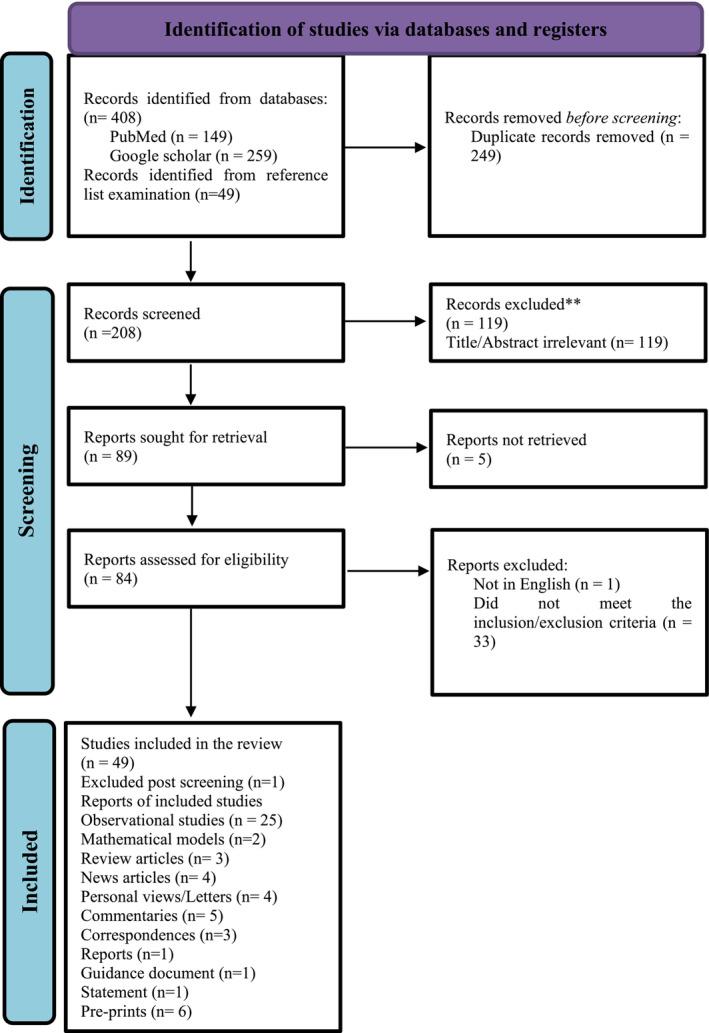
The Global Initiative on Sharing All Influenza Data, a public-access database for sharing severe acute respiratory syndrome coronavirus 2 genomic sequencing data, has received significantly less data from African countries compared to the global total. Furthermore, the contribution of these data was infrequent and, for some countries, non-existent. The primary aim of this review is to identify the technological barriers to routine genomic surveillance in Africa. PubMed and Google Scholar were searched for the relevant articles, and other eligible articles were identified from the reference list examination according to the PRISMA checklist. Eighty-four full-text articles were analysed for eligibility, and 49 published full-texted articles were included in the final qualitative analysis. The main technological barriers identified were limited genomic surveillance capacity, limited genomic sequencing infrastructure, lack of resources and skilled or trained scientists, and the high cost of importing, establishing, and maintaining a genomic sequencing facility. The Africa Pathogen Genomics Initiative aims to improve genomic surveillance capacity across Africa, through resources, training, education, infrastructure, and regional sequencing centres. Furthermore, collaborations between African governments and international partners or national, private, and academic institutions are imperative to sustain genomic surveillance in Africa, and investment in genomic sequencing and research and development is paramount. Longer turnaround times interfere with global viral evolution monitoring and national implementation of effective policies to reduce the burden and disease. Establishing effective genomic surveillance systems guides public health responses and vaccine development for diseases endemic in Africa.
全球共享流感数据倡议组织是一个用于共享严重急性呼吸系统综合征冠状病毒 2 基因组测序数据的公共访问数据库,与全球总数相比,该组织从非洲国家收到的数据明显较少。此外,这些数据的提供频率很低,有些国家根本没有提供数据。本综述的主要目的是确定非洲常规基因组监测的技术障碍。根据 PRISMA 清单,在 PubMed 和 Google Scholar 上搜索相关文章,并从参考文献检查中确定其他符合条件的文章。对 84 篇全文文章进行了合格性分析,最终有 49 篇已发表的全文文章纳入了最终的定性分析。确定的主要技术障碍包括有限的基因组监测能力、有限的基因组测序基础设施、资源和熟练或训练有素的科学家的缺乏,以及进口、建立和维护基因组测序设施的高成本。非洲病原体基因组学倡议旨在通过资源、培训、教育、基础设施和区域测序中心来提高整个非洲的基因组监测能力。此外,非洲政府与国际伙伴或国家、私人和学术机构之间的合作对于维持非洲的基因组监测至关重要,对基因组测序以及研发的投资至关重要。较长的周转时间会干扰全球病毒进化监测以及国家实施减少负担和疾病的有效政策。建立有效的基因组监测系统可以指导非洲地方性疾病的公共卫生应对和疫苗开发。
 Zotero 插件