
特质自我同情在恐惧消退过程中增强内侧前额叶皮质的激活:一项近红外光谱研究。
Trait self-compassion enhances activation in the medial prefrontal cortex during fear extinction: An fNIRS study.
作者信息
Chen Tingyuan, Mei Ying, Zhou Siyuan, Dou Haoran, Lei Yi
机构信息
Institute for Brain and Psychological Sciences, Sichuan Normal University, 610066, China.
Centre of Excellence for Learning Dynamics and Intervention Research, Faculty of Education and Psychology, University of Jyväskylä, Jyväskylä, FI, 40014, Finland.
出版信息
Int J Clin Health Psychol. 2024 Oct-Dec;24(4):100516. doi: 10.1016/j.ijchp.2024.100516. Epub 2024 Nov 6.
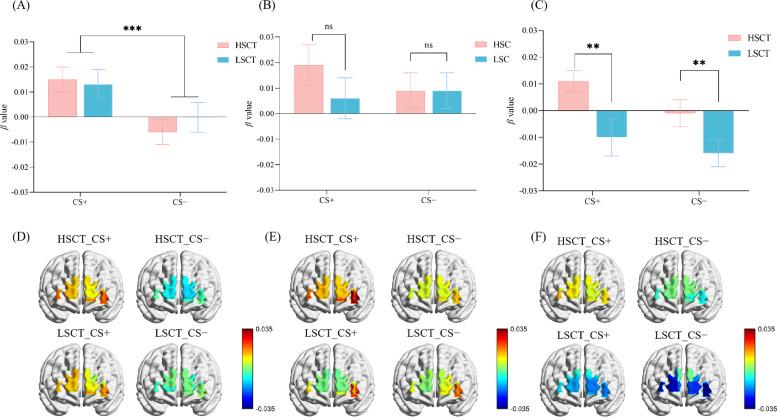
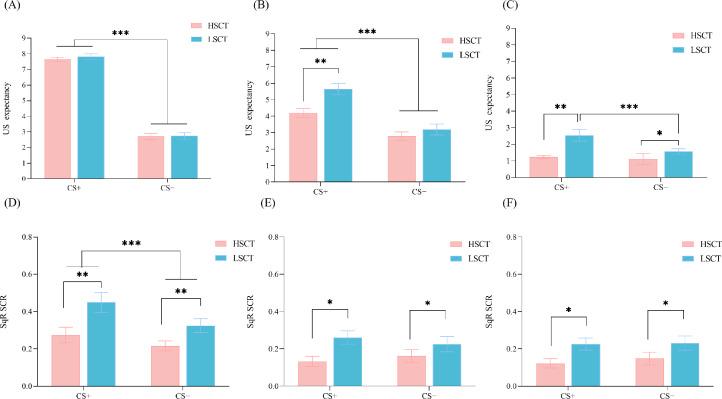
Fear acquisition and fear extinction are the most widely used experimental models to study anxiety related disorders, with the medial prefrontal cortex (mPFC) playing an important role in this process. Previous research suggests that trait self-compassion is associated with lower anxiety, but the neural mechanisms underlying this relationship remain unclear. Women generally exhibit lower self-compassion than men, making them more vulnerable to fear and anxiety. In this study, female participants were divided into two groups - high and low trait self-compassion, based on their scores on the Self-Compassion Scale-Short Form (SCS-SF). Both groups completed fear acquisition and fear extinction tasks, during which conditioned responses (CRs) were measured using self-reported unconditioned stimulus (US) expectancy ratings, skin conductance response (SCR), and functional near-infrared spectroscopy (fNIRS). The results showed that in the fear acquisition phase, all participants successfully acquired fear, showing greater responses to threat stimuli than safety stimuli. However, participants with high trait self-compassion exhibited lower SCR than those with low trait self-compassion. In the fear extinction phase, compared to individuals with low trait self-compassion, individuals with high trait self-compassion exhibited more effective fear extinction learning, characterized by lower US expectancy ratings, lower SCR, and higher mPFC activation. Moreover, trait self-compassion was significantly correlated with the behavioral extinction ability and the mPFC activation during the late phase of fear extinction, and behavioral extinction ability was significantly correlated with mPFC activation. The findings of this study suggest individuals with high trait self-compassion have better physiological flexibility during fear acquisition and fear extinction, and may through enhancing mPFC activation to facilitate fear extinction. The results provide new insights into the pathological mechanisms of anxiety.
恐惧习得和恐惧消退是研究焦虑相关障碍最广泛使用的实验模型,内侧前额叶皮质(mPFC)在此过程中发挥着重要作用。先前的研究表明,特质自我同情与较低的焦虑水平相关,但这种关系背后的神经机制仍不清楚。女性通常比男性表现出更低的自我同情,这使她们更容易受到恐惧和焦虑的影响。在本研究中,女性参与者根据她们在简易自我同情量表(SCS-SF)上的得分被分为两组——高特质自我同情组和低特质自我同情组。两组都完成了恐惧习得和恐惧消退任务,在此期间,使用自我报告的无条件刺激(US)预期评分、皮肤电传导反应(SCR)和功能性近红外光谱(fNIRS)来测量条件反应(CRs)。结果表明,在恐惧习得阶段,所有参与者都成功习得恐惧,对威胁刺激的反应比对安全刺激的反应更大。然而,高特质自我同情的参与者比低特质自我同情的参与者表现出更低的SCR。在恐惧消退阶段,与低特质自我同情的个体相比,高特质自我同情的个体表现出更有效的恐惧消退学习,其特征是更低的US预期评分、更低的SCR和更高的mPFC激活。此外,特质自我同情与恐惧消退后期的行为消退能力和mPFC激活显著相关,行为消退能力与mPFC激活也显著相关。本研究结果表明,高特质自我同情的个体在恐惧习得和恐惧消退过程中具有更好的生理灵活性,并且可能通过增强mPFC激活来促进恐惧消退。这些结果为焦虑的病理机制提供了新的见解。

 Zotero 插件