
PHQ-9和GAD-7在筛查腹泻型肠易激综合征情绪障碍中的价值及与情绪共病相关的肠道菌群特异性:初步研究结果
The Value of PHQ-9 and GAD-7 for Screening Emotional Disorders in IBS-D and the Specificity of the Gut Flora Associated with Emotional Comorbidity: Preliminary Findings.
作者信息
Zhao Jun, Li Xia, Wang Xin, Wang Xuefei, Hao Xin, Li Zhigang, Zhu Lin
机构信息
Department of Integrated Traditional and Western Medicine, West China Hospital, Sichuan University, Chengdu, 610044, People's Republic of China.
School of Acupuncture-Moxibustion and Tuina, Beijing University of Chinese Medicine, Beijing, 100029, People's Republic of China.
出版信息
Neuropsychiatr Dis Treat. 2024 Nov 14;20:2145-2158. doi: 10.2147/NDT.S486784. eCollection 2024.
BACKGROUND
To identify irritable bowel syndrome with diarrhea (IBS-D) combined with anxiety and/or depression through a psychological screening tool and to further explore the relationships between patients with comorbidities and gut microbiota.
METHODS
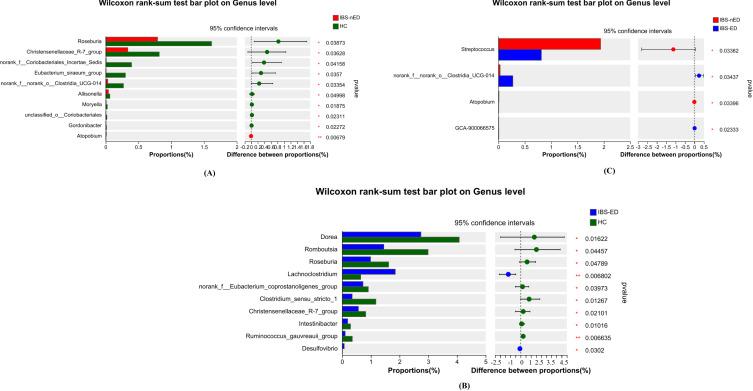
The GAD-7, SAS, PHQ-9 and SDS were administered to evaluate anxiety and depression. Faeces were subsequently collected from 44 patients with emotional disorders (IBS-EDs), 22 patients without emotional disorders (IBS-nEDs) and 18 healthy controls (HCs) via 16S rRNA sequencing, depending on the participants' wishes. The differences in gut microbiota among different groups were analysed. Spearman analysis was conducted at the genus level and was based on psychological assessment scores. Patients with IBS-D were recruited from December 2020 to November 2022.
RESULTS
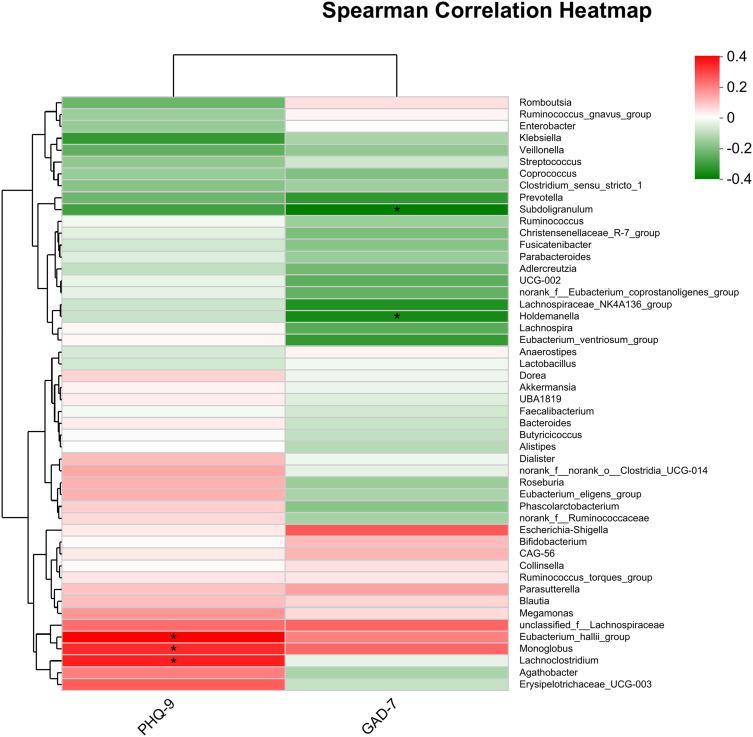
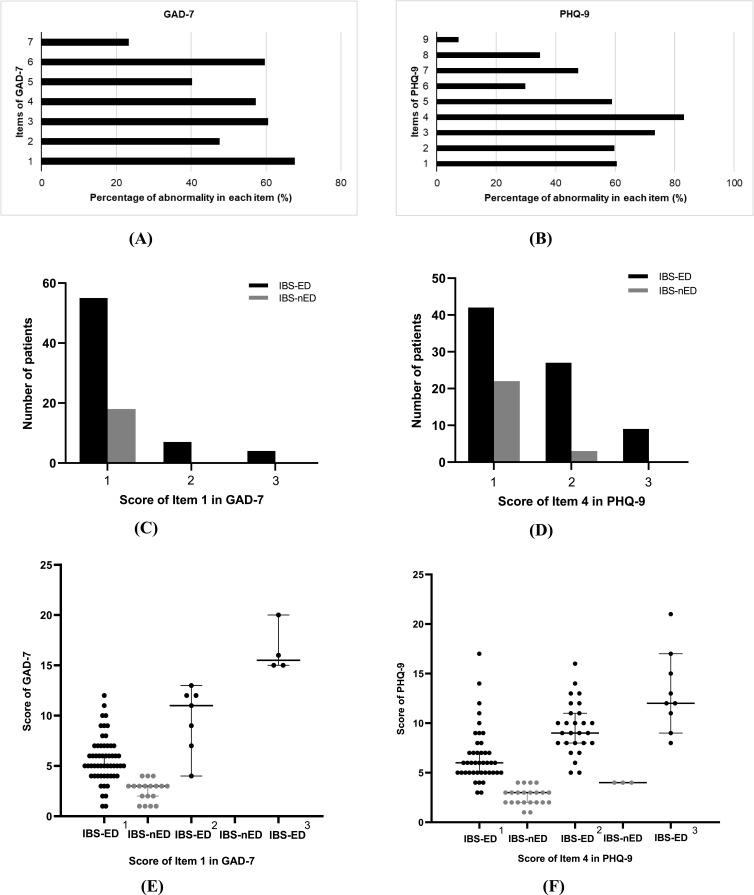
This study included 124 outpatients with IBS-D. According to the GAD-7 and SAS scores, 40.3% and 19.3% of the participants, respectively, had anxiety ( < 0.05). Similarly, a significantly greater percentage of participants had depression according to the PHQ-9 than according to the SDS (61.3% vs 33.1%) ( < 0.05). Overall, approximately 66.1% of the participants had emotional disorders (anxiety and/or depression) according to the GAD-7 and PHQ-9. Correlation analysis revealed that the abundances of and were closely related to the PHQ-9 scores and that the abundances of and were closely related to the GAD-7 scores.
CONCLUSION
In comparison to the SAS and SDS, both the GAD-7 and PHQ-9 identified a greater number of individuals with emotional disorders within the IBS-D population. Furthermore, our findings demonstrated that is not only a biomarker for IBS-ED patients but also that its abundance changes are related to PHQ-9 scores, which may provide insights for further brain gut investigations.
背景
通过一种心理筛查工具识别腹泻型肠易激综合征(IBS-D)合并焦虑和/或抑郁,并进一步探讨合并症患者与肠道微生物群之间的关系。
方法
采用广泛性焦虑障碍量表(GAD-7)、焦虑自评量表(SAS)、患者健康问卷-9(PHQ-9)和抑郁自评量表(SDS)评估焦虑和抑郁。随后,根据参与者的意愿,通过16S rRNA测序从44例情绪障碍型肠易激综合征(IBS-EDs)患者、22例无情绪障碍型肠易激综合征(IBS-nEDs)患者和18例健康对照(HCs)中收集粪便。分析不同组之间肠道微生物群的差异。在属水平上进行Spearman分析,并基于心理评估得分。IBS-D患者于2020年12月至2022年11月招募。
结果
本研究纳入124例IBS-D门诊患者。根据GAD-7和SAS评分,分别有40.3%和19.3%的参与者存在焦虑(P<0.05)。同样,根据PHQ-9评分,有抑郁的参与者比例显著高于根据SDS评分的比例(61.3%对33.1%)(P<0.05)。总体而言,根据GAD-7和PHQ-9,约66.1%的参与者存在情绪障碍(焦虑和/或抑郁)。相关性分析显示,[具体菌属1]和[具体菌属2]的丰度与PHQ-9评分密切相关,[具体菌属3]和[具体菌属4]的丰度与GAD-7评分密切相关。
结论
与SAS和SDS相比,GAD-7和PHQ-9在IBS-D人群中识别出更多有情绪障碍的个体。此外,我们的研究结果表明,[具体菌属]不仅是IBS-ED患者的生物标志物,而且其丰度变化与PHQ-9评分相关,这可能为进一步的脑肠研究提供见解。
 Zotero 插件