
SCORPIO-SR研究中恩昔瑞韦在健康参与者和SARS-CoV-2感染参与者中的群体药代动力学
Population Pharmacokinetics of Ensitrelvir in Healthy Participants and Participants with SARS-CoV-2 Infection in the SCORPIO-SR Study.
作者信息
Ishibashi Toru, Shimizu Ryosuke, Kubota Ryuji
机构信息
Clinical Pharmacology and Pharmacokinetics, Shionogi & Co., Ltd., 3-13, Imabashi 3-chome, Chuo-ku, Osaka, 541-0042, Japan.
出版信息
Clin Pharmacokinet. 2024 Dec;63(12):1723-1734. doi: 10.1007/s40262-024-01446-4. Epub 2024 Nov 20.
INTRODUCTION
Ensitrelvir, a novel oral inhibitor of the 3C-like protease of severe acute respiratory syndrome coronavirus 2 (SARS-CoV-2), has shown efficacy and safety in participants with mild to moderate coronavirus disease 2019 (COVID-19) with once-daily multiple doses of 375 mg on day 1 followed by 125 mg on days 2-5. The aims of this study were to characterize the pharmacokinetics of ensitrelvir and to explore its exposure-response relationships on the dose regimen.
METHODS
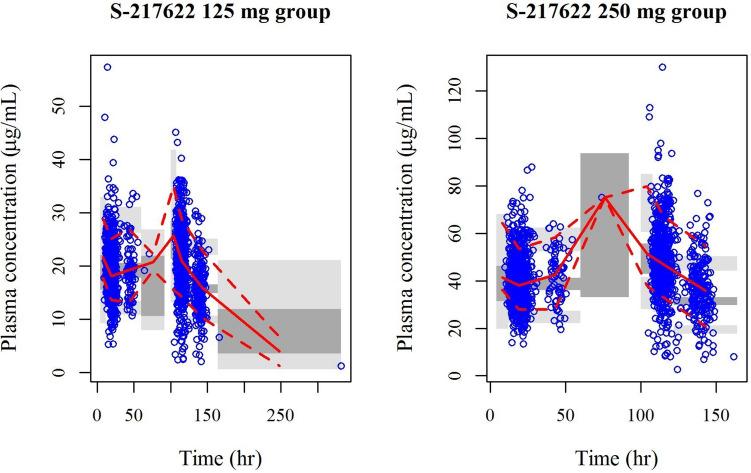
Pharmacokinetic data, including 8034 plasma concentration datasets from 2060 participants, from two phase I and one phase II/III study in healthy participants and participants infected with SARS-CoV-2 were used to develop a population pharmacokinetic model. The correlation between exposure and drug response was evaluated using observed plasma concentrations and estimated pharmacokinetic parameters as pharmacokinetic indexes and viral RNA as drug response.
RESULTS
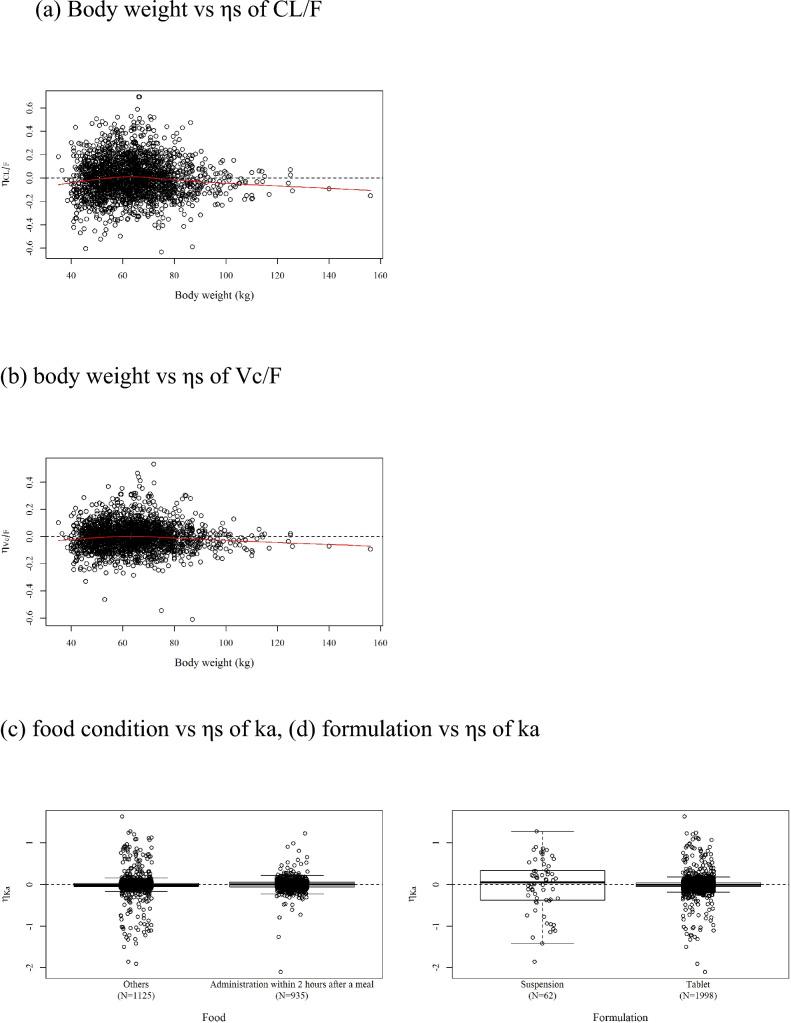
A two-compartment model with a first-order absorption model effectively described plasma ensitrelvir concentrations. The effects of body weight on clearance and volume of distribution and of food conditions and formulation on the absorption rate constant were selected as significant covariates. The efficacy indexes changed in the active group, but the responses were similar across the exposure range in the phase II/III study (SCORPIO-SR) regardless of the effects of the pharmacokinetic covariates.
CONCLUSION
Population pharmacokinetics revealed that body weight is the most important covariate in the pharmacokinetics of ensitrelvir. The antiviral effect, independent of ensitrelvir exposure, was demonstrated on the current dose regimen for treatment of SARS-CoV-2 infection.
简介
恩西他韦是一种新型的严重急性呼吸综合征冠状病毒2(SARS-CoV-2)3C样蛋白酶口服抑制剂,在轻度至中度2019冠状病毒病(COVID-19)患者中显示出疗效和安全性,第1天每日一次多剂量服用375毫克,随后第2至5天服用125毫克。本研究的目的是表征恩西他韦的药代动力学,并探讨其在该给药方案下的暴露-反应关系。
方法
来自两项健康受试者以及感染SARS-CoV-2受试者的I期研究和一项II/III期研究的药代动力学数据,包括2060名受试者的8034个血浆浓度数据集,用于建立群体药代动力学模型。以观察到的血浆浓度和估算的药代动力学参数作为药代动力学指标,以病毒RNA作为药物反应,评估暴露与药物反应之间的相关性。
结果
具有一级吸收模型的二室模型有效地描述了血浆恩西他韦浓度。选择体重对清除率和分布容积的影响以及食物条件和制剂对吸收速率常数的影响作为显著协变量。在II/III期研究(SCORPIO-SR)中,活性组的疗效指标发生了变化,但无论药代动力学协变量的影响如何,在整个暴露范围内反应相似。
结论
群体药代动力学表明,体重是恩西他韦药代动力学中最重要的协变量。在当前治疗SARS-CoV-2感染的给药方案中,证明了与恩西他韦暴露无关的抗病毒作用。


 Zotero 插件