
通过在不同养殖密度模式下补充姜黄素来提高罗非鱼(Oreochromis niloticus)的生长、抗氧化能力和免疫反应。
Enhancing growth, antioxidant capacity, and immune response in tilapia (Oreochromis niloticus) through curcumin supplementation across varied stocking density paradigms.
机构信息
Faculty of Natural Sciences, Department of Zoology, Lahore College for Women University, Lahore, Punjab, Pakistan.
Department of Biological Sciences, Purdue University Fort Wayne, Wayne, Indiana, United States of America.
出版信息
PLoS One. 2024 Nov 20;19(11):e0311146. doi: 10.1371/journal.pone.0311146. eCollection 2024.
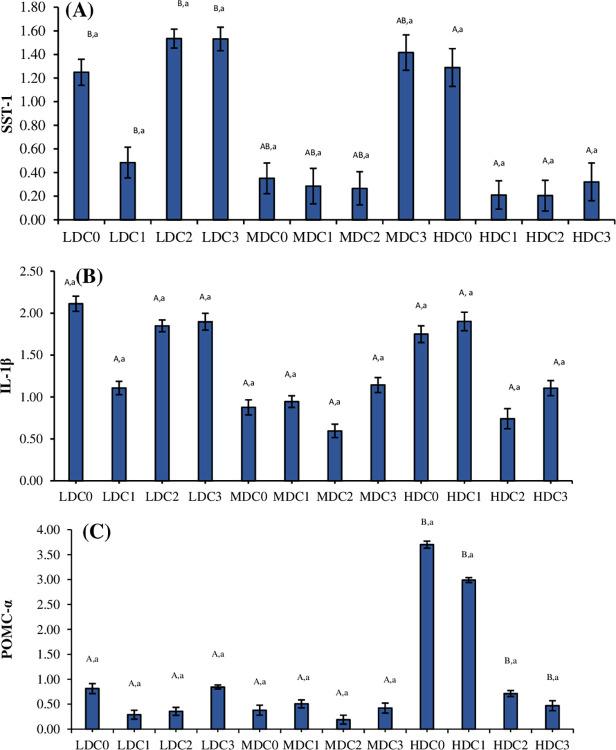
The present study evaluated the effects of curcumin on growth, immune and antioxidant response in tilapia (Oreochromis niloticus). An optimum dose of curcumin was investigated by feeding four different levels of this compound in combination with three different regimes of stocking density (12 treatments). Fish were reared at three densities; low density (LD = 1.50 kg/m3), medium density (MD = 3.00 kg/m3), and high density (HD = 4.50 kg/m3). Each treatment was fed with four different levels of dietary supplementation of curcumin (C0 = 0 mg/kg, C1 = 50 mg/kg, C2 = 100 mg/kg, and C3 = 150 mg/kg) for 60 days. Each treatment has three replicates (n = 50/replicate in LD, 100/replicate in MD, 150/ replicate in HD). Although better growth was observed in MD, however treatments at all densities fed with C1 diet showed improved growth as compared to other diets. Chemical composition of fish and activity of amylase, lipase and protease in all treatments were noted to be similar. Levels of antioxidant enzymes (catalase, superoxide dismutase and glutathione peroxidase) and cortisol in MD and HD treatments were similar to those in LD treatment. However, fish fed with C1 diet in each density treatment showed the lowest values of antioxidant enzymes. Similarly, the levels of malondialdehyde were noted to be similar in MD and HD treatments as compared to that in LD. Its levels were lower in fish fed with C1 and C3 diets in all density treatments. Expression of pro-opiomelanocortin-α (POMC-α), Somatostatins-1 (SST-1) and Interleukin 1-β (IL-1β) did not increase in MD and HD treatments in response to high stocking density when compared with LD treatment. The lowest levels of these genes were noted in fish fed with C2 and C3 diets in all treatments. In conclusion, supplementation of curcumin in diet of tilapia improved growth and antioxidant response in tilapia. optimum dose of curcumin for tilapia culture is 50 mg/kg at the density of 3.00 kg/m3which might be further investigated for intensive culture.
本研究评估了姜黄素对罗非鱼(Oreochromis niloticus)生长、免疫和抗氧化反应的影响。通过在三种不同的放养密度(12 种处理)下结合四种不同水平的该化合物喂养,研究了姜黄素的最佳剂量。鱼在三种密度下饲养;低密度(LD = 1.50 kg/m3)、中密度(MD = 3.00 kg/m3)和高密度(HD = 4.50 kg/m3)。每种处理都用四种不同水平的姜黄素饮食补充(C0 = 0 mg/kg、C1 = 50 mg/kg、C2 = 100 mg/kg 和 C3 = 150 mg/kg)喂养 60 天。每种处理有三个重复(LD 为 50 条/重复,MD 为 100 条/重复,HD 为 150 条/重复)。虽然在 MD 中观察到更好的生长,但在所有密度下用 C1 饮食喂养的处理显示出比其他饮食更好的生长。所有处理的鱼的化学成分和淀粉酶、脂肪酶和蛋白酶的活性都相似。MD 和 HD 处理中的抗氧化酶(过氧化氢酶、超氧化物歧化酶和谷胱甘肽过氧化物酶)和皮质醇水平与 LD 处理相似。然而,在每种密度处理中用 C1 饮食喂养的鱼表现出最低的抗氧化酶水平。同样,与 LD 相比,MD 和 HD 处理中的丙二醛水平相似。在所有密度处理中,用 C1 和 C3 饮食喂养的鱼的丙二醛水平较低。与 LD 处理相比,在 MD 和 HD 处理中,高密度放养不会导致 Pro-opiomelanocortin-α(POMC-α)、Somatostatins-1(SST-1)和 Interleukin 1-β(IL-1β)的表达增加。在所有处理中,用 C2 和 C3 饮食喂养的鱼的这些基因水平最低。总之,在罗非鱼的饮食中补充姜黄素可提高罗非鱼的生长和抗氧化反应。罗非鱼养殖的最佳姜黄素剂量为 50 mg/kg,在 3.00 kg/m3 的密度下,可能会进一步研究集约化养殖。


 Zotero 插件