
GFAP 星形细胞瘤病患儿的临床和影像学特征谱。
Spectrum of Clinical and Imaging Features of Children With GFAP Astrocytopathy.
机构信息
From the Departments of Pediatric Neurology (S.S., A.B., K.R.), and Pediatric Radiology (A.P., R.C.), Children's Hospital Datteln, Witten/Herdecke University, Datteln, Germany; Consultant Child Neurologist and Epileptologist at Neoclinic Children's Hospital (V.J.), Jaipur, India; Department of Pediatric Neurology (T.K.), Children's Hospital Datteln, University Witten/Herdecke; Faculty of Health (T.K.), Department of Psychology and Psychotherapy, Chair of Personality Psychology and Diagnosis, Witten/Herdecke University; Center for Paediatric and Adolescent Medicine (U.D.), University Medical Clinic, Mainz; University Children's Hospital Regensburg (KUNO) (T.G.), Hospital St. Hedwig of the Order of St. John, University of Regensburg; Department of Pediatric Neurology (A.N.), VAMED Klinik Geesthacht; Department of Pediatrics (A.N.), University Medical Center Hamburg-Eppendorf; Department of Pediatric Neurology (C.L.-N.), Mutterhaus der Borromäerinnen, Trier; Department of Pediatric Intensive Care (R.A.-H.), University Children's Hal Marburg; Department of Pediatric Neurology (M.F.-B.), Saarland University Medical Center, Homburg/Saar, Germany; Assistance Publique-Hôpitaux de Paris (K.D.), Paris-Saclay University Hospitals, Bicêtre Hospital, Pediatric Neurology Department, National Referral Center for Rare Inflammatory and Auto-immune Brain and Spinal Diseases, Paris Saclay University, France; Neuroimmunology Unit (T.A.), in Sant Joan de Déu Children's Hospital, Esplugues de Llobregat, Barcelona; Neuroimmunology Program (T.A., G.O.-C.), Institut d'Investigacions Biomèdiques August Pi I Sunyer (IDIBAPS), Hospital Clínic, University of Barcelona; Neurology Unit (G.O.-C.), Hospital Parc Taulí de Sabadell, Sabadell, Barcelona, Spain; Neuroimmunology Laboratory (S.K.), Amrita Institute of Medical Sciences, School of Medicine, Amrita University, Kochi, India; Department of Pediatrics (A.K.); Center for Rare Diseases (A.K.), Faculty of Medicine and University Hospital Cologne, University of Cologne, Germany; Department of Pediatric Neurology (H.M.); Pediatric Neurology Institute (A.F.-V.), Dana-Dwek Children's Hospital, Tel Aviv Sourasky Medical Center; Sackler Faculty of Medicine, Tel Aviv University; Institute of Pediatric Neurology (E.G.-C.), Schneider Children's Medical Center of Israel, Petah Tikva, Israel; Sackler Faculty of Medicine, Tel Aviv University, Israel; University Children's Hospital Oldenburg (H.L.), Department of Neuropediatrics, Oldenburg; Neuropediatric Unit (A.H., R.W.), Karolinska University Hospital and Karolinska Institute Stockholm, Sweden; and Institute of Clinical Chemistry (J.D., F.L.), Neuroimmunology Unit and Department of Neurology, University Medical Center Schleswig-Holstein Campus, Kiel, Germany.
出版信息
Neurol Neuroimmunol Neuroinflamm. 2025 Jan;12(1):e200327. doi: 10.1212/NXI.0000000000200327. Epub 2024 Nov 20.
BACKGROUND AND OBJECTIVES
Glial fibrillary acidic protein (GFAP) antibodies (abs) have been described primarily in adults with a spectrum of autoimmune-mediated diseases. In children, data on clinical and neuroradiologic features of children with autoimmune GFAP astrocytopathy are limited. The aim of this study was to describe the clinical and radiologic features in children with GFAP-ab-associated diseases.
METHODS
We retrospectively recruited children from 13 clinical centers between 2020 and 2023 who (1) tested positive for GFAP-ab in serum and/or CSF and (2) of whom a complete clinical and MRI data set was available.
RESULTS
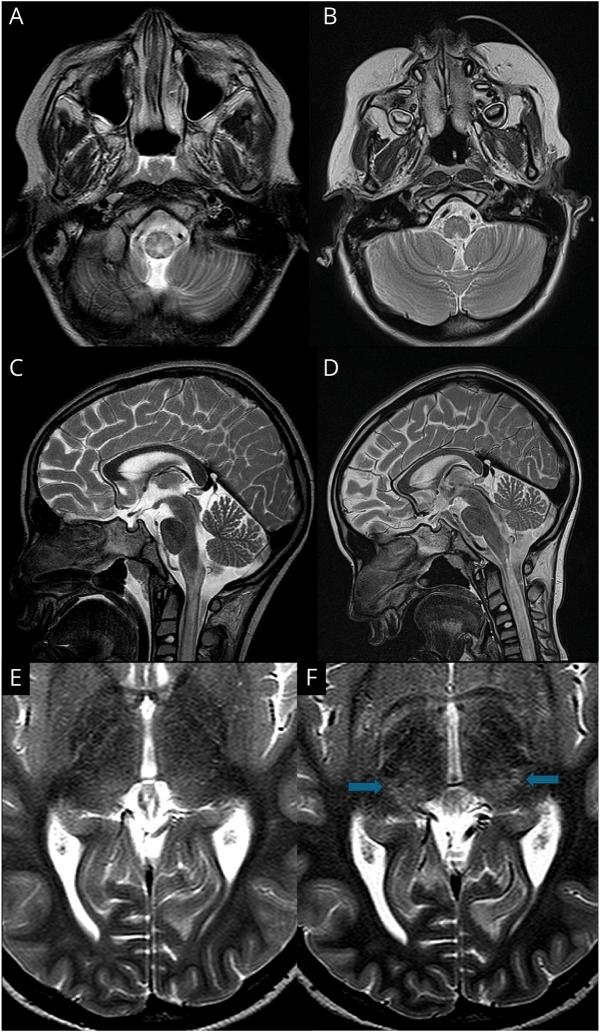
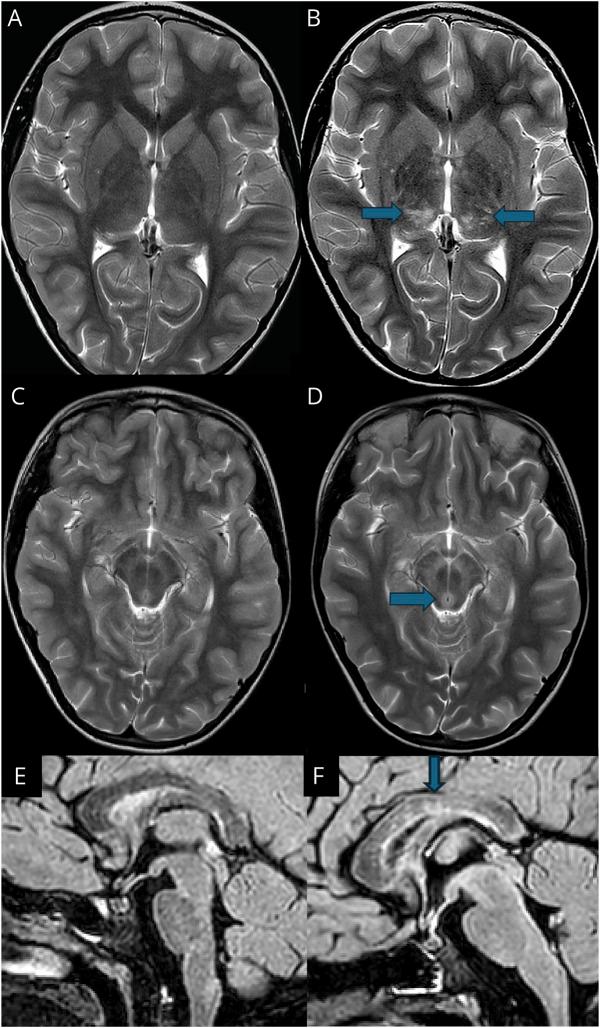
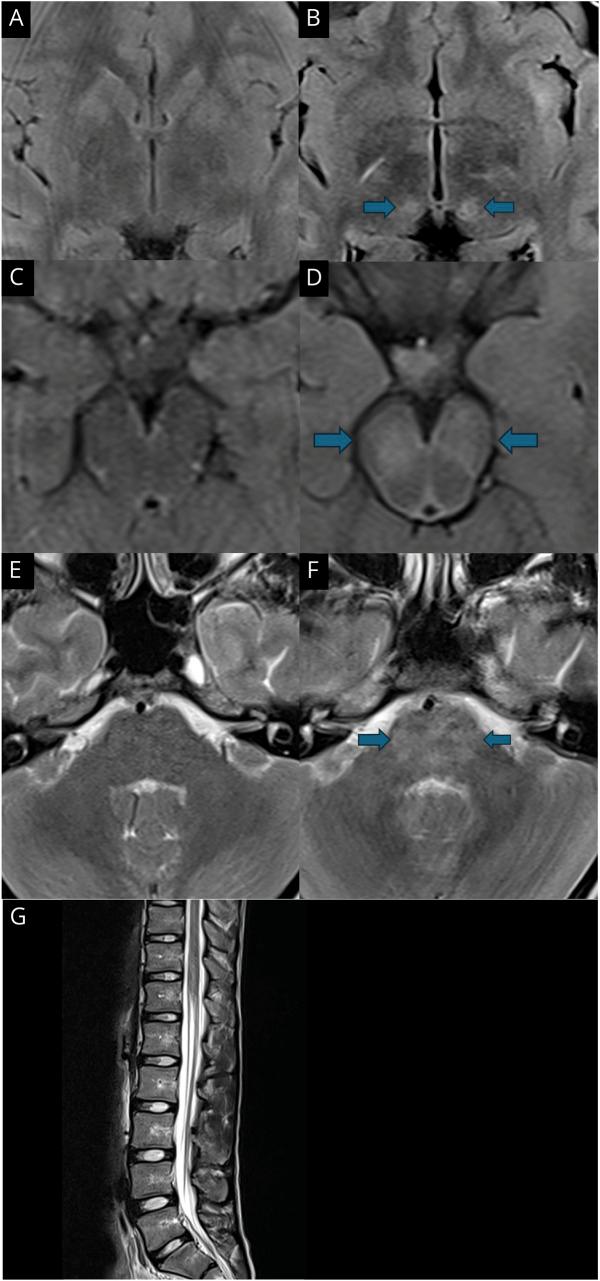
We identified and included 15 children (5 girls, 10 boys). The median age at onset was 9.9 years (range: 2-16 years). All children presented with features of AE or meningitis, acute cerebellitis, or transverse myelitis. CSF pleocytosis was common (13/15, median 245 cells/μL), and 13 (87%) of 15 harbored GFAP-abs in their CSF, 8 (53%) of whom did not have detectable GFAP-abs in their serum. MRI was abnormal in 15 (100%) of 15 children: Specific patterns included confluent lesions in the pons or caudate nucleus (11/15; 73%), peri-aqueductal regions (13/15; 87%), and spinal cord (6/10; 60%). 12 children had a favorable outcome (mRS score of </= 1). Two patients died in the acute phase or during follow-up.
DISCUSSION
GFAP-ab-associated diseases encompass a wide spectrum of clinical presentation associated with a particular set of MRI features clearly distinct to other antibody-mediated diseases or MOGAD. We recommend that testing for GFAP-abs in serum and CSF be included in the workup of children with AE, particularly if brainstem involvement occurs.
背景与目的
神经胶质纤维酸性蛋白(GFAP)抗体(abs)主要在患有一系列自身免疫性疾病的成年人中描述。在儿童中,关于自身免疫性 GFAP 星形胶质细胞瘤患儿的临床和神经影像学特征的数据有限。本研究旨在描述 GFAP-ab 相关疾病患儿的临床和影像学特征。
方法
我们回顾性招募了 2020 年至 2023 年间来自 13 个临床中心的儿童,他们(1)血清和/或 CSF 中 GFAP-ab 检测阳性,(2)有完整的临床和 MRI 数据集。
结果
我们确定并纳入了 15 名儿童(5 名女孩,10 名男孩)。发病中位年龄为 9.9 岁(范围:2-16 岁)。所有患儿均表现为 AE 或脑膜炎、急性小脑炎或横贯性脊髓炎的特征。CSF 细胞增多症常见(13/15,中位数 245 个/μL),15 名患儿中有 13 名(87%)的 CSF 中存在 GFAP-abs,其中 8 名(53%)患儿血清中未检测到 GFAP-abs。15 名患儿的 MRI 异常(100%):特定模式包括桥脑或尾状核的融合性病变(11/15;73%)、导水管周围区域(13/15;87%)和脊髓(6/10;60%)。12 名患儿预后良好(mRS 评分<=1)。2 名患儿在急性期或随访期间死亡。
讨论
GFAP-ab 相关疾病包括广泛的临床表现,与其他抗体介导的疾病或 MOGAD 具有明显不同的特定 MRI 特征集。我们建议在 AE 患儿的检查中包括血清和 CSF 中 GFAP-abs 的检测,特别是在发生脑干受累时。
 Zotero 插件