
癌症相关失眠管理建议:相关因素的系统文献回顾及治疗的叙述性综述
Proposal for Managing Cancer-Related Insomnia: A Systematic Literature Review of Associated Factors and a Narrative Review of Treatment.
机构信息
Department of Palliative Therapy, The Cancer Institute Hospital of Japanese Foundation for Cancer Research, Tokyo, Japan.
Department of Psychiatry, Shiga University of Medical Science, Otsu, Shiga, Japan.
出版信息
Cancer Med. 2024 Nov;13(22):e70365. doi: 10.1002/cam4.70365.
OBJECTIVE
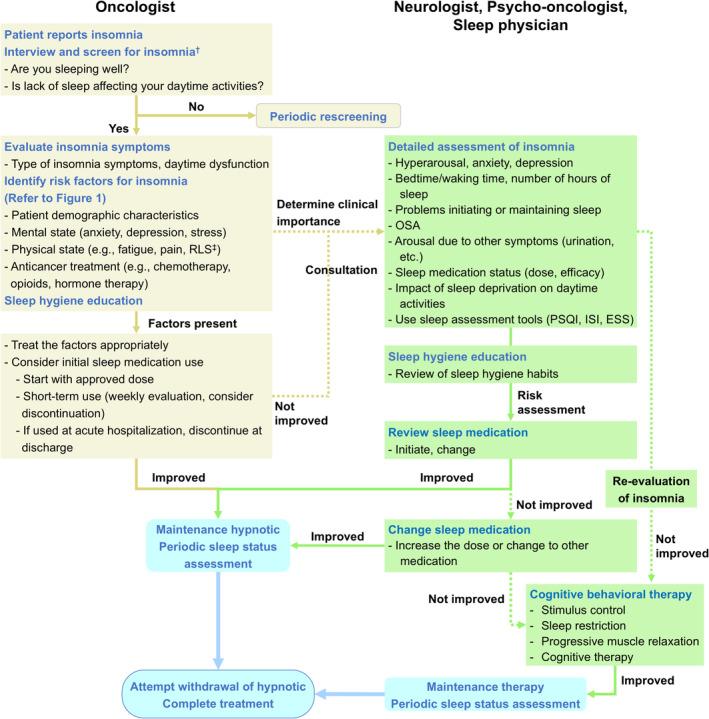
Insomnia is common in patients with cancer. It has a multifactorial etiology that may include the disease process, adverse effects of anticancer therapies, and/or an association with other comorbidities. The purpose of this review was to identify risk factors for insomnia and suggest optimal management strategies.
METHODS
We conducted a systematic literature review to elucidate the risk factors for insomnia and sleep disturbances in patients with solid tumors. The effects of sleep medications in this population were also described.
RESULTS
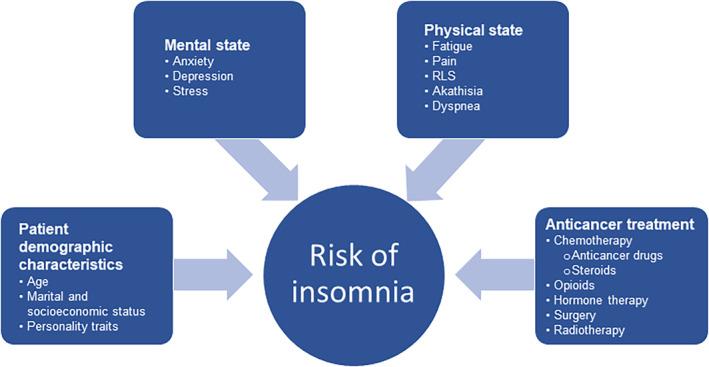
A total of 75 publications were evaluated, including those on breast, lung, gynecologic, brain, head and neck, gastrointestinal, prostate, thyroid, and mixed cancers. We classified the factors related to insomnia or sleep disturbance in cancer into four categories: (1) patient demographic characteristics (e.g., age, marital or socioeconomic status); (2) mental state (e.g., depression or anxiety); (3) physical state (e.g., fatigue, pain, or restless legs syndrome); and (4) anticancer treatment-related (e.g., use of chemotherapy, opioids, or hormone therapy). Overall, literature on the pharmacologic treatment of insomnia is extremely limited, although some efficacy data for zolpidem and melatonin have been reported.
CONCLUSIONS
Demographic characteristics, physical and mental distress, and anticancer treatments are all risks for insomnia in patients with cancer. The limited evidence base for pharmacologic therapy in this patient population means that healthcare professionals need to implement a comprehensive and multidisciplinary pathway from screening to management.
目的
癌症患者常患有失眠症。其病因复杂,可能包括疾病进程、抗癌治疗的副作用,和/或与其他合并症相关。本文旨在确定失眠症的风险因素,并提出最佳的管理策略。
方法
我们进行了系统的文献综述,以阐明实体瘤患者失眠和睡眠障碍的风险因素。还描述了该人群中睡眠药物的作用。
结果
共评估了 75 篇文献,包括乳腺癌、肺癌、妇科、脑、头颈部、胃肠道、前列腺、甲状腺和混合癌症的文献。我们将与失眠或睡眠障碍相关的因素分为四类:(1)患者的人口统计学特征(如年龄、婚姻或社会经济地位);(2)精神状态(如抑郁或焦虑);(3)身体状况(如疲劳、疼痛或不宁腿综合征);(4)与抗癌治疗相关的因素(如化疗、阿片类药物或激素治疗的应用)。总体而言,失眠药物治疗的文献极为有限,尽管已有关于唑吡坦和褪黑素的一些疗效数据报告。
结论
人口统计学特征、身体和精神痛苦以及抗癌治疗均是癌症患者失眠的风险因素。该患者人群中药物治疗的证据基础有限,这意味着医疗保健专业人员需要从筛查到管理实施全面的多学科途径。
 Zotero 插件