
PGC-1α 驱动小细胞神经内分泌癌向表达 ASCL1 的亚型进展,同时增加线粒体容量。
PGC-1α drives small cell neuroendocrine cancer progression toward an ASCL1-expressing subtype with increased mitochondrial capacity.
机构信息
Department of Microbiology Immunology and Molecular Genetics, University of California, Los Angeles, CA 90095.
Department of Molecular and Medical Pharmacology, University of California, Los Angeles, CA 90095.
出版信息
Proc Natl Acad Sci U S A. 2024 Dec 3;121(49):e2416882121. doi: 10.1073/pnas.2416882121. Epub 2024 Nov 26.
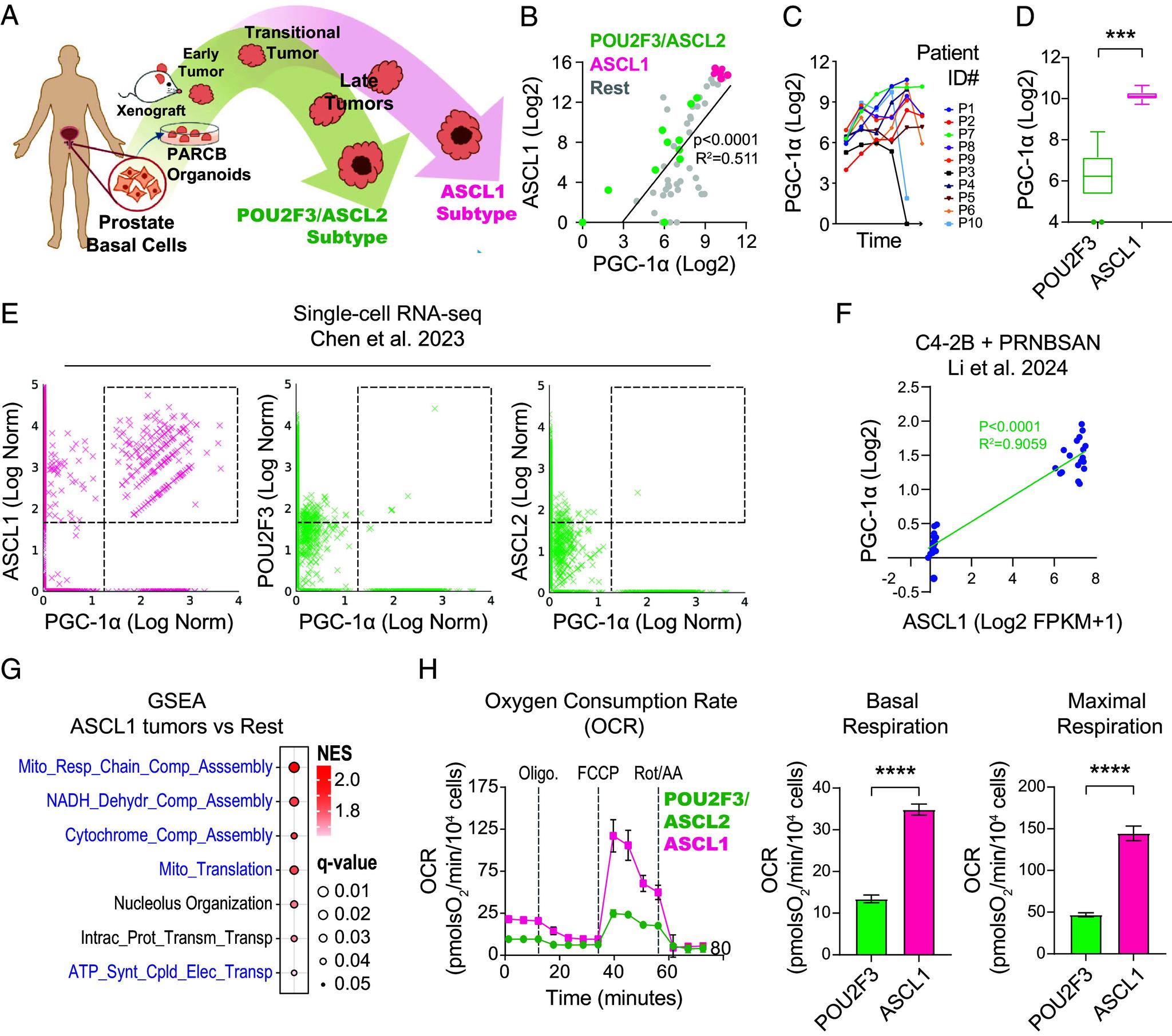
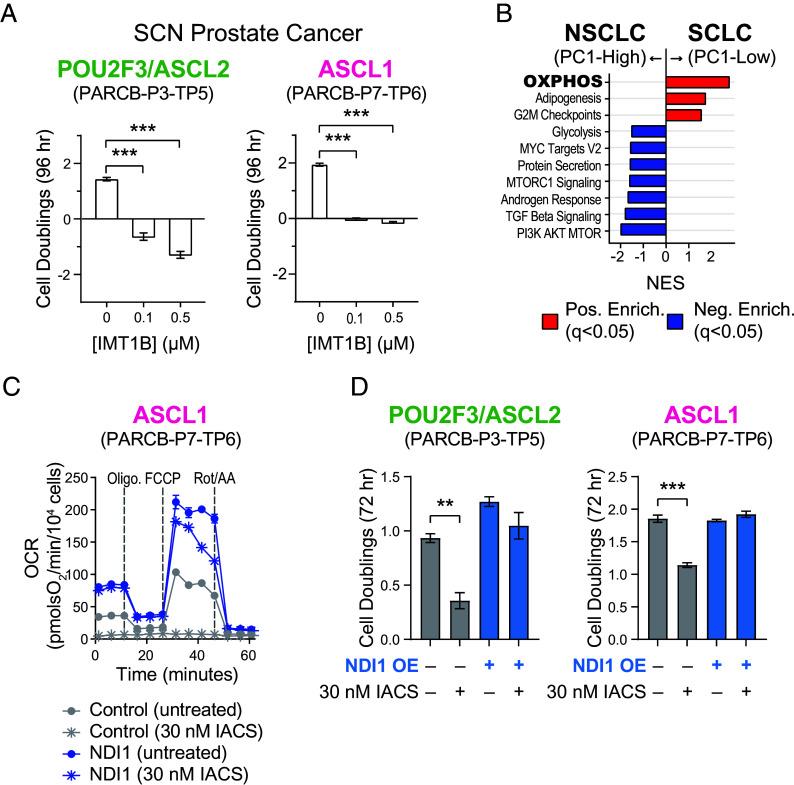
Adenocarcinomas from multiple tissues can converge to treatment-resistant small cell neuroendocrine (SCN) cancers composed of ASCL1, POU2F3, NEUROD1, and YAP1 subtypes. We investigated how mitochondrial metabolism influences SCN cancer (SCNC) progression. Extensive bioinformatics analyses encompassing thousands of patient tumors and human cancer cell lines uncovered enhanced expression of proliferator-activatedreceptor gamma coactivator 1-alpha (PGC-1α), a potent regulator of mitochondrial oxidative phosphorylation (OXPHOS), across several SCNCs. PGC-1α correlated tightly with increased expression of the lineage marker Achaete-scute homolog 1, (ASCL1) through a positive feedback mechanism. Analyses using a human prostate tissue-based SCN transformation system showed that the ASCL1 subtype has heightened PGC-1α expression and OXPHOS activity. PGC-1α inhibition diminished OXPHOS, reduced SCNC cell proliferation, and blocked SCN prostate tumor formation. Conversely, PGC-1α overexpression enhanced OXPHOS, validated by small-animal Positron Emission Tomography mitochondrial imaging, tripled the SCN prostate tumor formation rate, and promoted commitment to the ASCL1 lineage. These results establish PGC-1α as a driver of SCNC progression and subtype determination, highlighting metabolic vulnerabilities in SCNCs across different tissues.
多种组织来源的腺癌可向 ASCL1、POU2F3、NEUROD1 和 YAP1 亚型组成的治疗抵抗性小细胞神经内分泌(SCN)癌转化。我们研究了线粒体代谢如何影响 SCN 癌(SCNC)的进展。广泛的生物信息学分析涵盖了数千名患者肿瘤和人类癌细胞系,揭示了几种 SCNC 中增殖激活受体γ共激活因子 1-α(PGC-1α)的表达增强,PGC-1α 是线粒体氧化磷酸化(OXPHOS)的有效调节剂。PGC-1α 通过正反馈机制与谱系标记物 Achaete-scute 同源物 1(ASCL1)的表达增加密切相关。使用基于人前列腺组织的 SCN 转化系统进行的分析表明,ASCL1 亚型具有更高的 PGC-1α 表达和 OXPHOS 活性。PGC-1α 抑制降低了 OXPHOS,减少了 SCNC 细胞增殖,并阻止了 SCN 前列腺肿瘤的形成。相反,PGC-1α 的过表达增强了 OXPHOS,通过小动物正电子发射断层扫描线粒体成像得到验证,使 SCN 前列腺肿瘤的形成率增加了两倍,并促进了向 ASCL1 谱系的分化。这些结果确立了 PGC-1α 作为 SCNC 进展和亚型决定的驱动因素,突出了不同组织中 SCNC 的代谢脆弱性。




 Zotero 插件