
腺肌病相关信号通路及潜在靶点的研究进展。
Research Advances in Adenomyosis-Related Signaling Pathways and Promising Targets.
机构信息
Department of Gynecology, The Second Hospital & Clinical Medical School, Lanzhou University, Lanzhou 730000, China.
Departmemt of Urology, The First People's Hospital of Longnan, Longnan 742500, China.
出版信息
Biomolecules. 2024 Nov 4;14(11):1402. doi: 10.3390/biom14111402.
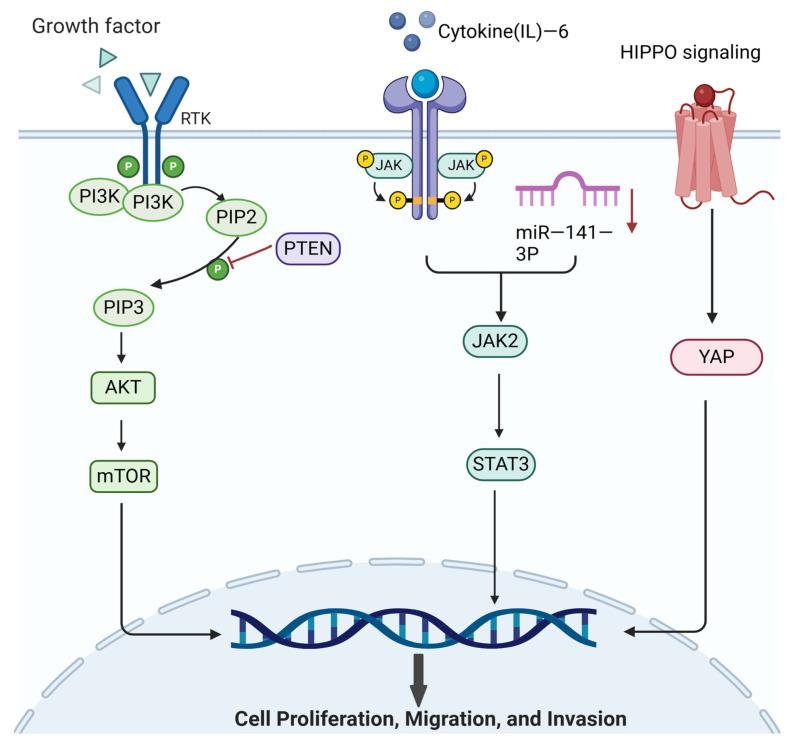
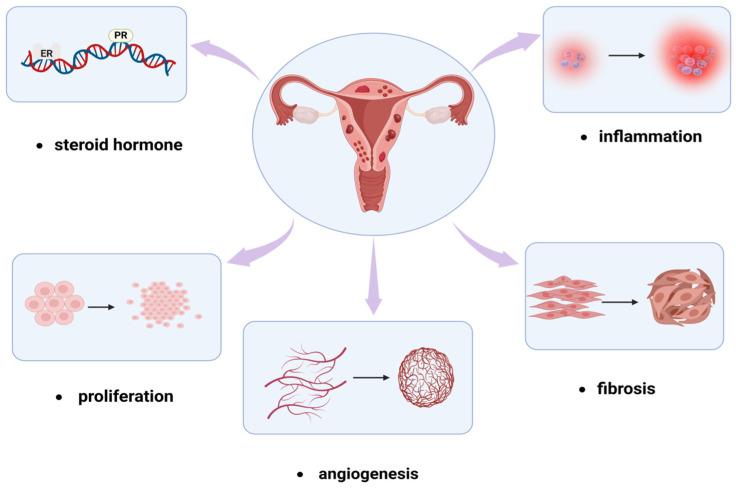
Adenomyosis is a benign gynecological condition characterized by the proliferation of the endometrial stroma and glands into the myometrium, uterine volume enlargement, and peripheral smooth muscle hypertrophy. The typical clinical symptoms include chronic pelvic pain, abnormal uterine bleeding, and subfertility, all of which significantly impact quality of life. There are no effective prevention or treatment strategies for adenomyosis, partly due to a limited understanding of the pathological mechanisms underlying the initiation and progression of the disease. Given that signaling pathways play a crucial role in the development of adenomyosis, a better understanding of these signaling pathways is essential for identifying therapeutic targets and advancing drug development. The occurrence and progression of adenomyosis are closely linked to various underlying pathophysiological mechanisms, including proliferation, migration, invasion, fibrosis, angiogenesis, inflammation, oxidative stress, immune response, and epigenetic changes. This review summarizes the signaling pathways and targets associated with the pathogenesis of adenomyosis, including CXCL/CXCR, NLRP3, NF-κB, TGF-β/smad, VEGF, Hippo/YAP, PI3K/Akt/mTOR, JAK/STAT, and other relevant pathways. In addition, it identifies promising future targets for the development of adenomyosis treatment, such as m6A, GSK3β, sphks, etc.
子宫腺肌病是一种良性妇科疾病,其特征是子宫内膜间质和腺体向子宫肌层增生,子宫体积增大,周围平滑肌肥大。典型的临床症状包括慢性盆腔痛、异常子宫出血和不孕,所有这些都会严重影响生活质量。目前尚无有效的预防或治疗子宫腺肌病的策略,部分原因是对疾病发生和发展的病理机制了解有限。鉴于信号通路在子宫腺肌病的发展中起着至关重要的作用,因此更好地了解这些信号通路对于确定治疗靶点和推进药物研发至关重要。子宫腺肌病的发生和发展与多种潜在的病理生理机制密切相关,包括增殖、迁移、侵袭、纤维化、血管生成、炎症、氧化应激、免疫反应和表观遗传变化。本综述总结了与子宫腺肌病发病机制相关的信号通路和靶点,包括 CXCL/CXCR、NLRP3、NF-κB、TGF-β/smad、VEGF、Hippo/YAP、PI3K/Akt/mTOR、JAK/STAT 等相关通路。此外,还确定了 m6A、GSK3β、sphks 等用于开发子宫腺肌病治疗的有前途的未来靶点。


 Zotero 插件