
特应性皮炎的新兴治疗方法和新载体配方
Emerging Treatments and New Vehicle Formulations for Atopic Dermatitis.
作者信息
Ali Sibel, Ion Ana, Orzan Olguța Anca, Bălăceanu-Gurău Beatrice
机构信息
Faculty of Medicine, "Carol Davila" University of Medicine and Pharmacy, 020021 Bucharest, Romania.
Department of Dermatology, Elias University Emergency Hospital, 011461 Bucharest, Romania.
出版信息
Pharmaceutics. 2024 Nov 7;16(11):1425. doi: 10.3390/pharmaceutics16111425.
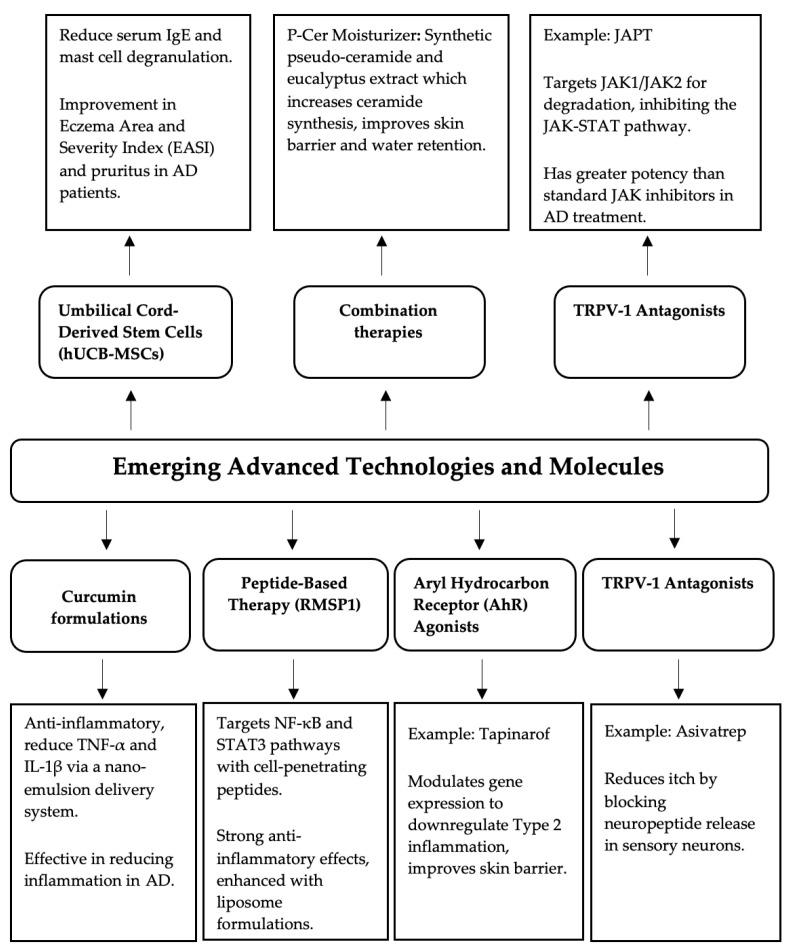
Atopic dermatitis is one of the most common inflammatory skin diseases, with an increasing incidence among both children and adults. The recurrent nature, often with the persistence of symptoms, and the polymorphism of the response to current therapies have led to increased research in the therapeutic area dedicated to this condition. The understanding of pathophysiological pathways has contributed to the development of innovative therapies, including biological therapies, JAK inhibitors, but also emerging technologies like nanotechnology-based drug delivery systems. These innovations promise enhanced efficacy, reduced side effects, and improved patient outcomes. The ongoing exploration of novel vehicles, formulations, and natural biopolymers, along with cutting-edge therapeutic agents like tapinarof and mesenchymal stem cells, highlights the potential for an even more precise and personalized management of AD in the future. Despite these advances, challenges persist, particularly in ensuring the long-term safety, accessibility, and broader application of these therapies, necessitating continued research and development.
特应性皮炎是最常见的炎症性皮肤病之一,在儿童和成人中的发病率均呈上升趋势。其复发特性(症状常持续存在)以及对当前疗法反应的多态性,促使了针对该病症治疗领域的研究不断增加。对病理生理途径的理解推动了创新疗法的发展,包括生物疗法、JAK抑制剂,还有基于纳米技术的药物递送系统等新兴技术。这些创新有望提高疗效、减少副作用并改善患者预后。对新型载体、制剂和天然生物聚合物的持续探索,以及如他扎罗汀和间充质干细胞等前沿治疗药物,凸显了未来对特应性皮炎进行更精准和个性化管理的潜力。尽管取得了这些进展,但挑战依然存在,尤其是在确保这些疗法的长期安全性、可及性和更广泛应用方面,这需要持续的研发。


 Zotero 插件