
宝藿苷 B 和没食子酸丙酯联合干预减轻 BHT 诱导的 HepG2 细胞毒性:调控细胞凋亡和自噬。
Dual intervention of Boeravinone B and Chebulinic Acid mitigates BHT-Induced toxicity in HepG2 cells: modulating apoptosis and autophagy.
机构信息
Department of Biotechnology, Shivaji University, Kolhapur, 416004, MS, India.
Department of Biochemistry, Shivaji University, Kolhapur, 416004, MS, India.
出版信息
Sci Rep. 2024 Nov 28;14(1):29595. doi: 10.1038/s41598-024-81203-6.
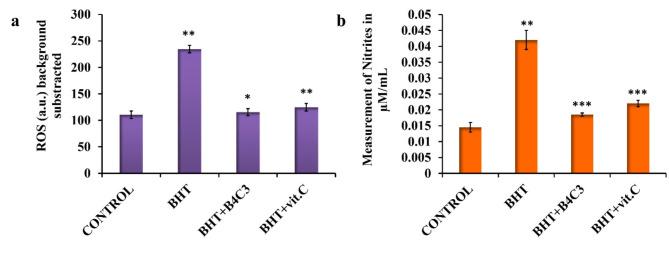
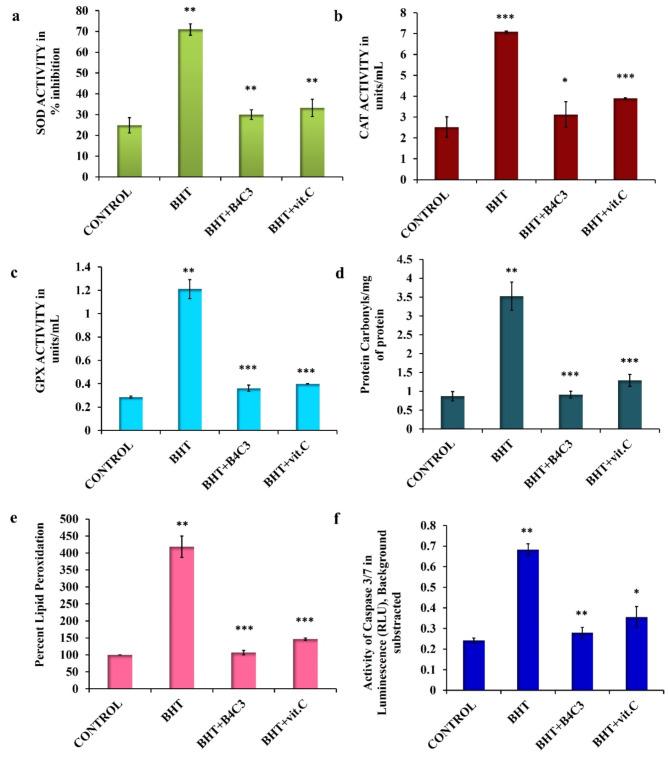
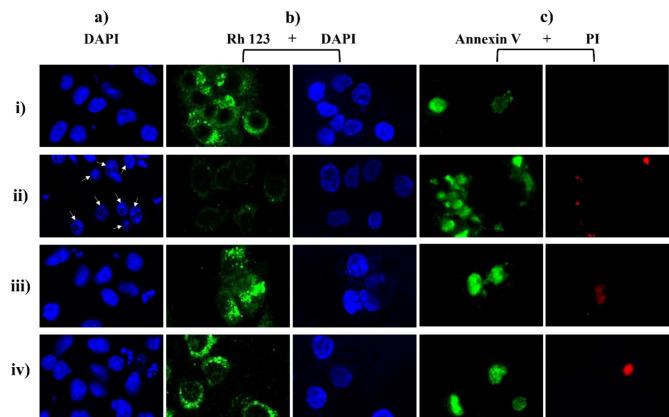
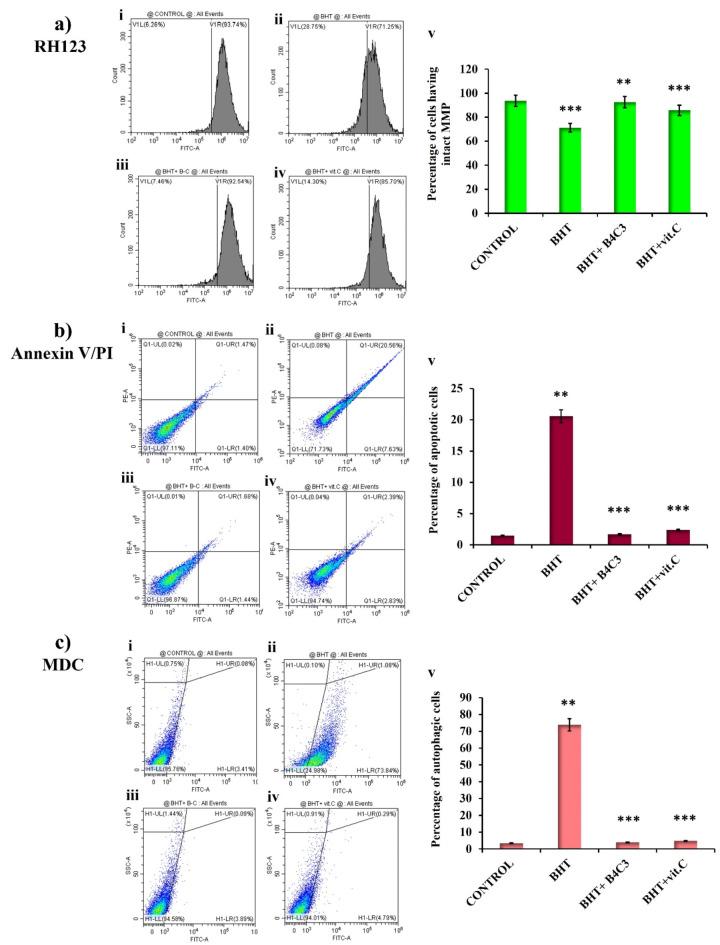
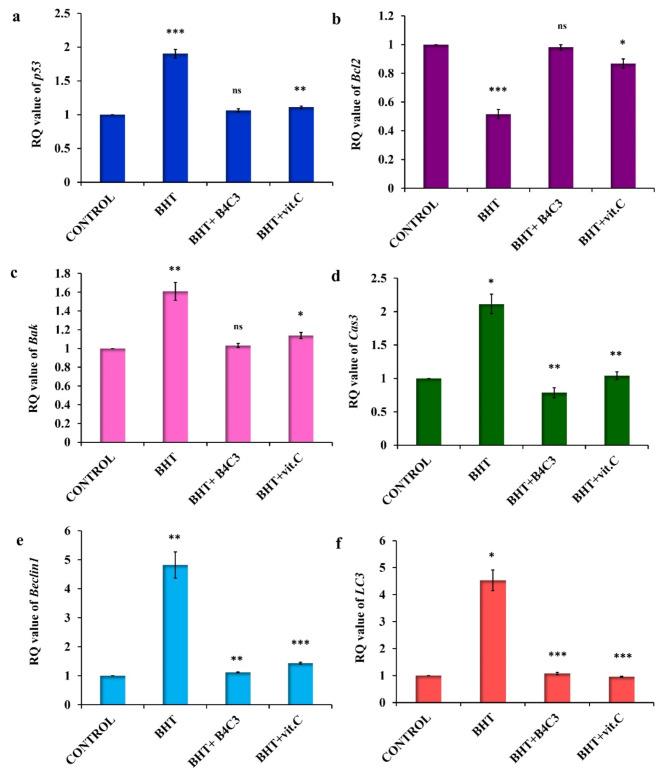
Butylated Hydroxytoluene (BHT) is found to exert cellular toxicity through induction of oxidative stress although being used as antioxidant in many food products. This study investigates the protective effects of two herbal compounds Boeravinone B (BB) and Chebulinic acid (CA) in combination (B4C3 i.e. BB 4 µg/mL and CA 3 µg/mL). Key findings revealed that BHT exerted toxicity through induction of ROS (234.47 a.u.) and RNS (0.042 µM/mL), but B4C3 has significantly reduced it (115.46 a.u. and 0.018 µM/mL respecctively). BHT exposure raised the activities of antioxidant enzymes such as SOD (70.9%), CAT (7.08 units/mL), GPX (1.21 units/mL), levels of protein carbonyls (3.52 units/mg) and lipid peroxides (418.34%). Whereas treatment with B4C3 decreased the levels of SOD (29.92%), CAT (3.12 units/mL), GPX (0.36 units/mL), protein carbonyls (0.91 units/mg of protein) and lipid peroxides (106.67%) during BHT exposure. It was found that 20.56% cells were apoptotic while 73.83% were autophagic during BHT treatment. However, proposed phytotherapy rescued the cells from apoptotic and autophagic death and supported cell growth which was confirmed by RT-PCR and growth analysis. Collectively, B4C3 offered a significant protection against BHT-induced cellular damage, suggesting its potential as therapeutic agents for oxidative stress-related hepatotoxicity.
丁羟甲苯(BHT)虽然在许多食品中被用作抗氧化剂,但它被发现通过诱导氧化应激发挥细胞毒性。本研究调查了两种草药化合物博莱酮 B(BB)和齐墩果酸(CA)联合(B4C3,即 BB 4μg/mL 和 CA 3μg/mL)的保护作用。主要发现表明,BHT 通过诱导 ROS(234.47 a.u.)和 RNS(0.042 μM/mL)产生毒性,但 B4C3 显著降低了其毒性(分别为 115.46 a.u.和 0.018 μM/mL)。BHT 暴露会提高抗氧化酶的活性,如 SOD(70.9%)、CAT(7.08 单位/mL)、GPX(1.21 单位/mL)、蛋白质羰基(3.52 单位/mg)和脂质过氧化物(418.34%)的水平。然而,用 B4C3 处理会降低 SOD(29.92%)、CAT(3.12 单位/mL)、GPX(0.36 单位/mL)、蛋白质羰基(0.91 单位/mg 蛋白质)和脂质过氧化物(106.67%)的水平在 BHT 暴露期间。研究发现,20.56%的细胞发生凋亡,而 73.83%的细胞发生自噬。然而,所提出的植物疗法挽救了细胞免受凋亡和自噬死亡的影响,并支持细胞生长,这通过 RT-PCR 和生长分析得到了证实。总的来说,B4C3 对 BHT 诱导的细胞损伤提供了显著的保护作用,表明其作为治疗氧化应激相关肝毒性的潜在药物。

 Zotero 插件