
寻找“X”因素:探究原发性卵巢功能不全的遗传学。
Searching for the 'X' factor: investigating the genetics of primary ovarian insufficiency.
机构信息
Department of Physiology, Temerty Faculty of Medicine, University of Toronto, Toronto, Canada.
Lunenfeld-Tanenbaum Research Institute, Sinai Health System, 25 Orde Street, Room 6-1016-1, Toronto, ON, M5T 3H7, Canada.
出版信息
J Ovarian Res. 2024 Nov 28;17(1):238. doi: 10.1186/s13048-024-01555-5.
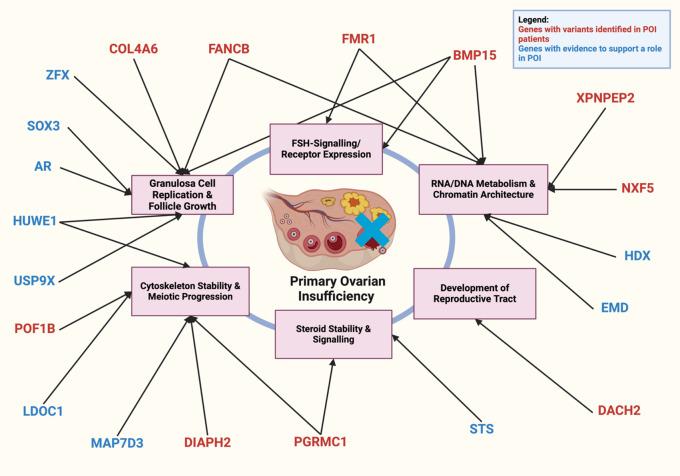
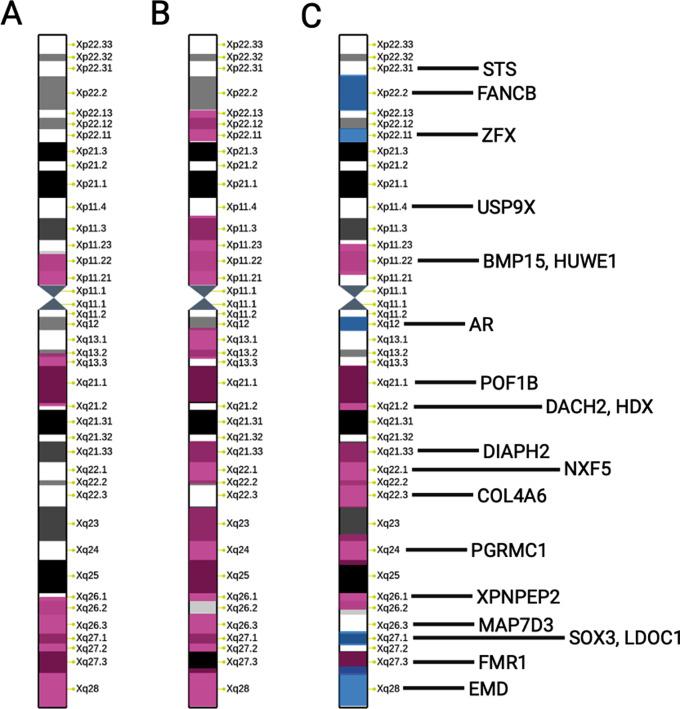
Primary ovarian insufficiency (POI) is the cessation of ovarian function before the age of 40. The causes of POI are heterogeneous, but substantial evidence exists to support a genetic basis of POI, particularly in the critical involvement of genes on the X chromosome. Recent studies have revealed novel candidate genes through the identification of copy number variations associated with POI. This review summarizes the genes located on the X chromosome with variants shown to be associated with POI in humans and/or in mice. Additionally, we present evidence to support the potential involvement of these candidate genes in the etiology of POI. We conducted a literature search in PubMed to identify case studies and screenings for the genetic causes of POI. We then performed systematic searches for the proposed candidate genes to investigate their potential reproductive roles. Of the X-linked candidate genes investigated, 10 were found to have variants associated with cases of POI in humans. An additional 10 genes were found to play a supportive role in POI. Other genes were not implicated in any cases of POI but were associated with various roles in reproduction. In the majority of cases where variants were identified through whole-exome sequencing, rather than targeted screening of candidate genes, more than one genetic variant was identified. Overall, this review supports past findings that the X chromosome plays a critical role in ovarian function, as demonstrated by a link between POI and various disruptions to genes on the X chromosome. Current genetic screening for POI, which includes only FMR1, is inadequate to capture the majority of cases with a genetic origin. An expanded genetic testing may improve health outcomes for individuals with POI as it could lead to better early interventions and education about these health risks.
原发性卵巢功能不全(POI)是指 40 岁以前卵巢功能停止。POI 的病因具有异质性,但大量证据支持 POI 的遗传基础,特别是 X 染色体上基因的重要作用。最近的研究通过鉴定与 POI 相关的拷贝数变异,揭示了新的候选基因。本综述总结了位于 X 染色体上的基因,这些基因的变异与人类和/或小鼠的 POI 相关。此外,我们还提供了证据支持这些候选基因可能参与 POI 的病因。我们在 PubMed 中进行了文献检索,以确定与 POI 遗传原因相关的病例研究和筛查。然后,我们系统地搜索了提出的候选基因,以研究它们在生殖中的潜在作用。在所研究的 X 连锁候选基因中,有 10 个基因的变异与人类 POI 病例相关。另外 10 个基因被发现对 POI 具有支持作用。其他基因与任何 POI 病例无关,但与生殖的各种作用有关。在通过全外显子组测序而不是针对候选基因的靶向筛查确定变异的大多数情况下,鉴定出了不止一个遗传变异。总的来说,这篇综述支持了过去的发现,即 X 染色体在卵巢功能中起着关键作用,POI 与 X 染色体上各种基因的破坏之间存在联系。目前针对 POI 的遗传筛查仅包括 FMR1,不足以捕获大多数具有遗传起源的病例。扩大遗传检测可能会改善 POI 患者的健康结果,因为它可以导致更好的早期干预和对这些健康风险的教育。
 Zotero 插件