
肠道微生物群在心力衰竭的发生和进展中的作用:对表观遗传机制和衰老的认识。
The role of the gut microbiota in the onset and progression of heart failure: insights into epigenetic mechanisms and aging.
机构信息
Clinic of Laboratory and Precision Medicine, IRCCS INRCA, 60127, Ancona, Italy.
Advanced Technology Center for Aging Research, IRCCS INRCA, 60121, Ancona, Italy.
出版信息
Clin Epigenetics. 2024 Nov 29;16(1):175. doi: 10.1186/s13148-024-01786-9.
BACKGROUND
The gut microbiota (GM) plays a critical role in regulating human physiology, with dysbiosis linked to various diseases, including heart failure (HF). HF is a complex syndrome with a significant global health impact, as its incidence doubles with each decade of life, and its prevalence peaks in individuals over 80 years. A bidirectional interaction exists between GM and HF, where alterations in gut health can worsen the disease's progression.
MAIN BODY
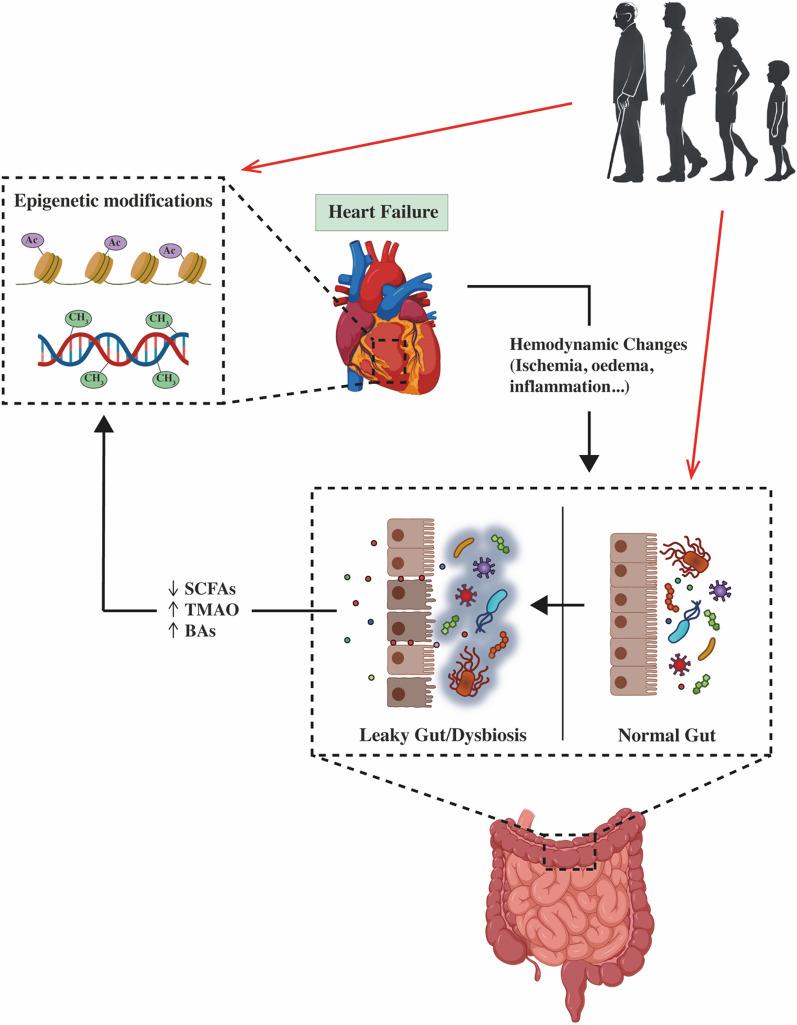
The "gut hypothesis of HF" suggests that HF-induced changes, such as reduced intestinal perfusion and altered gut motility, negatively impact GM composition, leading to increased intestinal permeability, the release of GM-derived metabolites into the bloodstream, and systemic inflammation. This process creates a vicious cycle that further deteriorates heart function. GM-derived metabolites, including trimethylamine N-oxide (TMAO), short-chain fatty acids (SCFAs), and secondary bile acids (BAs), can influence gene expression through epigenetic mechanisms, such as DNA methylation and histone modifications. These epigenetic changes may play a crucial role in mediating the effects of dysbiotic gut microbial metabolites, linking them to altered cardiac health and contributing to the progression of HF. This process is particularly relevant in older individuals, as the aging process itself has been associated with both dysbiosis and cumulative epigenetic alterations, intensifying the interplay between GM, epigenetic changes, and HF, and further increasing the risk of HF in the elderly.
CONCLUSION
Despite the growing body of evidence, the complex interplay between GM, epigenetic modifications, and HF remains poorly understood. The dynamic nature of epigenetics and GM, shaped by various factors such as age, diet, and lifestyle, presents significant challenges in elucidating the precise mechanisms underlying this complex relationship. Future research should prioritize innovative approaches to overcome these limitations. By identifying specific metabolite-induced epigenetic modifications and modulating the composition and function of GM, novel and personalized therapeutic strategies for the prevention and/or treatment of HF can be developed. Moreover, targeted research focusing specifically on older individuals is crucial for understanding the intricate connections between GM, epigenetics, and HF during aging.
背景
肠道微生物群(GM)在调节人体生理机能方面起着至关重要的作用,其失衡与各种疾病有关,包括心力衰竭(HF)。HF 是一种复杂的综合征,具有重大的全球健康影响,其发病率每十年增加一倍,在 80 岁以上的人群中达到峰值。GM 和 HF 之间存在着双向相互作用,肠道健康的改变会使疾病的进展恶化。
主体
“HF 的肠道假说”表明,HF 引起的变化,如肠道灌注减少和肠道运动改变,会对 GM 组成产生负面影响,导致肠道通透性增加,GM 衍生代谢物释放到血液中,并引发全身炎症。这个过程形成了一个恶性循环,进一步恶化了心脏功能。GM 衍生的代谢物,包括三甲胺 N-氧化物(TMAO)、短链脂肪酸(SCFAs)和次级胆汁酸(BAs),可以通过 DNA 甲基化和组蛋白修饰等表观遗传机制影响基因表达。这些表观遗传变化可能在介导失调的肠道微生物代谢物的影响方面发挥关键作用,将其与心脏健康的改变联系起来,并促进 HF 的进展。这个过程在老年人中尤为相关,因为衰老过程本身与失调和累积的表观遗传改变有关,这加剧了 GM、表观遗传变化和 HF 之间的相互作用,进一步增加了老年人 HF 的风险。
结论
尽管有越来越多的证据,但 GM、表观遗传修饰和 HF 之间的复杂相互作用仍知之甚少。表观遗传学和 GM 的动态性质受到年龄、饮食和生活方式等各种因素的影响,这在阐明这种复杂关系的精确机制方面带来了重大挑战。未来的研究应优先考虑创新方法来克服这些限制。通过识别特定代谢物诱导的表观遗传修饰,并调节 GM 的组成和功能,可以开发出针对 HF 的预防和/或治疗的新的、个性化的治疗策略。此外,专门针对老年人的针对性研究对于了解 GM、表观遗传学和 HF 在衰老过程中的复杂联系至关重要。
 Zotero 插件