
泰国不同地区村民中与猪流感相关的暴露、知识、态度和行为(KAP)的定量调查。
A quantitative survey on exposures, knowledge, attitudes, and practices (KAP) related to swine influenza among villagers in different regions of Thailand.
作者信息
Suwannarong Kanokwan, Thammasutti Kannika, Ponlap Thanomsin, Kanthawee Phitsanuruk, Saengkul Chutarat, Boonyakawee Paisit, Pothita Rungsimun, Phosri Darunee, Anuragudom Supaporn, Changtes Suthutta, Amonsin Alongkorn
机构信息
Center of Excellence for Emerging and Re-emerging Infectious Diseases in Animals, Chulalongkorn University, Bangkok, Thailand.
SUPA71 Co., Ltd, Bangkok, Thailand.
出版信息
BMC Vet Res. 2024 Dec 4;20(1):548. doi: 10.1186/s12917-024-04406-z.
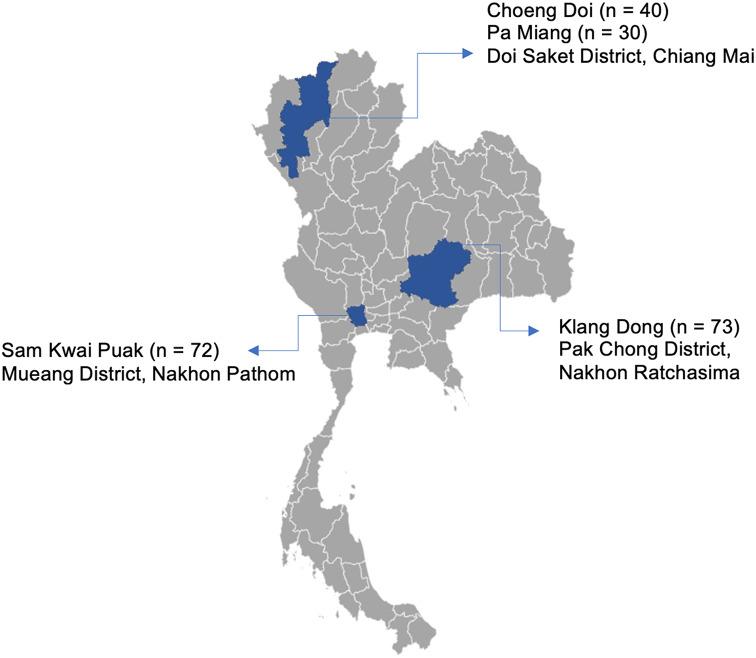
This analytical cross-sectional study aimed to determine factors influencing knowledge, attitudes, and practices (KAP) toward the swine influenza virus (SIV) among pig farm owners, workers, and villagers in selected provinces of Thailand. This study was carried out from February to December 2022 in pig farms and villages across the provinces. A structured and standardized quantitative questionnaire was utilized to collect data on socio-demographic variables and KAP related to SIV from 215 participants. The quantitative data was analyzed in two steps using R software. The study findings showed that the average knowledge score on SIV was 6.92 out of 12, indicating moderate understanding of SIV in study participants. Attitudes towards SIV were generally positive, with an average score of 3.74 out of 5. Practices for SIV prevention averaged a score of 3.63 out of 5. Key factors associated with better SIV knowledge included higher education levels, higher monthly income, and direct involvement in vaccination processes. Moreover, those with higher education, employment on pig farms, and prior vaccination experience showed more positive attitudes towards SIV. Occupations related to pig farming and the availability of vaccination services significantly influenced SIV prevention practices. The findings highlighted that improved education and stronger connections with healthcare professionals and the pig farming sector may significantly enhance KAP regarding SIV among targeted populations. In contrast, participants with limited exposure to health services or pig farming activities, such as nearby villagers, require specialized educational interventions. This study recommends that local health authorities should develop and implement communication strategies and interventions focused on educating pig farm owners, managers, and villagers about SIV to mitigate the risks associated with SIV and other zoonotic diseases.
这项分析性横断面研究旨在确定泰国选定省份的养猪场主、工人和村民对猪流感病毒(SIV)的知识、态度和行为(KAP)的影响因素。本研究于2022年2月至12月在各省份的养猪场和村庄开展。采用结构化和标准化的定量问卷,从215名参与者中收集社会人口统计学变量以及与SIV相关的KAP数据。使用R软件分两步对定量数据进行分析。研究结果显示,SIV的平均知识得分在12分中为6.92分,表明研究参与者对SIV有中等程度的了解。对SIV的态度总体呈积极,平均得分为5分中的3.74分。SIV预防行为的平均得分为5分中的3.63分。与更好的SIV知识相关的关键因素包括更高的教育水平、更高的月收入以及直接参与疫苗接种过程。此外,受过高等教育、在养猪场工作且有过疫苗接种经历的人对SIV表现出更积极的态度。与养猪相关的职业以及疫苗接种服务的可及性显著影响SIV预防行为。研究结果强调,改善教育以及加强与医疗专业人员和养猪行业的联系,可能会显著提高目标人群对SIV的KAP。相比之下,接触卫生服务或养猪活动有限的参与者,如附近的村民,需要专门的教育干预措施。本研究建议,地方卫生当局应制定并实施沟通策略和干预措施,重点是对养猪场主、管理人员和村民进行SIV教育,以降低与SIV和其他人畜共患病相关的风险。
 Zotero 插件