
破解铂族金属催化剂在酸性水分解析氧反应中的稳定性/耐久性问题的关键
Keys to Unravel the Stability/Durability Issues of Platinum-Group-Metal Catalysts toward Oxygen Evolution Reaction for Acidic Water Splitting.
作者信息
Zhou Yangdong, Guo Weijia, Xing Lixin, Dong Zhun, Yang Yunsong, Du Lei, Xie Xiaohong, Ye Siyu
机构信息
Huangpu Hydrogen Energy Innovation Centre/School of Chemistry and Chemical Engineering, Guangzhou University, Waihuanxi Road 230, Guangzhou 510006, P. R. China.
School of Chemistry and Chemical Engineering, Chongqing University, Daxuecheng South Road 55, Chongqing 401331, P. R. China.
出版信息
ACS Cent Sci. 2024 Nov 13;10(11):2006-2015. doi: 10.1021/acscentsci.4c01363. eCollection 2024 Nov 27.
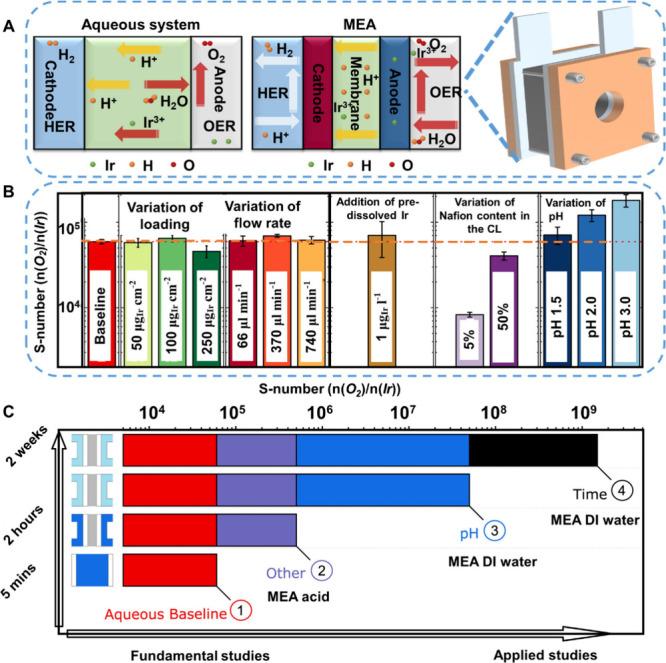
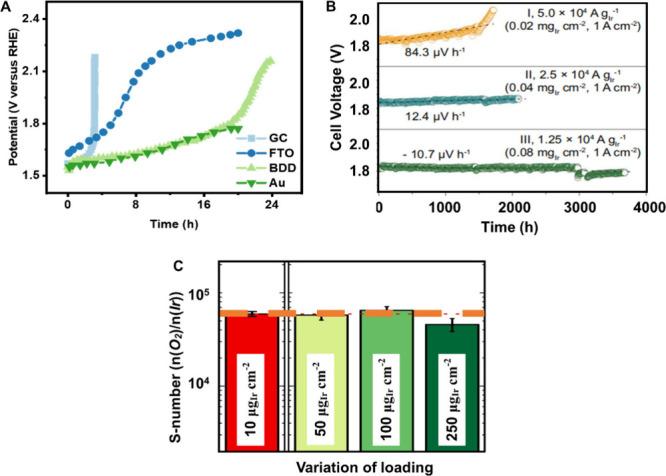
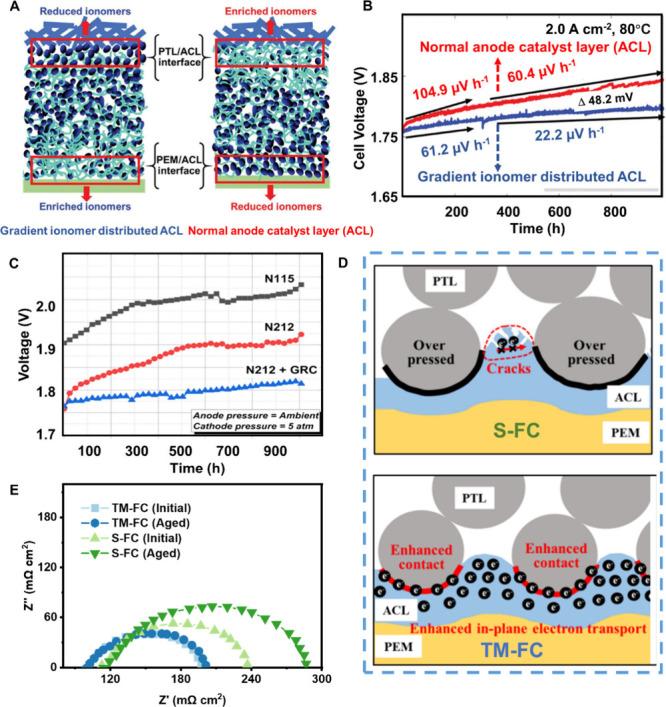
Proton exchange membrane (PEM) water electrolyzers stand as one of the foremost promising avenues for acidic water splitting and green hydrogen production, yet this electrolyzer encounters significant challenges. The primary culprit lies in not only the requirements of substantial platinum-group-metal (PGM)-based electrocatalysts (e.g., IrO ) at the anode where sluggish oxygen evolution reaction (OER) takes place, but also the harsh high overpotential and acidic environments leading to severe performance degradation. The key points for obtaining accurate stability/durability information on the OER catalysts have not been well agreed upon, in contrast to the oxygen reduction reaction fields. In this regard, we herein reviewed and discussed the pivotal experimental variables involved in stability/durability testing (including but not limited to electrolyte, impurity, catalyst loading, and two/three-electrode vs membrane-electrode-assembly), while the test protocols are revisited and summarized. This outlook is aimed at highlighting the reasonable and effective accelerated degradation test procedures to unravel the acidic OER catalyst instability issues and promote the research and development of a PEM water electrolyzer.
质子交换膜(PEM)水电解槽是酸性水分解和绿色制氢最具前景的途径之一,但这种电解槽面临重大挑战。主要原因不仅在于阳极发生缓慢析氧反应(OER)时需要大量基于铂族金属(PGM)的电催化剂(如IrO ),还在于苛刻的高过电位和酸性环境导致性能严重下降。与氧还原反应领域相比,获取关于OER催化剂准确稳定性/耐久性信息的关键点尚未得到很好的共识。在这方面,我们在此回顾并讨论了稳定性/耐久性测试中涉及的关键实验变量(包括但不限于电解质、杂质、催化剂负载量以及两电极/三电极与膜电极组件),同时重新审视并总结了测试方案。这一展望旨在突出合理有效的加速降解测试程序,以解决酸性OER催化剂的不稳定性问题,并推动PEM水电解槽的研发。

 Zotero 插件