
X染色体失活特异性转录本:一种在人类疾病性别差异中具有复杂作用的长链非编码RNA。
X-inactive-specific transcript: a long noncoding RNA with a complex role in sex differences in human disease.
作者信息
Predescu Dan N, Mokhlesi Babak, Predescu Sanda A
机构信息
Department of Internal Medicine, Pulmonary, Critical Care, and Sleep Medicine, Rush University Medical Center, Chicago, IL, 60612, USA.
出版信息
Biol Sex Differ. 2024 Dec 5;15(1):101. doi: 10.1186/s13293-024-00681-5.
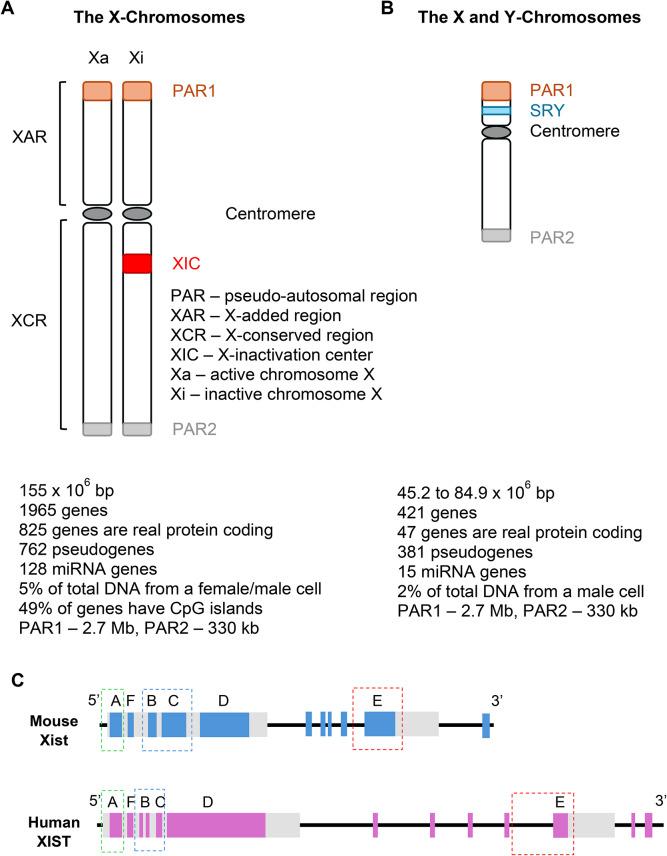
In humans, the X and Y chromosomes determine the biological sex, XX specifying for females and XY for males. The long noncoding RNA X-inactive specific transcript (lncRNA XIST) plays a crucial role in the process of X chromosome inactivation (XCI) in cells of the female, a process that ensures the balanced expression of X-linked genes between sexes. Initially, it was believed that XIST can be expressed only from the inactive X chromosome (Xi) and is considered a typically female-specific transcript. However, accumulating evidence suggests that XIST can be detected in male cells as well, and it participates in the development of cancers and other human diseases by regulating gene expression at epigenetic, chromatin remodeling, transcriptional, and translational levels. XIST is abnormally expressed in many sexually dimorphic diseases, including autoimmune and neurological diseases, pulmonary arterial hypertension (PAH), and some types of cancers. However, the underlying mechanisms are not fully understood. Escape from XCI and skewed XCI also contributes to sex-biased diseases and their severity. Interestingly, in humans, similar to experimental animal models of human disease, the males with the XIST gene activated display the sex-biased disease condition at a rate close to females, and significantly greater than males who had not been genetically modified. For instance, the men with supernumerary X chromosomes, such as men with Klinefelter syndrome (47, XXY), are predisposed toward autoimmunity similar to females (46, XX), and have increased risk for strongly female biased diseases, compared to 46, XY males. Interestingly, chromosome X content has been linked to a longer life span, and the presence of two chromosome X contributes to increased longevity regardless of the hormonal status. In this review, we summarize recent knowledge about XIST structure/function correlation and involvement in human disease with focus on XIST abnormal expression in males. Many human diseases show differences between males and females in penetrance, presentation, progression, and survival. In humans, the X and Y sex chromosomes determine the biological sex, XX specifying for females and XY for males. This numeric imbalance, two X chromosomes in females and only one in males, known as sex chromosome dosage inequality, is corrected in the first days of embryonic development by inactivating one of the X chromosomes in females. While this "dosage compensation" should in theory solve the difference in the number of genes between sexes, the expressed doses of X genes are incompletely compensated by X chromosome inactivation in females. In this review we try to highlight how abnormal expression and function of XIST, a gene on the X chromosome responsible for this inactivation process, may explain the sex differences in human health and disease. A better understanding of the molecular mechanisms of XIST participation in the male-female differences in disease is highly relevant since it would allow for improving the personalization of diagnosis and sex-specific treatment of patients.
在人类中,X和Y染色体决定生物性别,XX代表女性,XY代表男性。长链非编码RNA X染色体失活特异性转录本(lncRNA XIST)在女性细胞的X染色体失活(XCI)过程中起关键作用,该过程可确保两性之间X连锁基因的平衡表达。最初,人们认为XIST只能从不活跃的X染色体(Xi)表达,被视为典型的女性特异性转录本。然而,越来越多的证据表明,XIST在男性细胞中也能被检测到,并且它通过在表观遗传、染色质重塑、转录和翻译水平上调节基因表达,参与癌症和其他人类疾病的发生发展。XIST在许多性二态性疾病中异常表达,包括自身免疫性疾病、神经疾病、肺动脉高压(PAH)和某些类型的癌症。然而,其潜在机制尚未完全了解。XCI逃逸和XCI偏斜也会导致性别偏向性疾病及其严重程度。有趣的是,在人类中,与人类疾病的实验动物模型类似,XIST基因被激活的男性出现性别偏向性疾病的几率与女性相近,且显著高于未经过基因改造的男性。例如,拥有额外X染色体的男性,如患有克兰费尔特综合征(47, XXY)的男性,与女性(46, XX)一样易患自身免疫性疾病,与46, XY男性相比,患女性偏向性强的疾病的风险增加。有趣的是,X染色体含量与更长的寿命有关,无论激素状态如何,两条X染色体的存在都有助于延长寿命。在本综述中,我们总结了关于XIST结构/功能相关性及其参与人类疾病的最新知识,重点关注男性中XIST的异常表达。许多人类疾病在发病率、表现、进展和存活率方面存在性别差异。在人类中,X和Y性染色体决定生物性别,XX代表女性,XY代表男性。这种数量上的不平衡,即女性有两条X染色体而男性只有一条,被称为性染色体剂量不平等,在胚胎发育的最初几天通过使女性的一条X染色体失活来纠正。虽然这种“剂量补偿”理论上应该解决两性之间基因数量的差异,但女性中X基因的表达剂量并未通过X染色体失活得到完全补偿。在本综述中,我们试图强调负责这种失活过程的X染色体上的基因XIST的异常表达和功能,可能如何解释人类健康和疾病中的性别差异。更好地理解XIST参与疾病中男女差异的分子机制具有高度相关性,因为这将有助于改善患者诊断的个性化和针对性别进行的治疗。
 Zotero 插件