
精密设计的PROTACs可将癌症治疗中的非组织效应降至最低。
Precision-engineered PROTACs minimize off-tissue effects in cancer therapy.
作者信息
Shi Jianghua, Wang Luo, Zeng Xuanwei, Xie Chengzhi, Meng Zhaowei, Campbell Anahit, Wang Lulu, Fan Heli, Sun Huabing
机构信息
National Engineering and Technology Research Center of Chirality Pharmaceutical, Lunan Pharmaceutical Group Co., Ltd., Linyi, China.
State Key Laboratory of Experimental Hematology, Tianjin Key Laboratory on Technologies Enabling Development of Clinical Therapeutics and Diagnostics, The School of Pharmacy, Tianjin Medical University, Tianjin, China.
出版信息
Front Mol Biosci. 2024 Nov 22;11:1505255. doi: 10.3389/fmolb.2024.1505255. eCollection 2024.
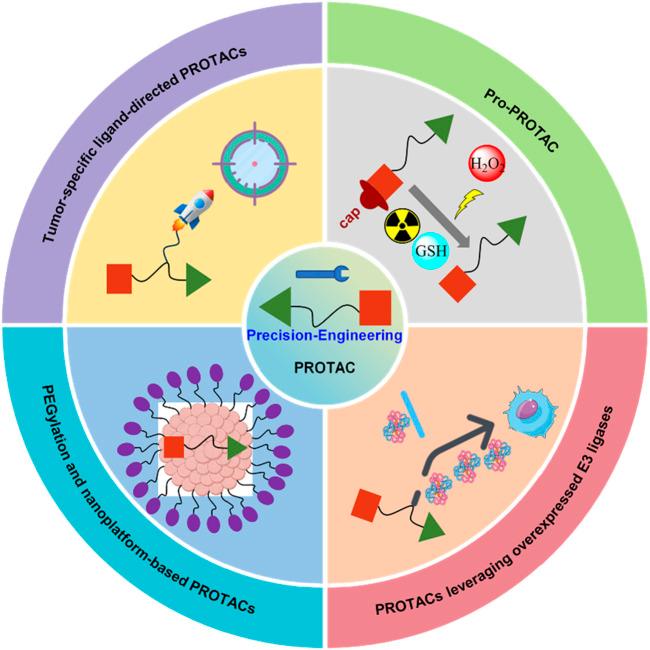
Proteolysis-targeting chimeras (PROTACs) offer a groundbreaking approach to selectively degrade disease-related proteins by utilizing the ubiquitin-proteasome system. While this strategy shows great potential in preclinical and clinical settings, off-tissue effects remain a major challenge, leading to toxicity in healthy tissues. This review explores recent advancements aimed at improving PROTAC specificity, including tumor-specific ligand-directed PROTACs, pro-PROTACs activated in tumor environments, and E3 ligase overexpression strategies. Innovations such as PEGylation and nanotechnology also play a role in optimizing PROTAC efficacy. These developments hold promise for safer, more effective cancer therapies, though challenges remain for clinical translation.
蛋白酶靶向嵌合体(PROTACs)提供了一种开创性的方法,即通过利用泛素-蛋白酶体系统来选择性降解与疾病相关的蛋白质。虽然这一策略在临床前和临床环境中显示出巨大潜力,但组织外效应仍然是一个主要挑战,会导致健康组织产生毒性。本综述探讨了旨在提高PROTAC特异性的最新进展,包括肿瘤特异性配体导向的PROTACs、在肿瘤环境中激活的前体PROTACs以及E3连接酶过表达策略。聚乙二醇化和纳米技术等创新也在优化PROTAC疗效方面发挥作用。这些进展有望实现更安全、更有效的癌症治疗,不过临床转化仍面临挑战。




 Zotero 插件