
miR-210介导胰腺导管腺癌中的缺氧反应。
miR-210 Mediated Hypoxic Responses in Pancreatic Ductal Adenocarcinoma.
作者信息
Mortoglou Maria, Lian Mutian, Miralles Francesc, Dart D Alwyn, Uysal-Onganer Pinar
机构信息
Cancer Mechanisms and Biomarkers Research Group, School of Life Sciences, University of Westminster, London W1W 6UW, U.K.
School of Health and Medical Sciences, City St George's, University of London, Cranmer Terrace, London SW17 0RE, U.K.
出版信息
ACS Omega. 2024 Nov 20;9(48):47872-47883. doi: 10.1021/acsomega.4c08947. eCollection 2024 Dec 3.
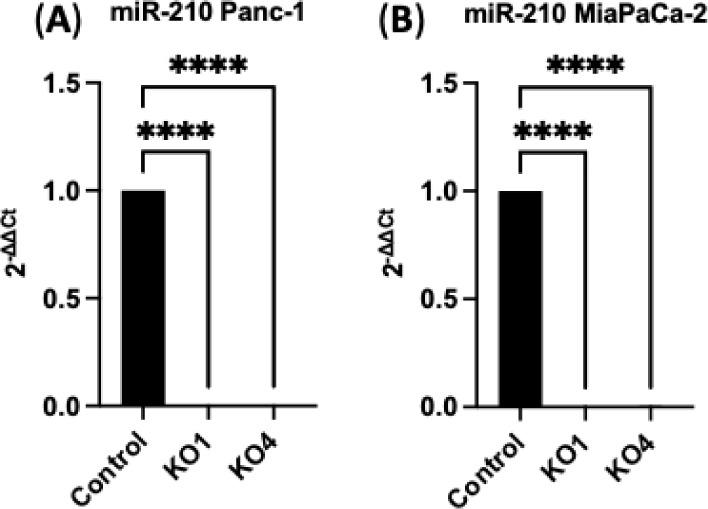
Pancreatic ductal adenocarcinoma (PDAC) is one among the most lethal malignancies due to its aggressive behavior and resistance to conventional therapies. Hypoxia significantly contributes to cancer progression and therapeutic resistance of PDAC. microRNAs (miRNAs/miRs) have emerged as critical regulators of various biological processes. miR-210 is known as the "hypoxamir" due to its prominent role in cellular responses to hypoxia. In this study, we investigated the multifaceted role of miR-210 in PDAC using miR-210 knockout (KO) cellular models to elucidate its functions under hypoxic conditions. Hypoxia-inducible factor-1α (HIF1-α), a key transcription factor activated in response to low oxygen levels, upregulates miR-210. miR-210 maintains cancer stem cell (CSC) phenotypes and promotes epithelial-mesenchymal transition (EMT), which is essential for tumor initiation, metastasis, and therapeutic resistance. Our findings demonstrate that miR-210 regulates the expression of CSC markers, such as CD24, CD44, and CD133, and EMT markers, including E-cadherin, Vimentin, and Snail. Specifically, depletion of miR-210 reversed EMT and CSC marker expression levels in hypoxic Panc-1 and MiaPaCa-2 PDAC cells. These regulatory actions facilitate a more invasive and treatment-resistant PDAC phenotype. Understanding the regulatory network involving miR-210 under hypoxic conditions may reveal new therapeutic targets for combating PDAC and improving patient outcomes. Our data suggest that miR-210 is a critical regulator of HIF1-α expression, EMT, and the stemness of PDAC cells in hypoxic environments.
胰腺导管腺癌(PDAC)因其侵袭性和对传统疗法的耐药性,是最致命的恶性肿瘤之一。缺氧显著促进了PDAC的癌症进展和治疗耐药性。微小RNA(miRNA/miR)已成为各种生物学过程的关键调节因子。miR-210因其在细胞对缺氧反应中的突出作用而被称为“缺氧微RNA”。在本研究中,我们使用miR-210基因敲除(KO)细胞模型研究了miR-210在PDAC中的多方面作用,以阐明其在缺氧条件下的功能。缺氧诱导因子-1α(HIF1-α)是一种在低氧水平下被激活的关键转录因子,可上调miR-210。miR-210维持癌症干细胞(CSC)表型并促进上皮-间质转化(EMT),这对肿瘤起始、转移和治疗耐药性至关重要。我们的研究结果表明,miR-210调节CSC标志物(如CD24、CD44和CD133)以及EMT标志物(包括E-钙黏蛋白、波形蛋白和蜗牛蛋白)的表达。具体而言,miR-210的缺失逆转了缺氧的Panc-1和MiaPaCa-2 PDAC细胞中的EMT和CSC标志物表达水平。这些调节作用促进了更具侵袭性和抗治疗性的PDAC表型。了解缺氧条件下涉及miR-210的调控网络可能会揭示对抗PDAC和改善患者预后的新治疗靶点。我们的数据表明,miR-210是缺氧环境中HIF1-α表达、EMT和PDAC细胞干性的关键调节因子。




 Zotero 插件