
用于去除药物污染物的层状双氢氧化物/石墨烯和层状双氢氧化物/石墨相氮化碳的电子性质与吸附性能:分子动力学模拟
The Electronic Properties and Adsorption Performance of LDH/Graphene, and LDH/g-CN for the Removal of Pharmaceutical Contaminants: A Molecular Dynamics Simulation.
作者信息
Ibrahim Qusai, Gharbia Salem
机构信息
School of Engineering and Design, Atlantic Technological University, Ash Lane, F91 YW50 Sligo, Ireland.
出版信息
Int J Mol Sci. 2024 Nov 27;25(23):12730. doi: 10.3390/ijms252312730.
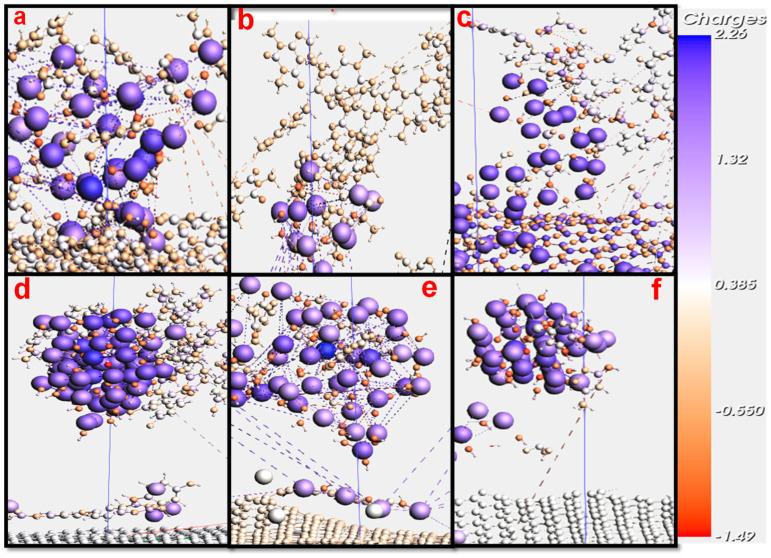
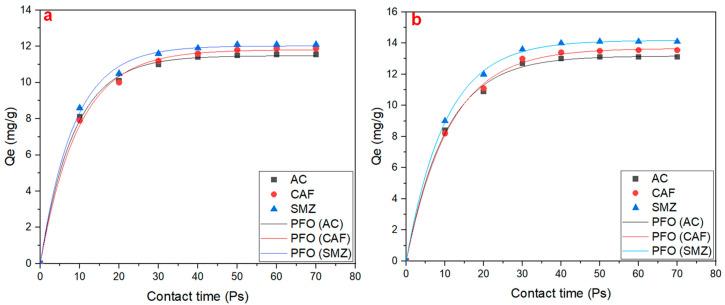
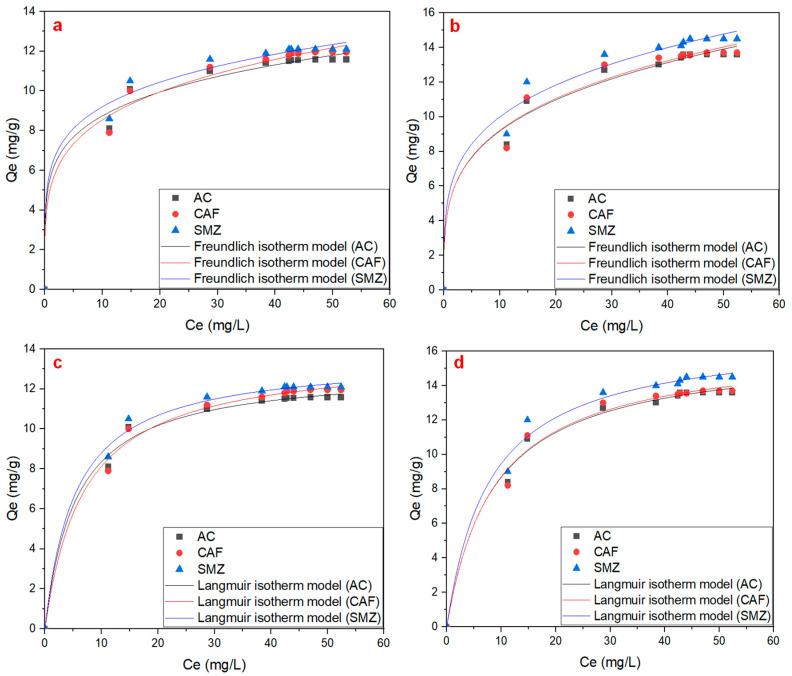
Water shortages and pharmaceutical pollution are two interconnected crises that pose severe threats to global health, environmental sustainability, and economic stability. Pharmaceutical pollution is widespread and has reached potentially toxic levels in over 258 rivers in 104 countries. So far, more interest has been paid towards efficient water treatment processes in recent years. In this study, we explore the efficacy of layered double hydroxide (LDH) nanocomposites with graphene and graphitic carbon nitride (g-CN) as promising adsorbents of pharmaceutical contaminants. The LDH nanocomposite has been designed and simulated for the first time, consisting of two layers of sodium hydroxide with a layer of graphene and g-CN. We investigated the adsorption performance of LDH, specifically LDH/graphene and LDH/g-CN, for the removal of pharmaceutical contaminants including acetaminophen (AC), caffeine (CAF), and sulfamethoxazole (SMZ). Through comprehensive molecular dynamics simulations using the reactive forcefield (ReaxFF) software, we investigated the adsorption mechanisms, kinetics, and adsorption capacity of pharmaceutical contaminants onto these nanocomposite surfaces. Our findings showed that the combination of LDH/graphene had a higher adsorption capacity for the removal of pharmaceutical contaminants than LDH/g-CN. At 70 Picoseconds (Ps), 124, 129, and 142 molecules of each of the pharmaceutical contaminants AC, CAF and SMZ, respectively, had been adsorbed by LDH/graphene, with a higher exothermic energy equating to -1111, -1015, and -1150 × 10 kJ/mol, respectively. On the other hand, for LDH/g-CN at 70 Ps, 108, 110, and 120 molecules of AC, CAF and SMZ, respectively, had been adsorbed, with exothermic energy equating to -978, -948, and -1173 × 10 kJ/mol, respectively. Finally, we calculated the electronic properties, including the band gap and density of state of the nanocomposite materials, to check their effect on the adsorption process. In addition, the results showed that the adsorption kinetics followed a pseudo-first-order model, while the adsorption isotherms for AC, CAF and SMZ adhered to the Langmuir model.
水资源短缺和药物污染是两个相互关联的危机,对全球健康、环境可持续性和经济稳定构成严重威胁。药物污染十分普遍,在104个国家的258条以上河流中已达到潜在毒性水平。近年来,人们对高效水处理工艺的关注度更高。在本研究中,我们探索了以石墨烯和石墨相氮化碳(g-CN)为药物污染物潜在吸附剂的层状双氢氧化物(LDH)纳米复合材料的效能。首次设计并模拟了LDH纳米复合材料,它由两层氢氧化钠与一层石墨烯和g-CN组成。我们研究了LDH,特别是LDH/石墨烯和LDH/g-CN对包括对乙酰氨基酚(AC)、咖啡因(CAF)和磺胺甲恶唑(SMZ)在内的药物污染物的吸附性能。通过使用反应力场(ReaxFF)软件进行全面的分子动力学模拟,我们研究了药物污染物在这些纳米复合材料表面的吸附机制、动力学和吸附容量。我们的研究结果表明,LDH/石墨烯组合对药物污染物的去除具有比LDH/g-CN更高的吸附容量。在70皮秒(Ps)时,LDH/石墨烯分别吸附了124、129和142个AC、CAF和SMZ药物污染物分子,其更高的放热能量分别相当于-1111、-1015和-1150×10 kJ/mol。另一方面,对于70 Ps时的LDH/g-CN,分别吸附了108、110和120个AC、CAF和SMZ分子,放热能量分别相当于-978,-948和-1173×10 kJ/mol。最后,我们计算了纳米复合材料的电子性质,包括带隙和态密度,以检查它们对吸附过程的影响。此外,结果表明吸附动力学遵循准一级模型,而AC、CAF和SMZ的吸附等温线符合Langmuir模型。



 Zotero 插件