
血清透明质酸在新型冠状病毒肺炎患者中的诊断价值
Diagnostic Usefulness of Serum Hyaluronic Acid in Patients with SARS-CoV-2 Infection.
作者信息
Cylwik Bogdan, Gan Kacper, Kazberuk Marcin, Gruszewska Ewa, Panasiuk Anatol, Chrostek Lech
机构信息
Department of Paediatric Laboratory Diagnostics, Medical University of Bialystok, 15-274 Bialystok, Poland.
Department of Gastroenterology, Hepatology and Internal Diseases, Provincial Welded Hospital, 15-278 Bialystok, Poland.
出版信息
J Clin Med. 2024 Dec 8;13(23):7471. doi: 10.3390/jcm13237471.
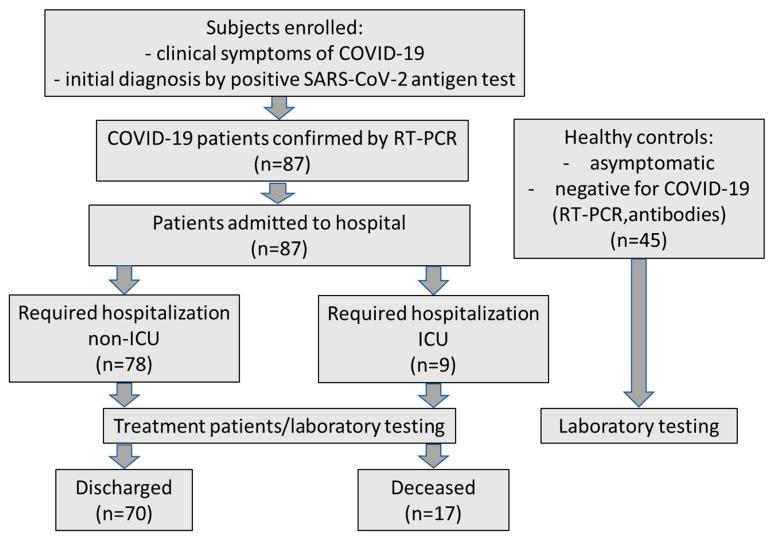
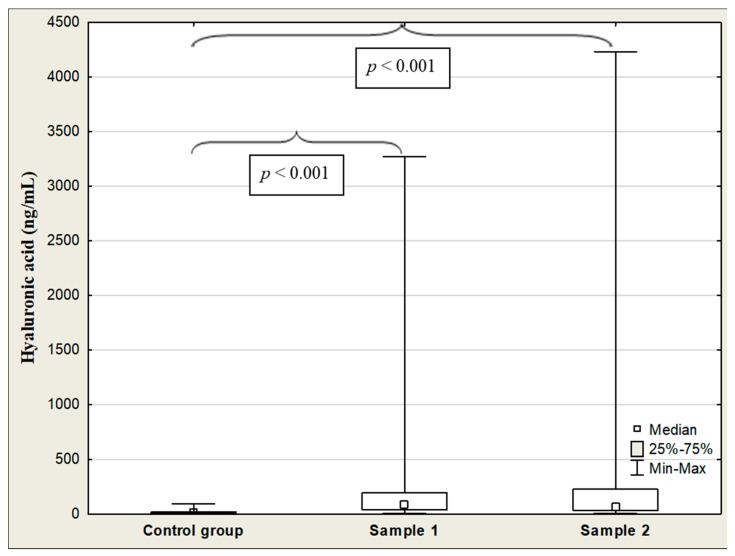
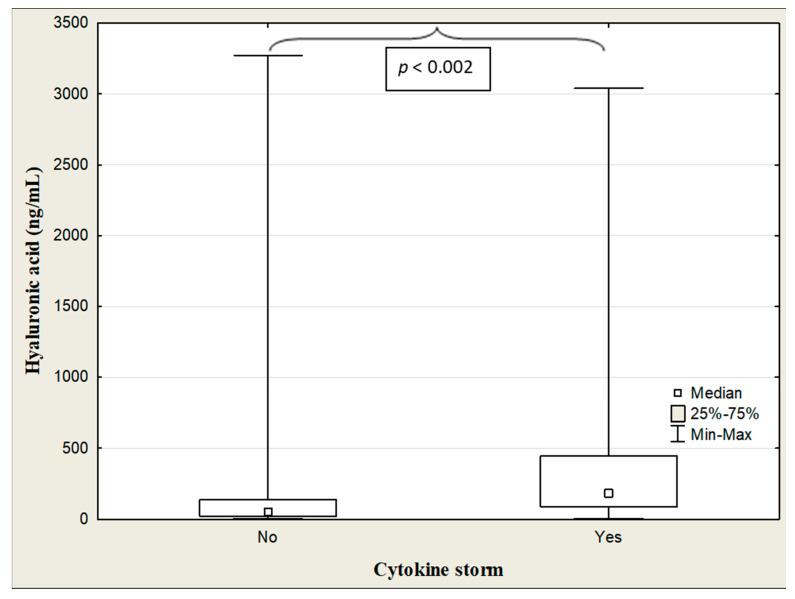
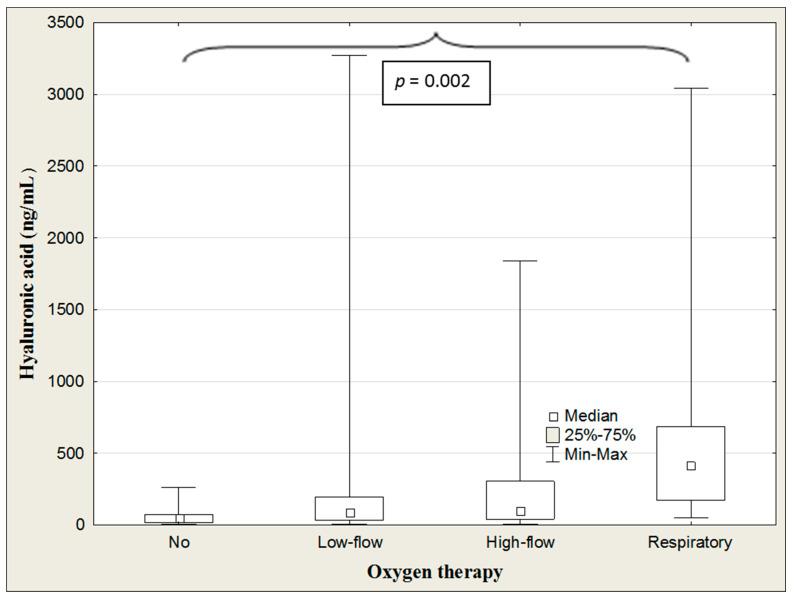
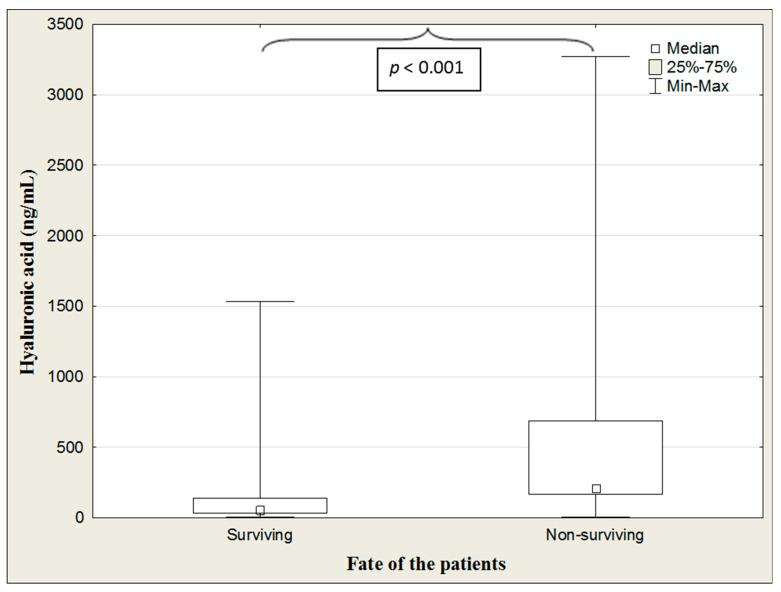
The aim of our study is to comprehensively assess the diagnostic usefulness of serum hyaluronic acid (HA) determination in COVID-19 patients. The study group included 87 patients with COVID-19 disease and 45 healthy subjects. The HA concentration was measured using the immunochemical method. The serum HA concentration was significantly higher in the COVID-19 patients before admission to hospital than that in the controls ( < 0.001). Differences were found in HA levels between the groups categorized according to disease severity ( = 002), being significantly higher in patients with critical as compared to moderate disease severity ( < 0.001). The HA concentration varied depending on the type of oxygen therapy ( = 0.004). It was significantly higher in patients on a ventilator than in those without oxygen therapy ( = 0.002). In patients who qualified for the steroid treatment and immunotherapy, the HA levels were significantly higher compared to those who did not qualify for such therapies ( = 0.043, = 0.049, respectively). The HA levels were significantly higher in patients with cytokine storm compared to those without it ( < 0.001) and were significantly more elevated in non-survivors than in survivors ( < 0.001). HA had an excellent diagnostic power (AUC = 0.994) with sensitivity (83.3%) and specificity (97.8%) in identifying patients with critical disease severity and an excellent diagnostic power (AUC = 0.932) with sensitivity (88.2%) and specificity (95.6%) in identifying non-surviving patients. In summary, the results of our study indicate that HA is closely associated with severe SARS-CoV-2 infection and could be used as a novel serum biomarker to predict the risk of disease progression and as a predictor of COVID-19 mortality.
我们研究的目的是全面评估血清透明质酸(HA)测定在新冠肺炎患者中的诊断效用。研究组包括87例新冠肺炎患者和45名健康受试者。采用免疫化学方法测定HA浓度。新冠肺炎患者入院前血清HA浓度显著高于对照组(<0.001)。根据疾病严重程度分类的各组之间HA水平存在差异(=0.002),与中度疾病严重程度患者相比,危重症患者的HA水平显著更高(<0.001)。HA浓度因氧疗类型而异(=0.004)。使用呼吸机的患者的HA浓度显著高于未接受氧疗的患者(=0.002)。符合类固醇治疗和免疫治疗条件的患者,其HA水平显著高于不符合此类治疗条件的患者(分别为=0.043和=0.049)。与无细胞因子风暴的患者相比,有细胞因子风暴的患者的HA水平显著更高(<0.001),非幸存者的HA水平显著高于幸存者(<0.001)。HA在识别危重症疾病严重程度患者方面具有出色的诊断能力(AUC=0.994),敏感性为83.3%,特异性为9七十二点八%;在识别非存活患者方面具有出色的诊断能力(AUC=0.932),敏感性为88.2%,特异性为95.6%。总之,我们的研究结果表明,HA与严重的SARS-CoV-2感染密切相关,可作为预测疾病进展风险的新型血清生物标志物以及新冠肺炎死亡率的预测指标。



 Zotero 插件