
在果蝇酵母限制型营养不良的情况下,补充必需氨基酸可抑制与年龄相关的睡眠丧失和睡眠片段化,但不会抑制节律强度的丧失。
Supplementation of essential amino acids suppresses age-associated sleep loss and sleep fragmentation but not loss of rhythm strength under yeast-restricted malnutrition in Drosophila.
作者信息
Chikamatsu Sachie, Sakakibara Yasufumi, Takei Kimi, Nishijima Risa, Iijima Koichi M, Sekiya Michiko
机构信息
Department of Neurogenetics, Center for Development of Advanced Medicine for Dementia, National Center for Geriatrics and Gerontology, 7-430 Morioka-cho, Obu, Aichi 474-8511, Japan.
Department of Experimental Gerontology, Graduate School of Pharmaceutical Sciences, Nagoya City University, 3-1 Tanabe-dori, Mizuho-ku, Nagoya, Aichi 467-8603 Japan.
出版信息
J Biochem. 2025 Mar 4;177(3):225-237. doi: 10.1093/jb/mvae090.
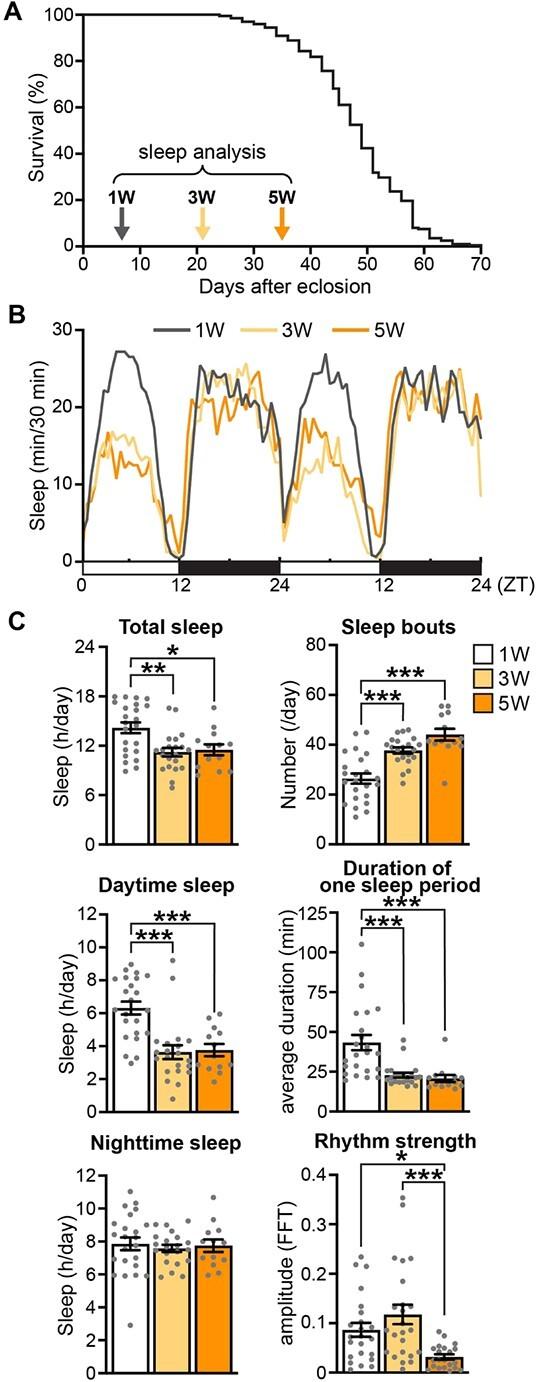
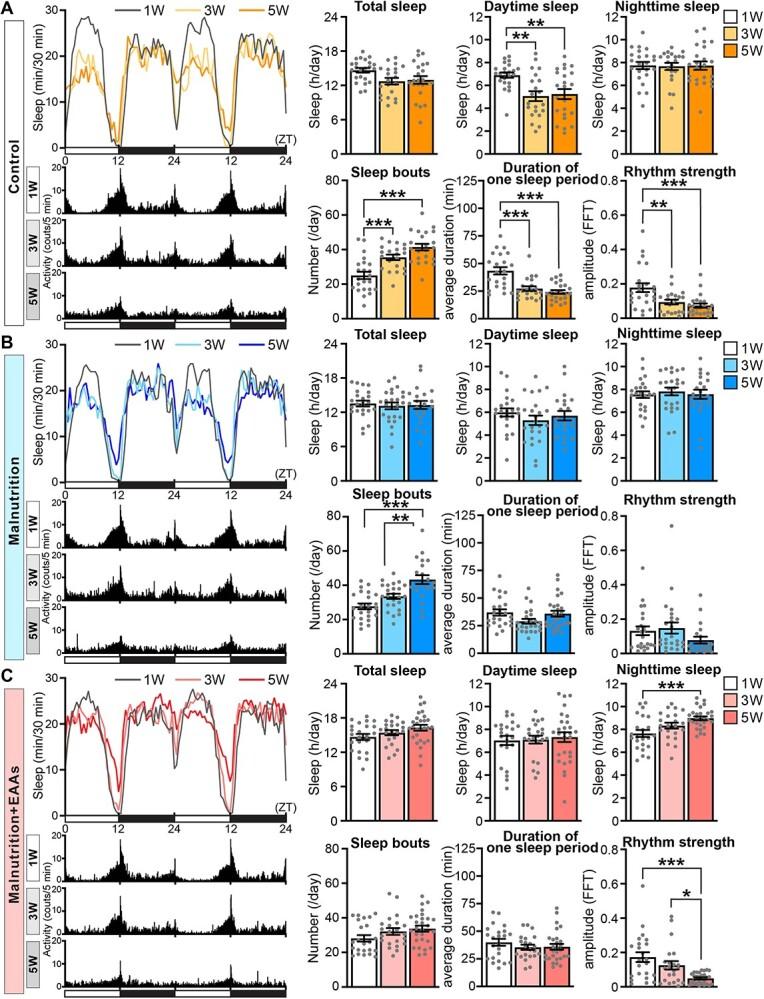
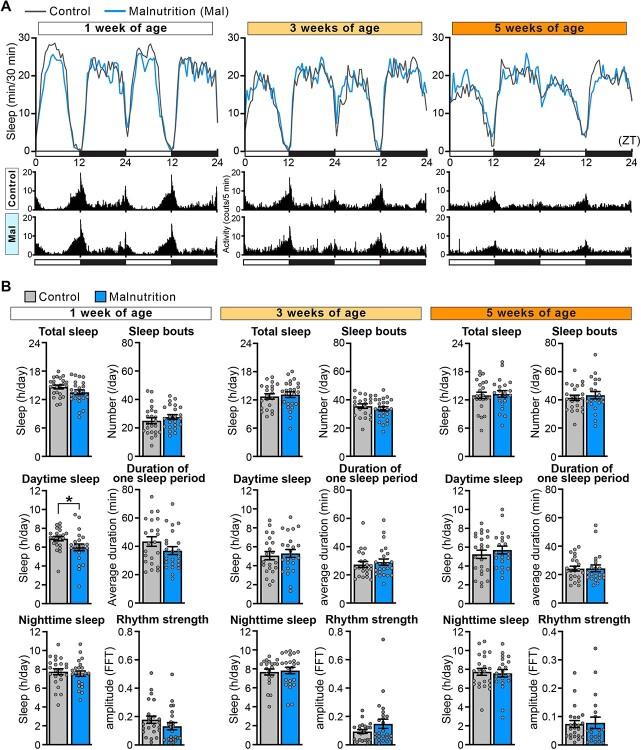
Sleep quality and quantity decrease with age, and sleep disturbance increases the risk of many age-associated diseases. There is a significant relationship between nutritional status and sleep outcomes, with malnutrition inducing poor sleep quality in older adults. However, it remains elusive whether, and if so how, nutritional supplementation prevents age-associated sleep problems. Here, we utilized Drosophila to investigate the effects of a malnutrition diet with restricted yeast, a primary protein source, and supplementation of 10 essential amino acids (EAAs) on sleep profiles during ageing. Compared with the standard diet containing 2.7% yeast, the malnutrition diet containing 0.27% yeast significantly decreased target of rapamycin (TOR) signalling and shortened the lifespan of male Canton-S flies. By contrast, age-associated sleep loss, sleep fragmentation and loss of rhythm strength were similarly observed under both diets. Supplementation of the malnutrition diet with EAAs in restricted yeast significantly ameliorated age-associated sleep loss and sleep fragmentation without altering loss of rhythm strength. It also rescued decreased TOR signalling activity but not the shortened lifespan, suggesting that the effects of EAAs on sleep integrity are independent of TOR activity and lifespan regulation. These results may help to develop dietary interventions that improve age-related sleep problems in humans.
睡眠质量和睡眠时间会随着年龄增长而下降,睡眠障碍会增加许多与年龄相关疾病的风险。营养状况与睡眠结果之间存在显著关系,营养不良会导致老年人睡眠质量差。然而,营养补充是否以及如何预防与年龄相关的睡眠问题仍不清楚。在这里,我们利用果蝇来研究限制酵母(一种主要蛋白质来源)的营养不良饮食以及补充10种必需氨基酸(EAA)对衰老过程中睡眠模式的影响。与含有2.7%酵母的标准饮食相比,含有0.27%酵母的营养不良饮食显著降低了雷帕霉素靶蛋白(TOR)信号传导,并缩短了雄性Canton-S果蝇的寿命。相比之下,在两种饮食条件下均同样观察到与年龄相关的睡眠丧失、睡眠碎片化和节律强度丧失。在限制酵母的情况下,用EAA补充营养不良饮食可显著改善与年龄相关的睡眠丧失和睡眠碎片化,而不会改变节律强度丧失。它还挽救了降低的TOR信号传导活性,但不能挽救缩短的寿命,这表明EAA对睡眠完整性的影响独立于TOR活性和寿命调节。这些结果可能有助于开发改善人类与年龄相关睡眠问题的饮食干预措施。



 Zotero 插件