
基于传统风险因素和循环代谢物的新型2型糖尿病预测评分:两项大型队列研究中的模型推导与验证
Novel type 2 diabetes prediction score based on traditional risk factors and circulating metabolites: model derivation and validation in two large cohort studies.
作者信息
Xie Ruijie, Herder Christian, Sha Sha, Peng Lei, Brenner Hermann, Schöttker Ben
机构信息
Division of Clinical Epidemiology and Aging Research, German Cancer Research Center, Im Neuenheimer Feld 581, Heidelberg, 69120, Germany.
Faculty of Medicine, Heidelberg University, Heidelberg, 69115, Germany.
出版信息
EClinicalMedicine. 2024 Dec 6;79:102971. doi: 10.1016/j.eclinm.2024.102971. eCollection 2025 Jan.
BACKGROUND
We aimed to evaluate the incremental predictive value of metabolomic biomarkers for assessing the 10-year risk of type 2 diabetes when added to the clinical Cambridge Diabetes Risk Score (CDRS).
METHODS
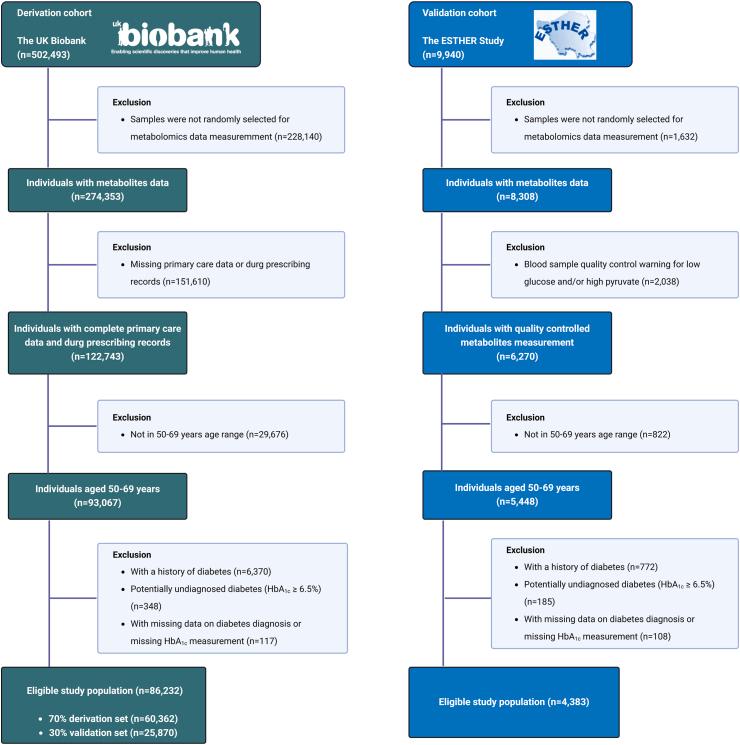
We utilized 86,232 UK Biobank (UKB) participants (recruited between 13 March 2006 and 1 October 2010) for model derivation and internal validation. Additionally, we included 4383 participants from the German ESTHER cohort (recruited between 1 July 2000 and 30 June 2002 for external validation). Participants were followed up for 10 years to assess the incidence of type 2 diabetes. A total of 249 NMR-derived metabolites were quantified using nuclear magnetic resonance (NMR) spectroscopy. Metabolites were selected with LASSO regression and model performance was evaluated with Harrell's C-index.
FINDINGS
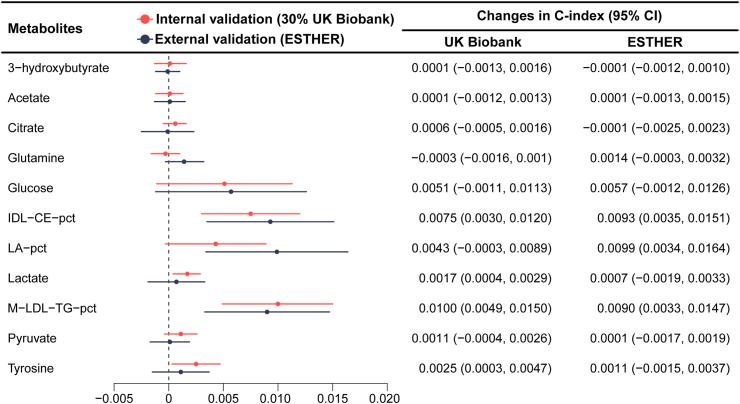
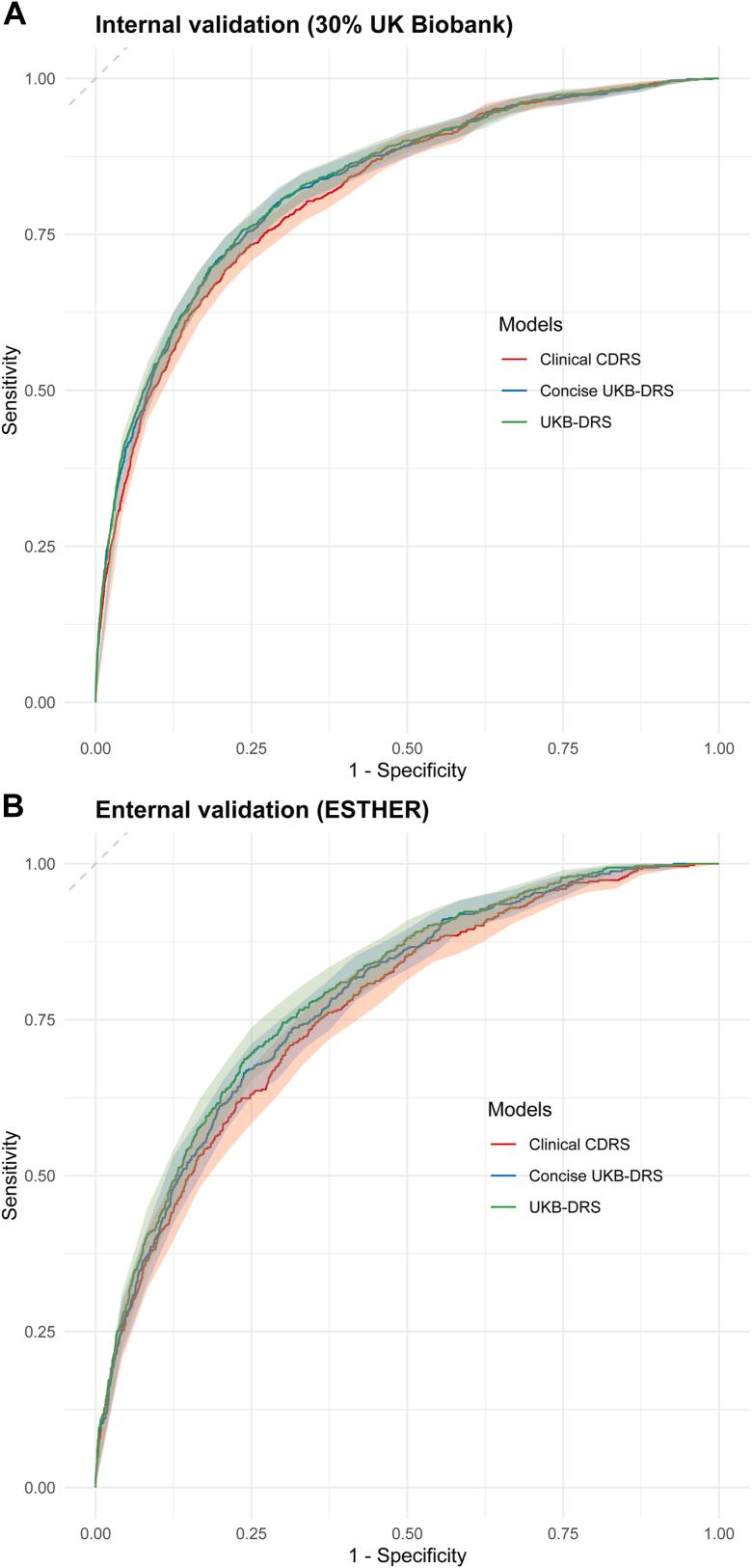
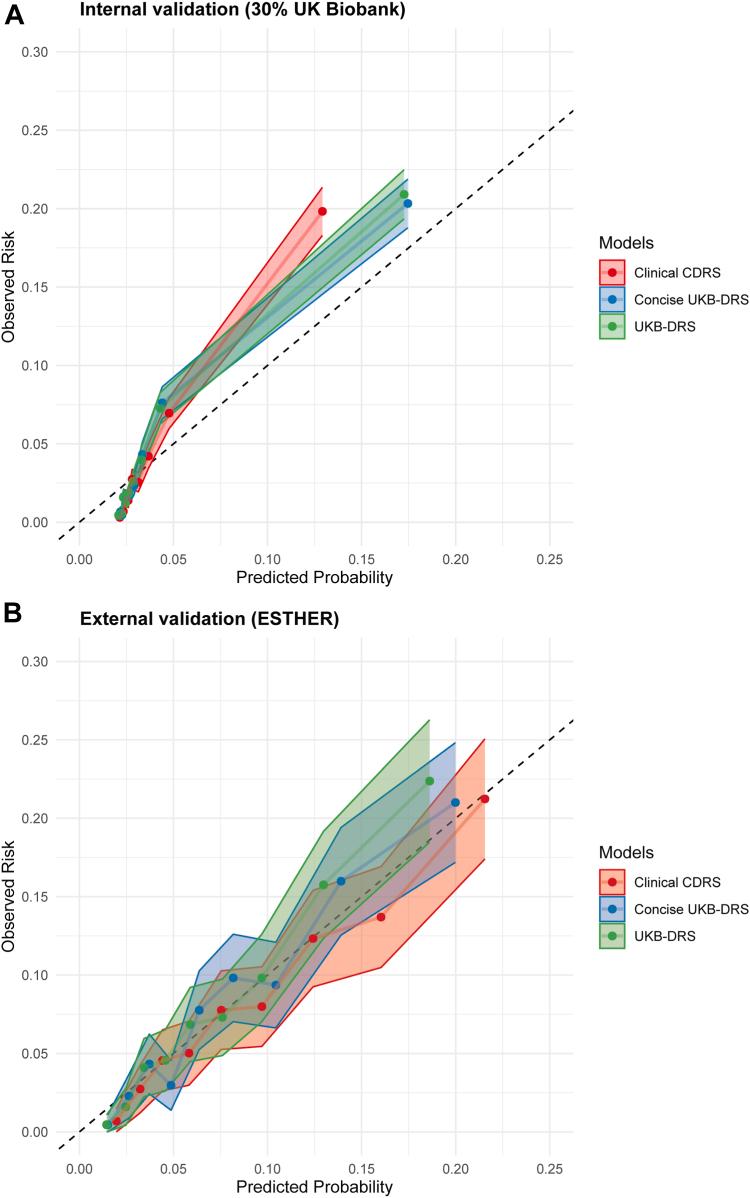
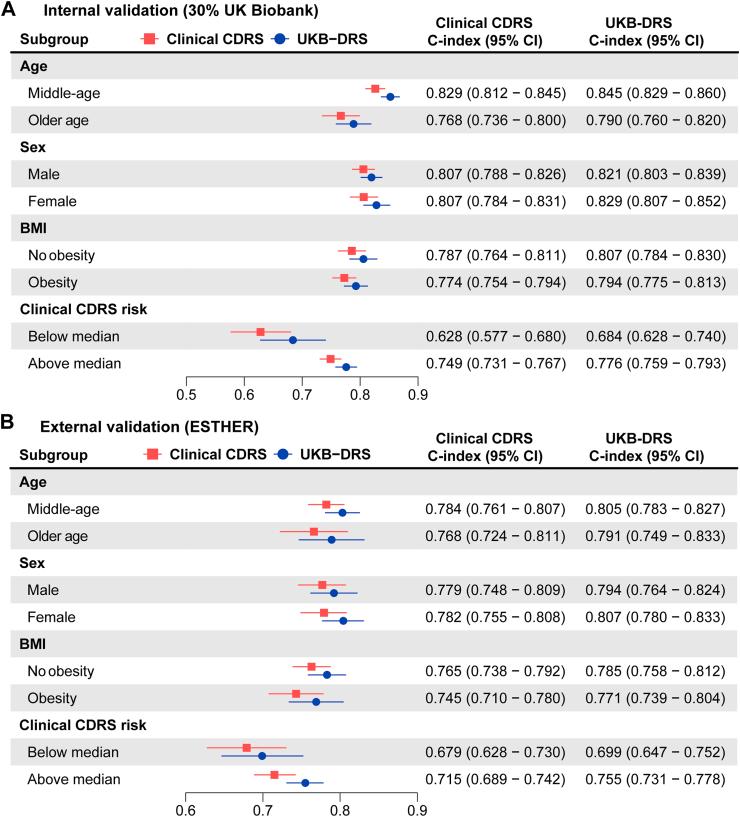
11 metabolomic biomarkers, including glycolysis related metabolites, ketone bodies, amino acids, and lipids, were selected. In internal validation within the UKB, adding these metabolites significantly increased the C-index (95% confidence interval (95% CI)) of the clinical CDRS from 0.815 (0.800, 0.829) to 0.834 (0.820, 0.847) and the continuous net reclassification index (NRI) with 95% CI was 39.8% (34.6%, 45.0%). External validation in the ESTHER cohort showed a comparable statistically significant C-index increase from 0.770 (0.750, 0.791) to 0.798 (0.779, 0.817) and a continuous NRI of 33.8% (26.4%, 41.2%). A concise model with 4 instead of 11 metabolites yielded similar results.
INTERPRETATION
Adding 11 metabolites to the clinical CDRS led to a novel type 2 diabetes prediction model, we called UK Biobank Diabetes Risk Score (UKB-DRS), substantially outperformed the clinical CDRS. The concise version with 4 metabolites performed comparably. As only very few clinical information and a blood sample are needed for the UKB-DRS, and as high-throughput NMR metabolomics are becoming increasingly available at low costs, these models have considerable potential for routine clinical application in diabetes risk assessment.
FUNDING
The ESTHER study was funded by grants from the Baden-Württemberg state Ministry of Science, Research and Arts (Stuttgart, Germany), the Federal Ministry of Education and Research (Berlin, Germany), the Federal Ministry of Family Affairs, Senior Citizens, Women and Youth (Berlin, Germany), and the Saarland State Ministry of Health, Social Affairs, Women and the Family (Saarbrücken, Germany). The UK Biobank project was established through collaboration between various entities including the Wellcome Trust, the Medical Research Council, Department of Health, Scottish Government, and the Northwest Regional Development Agency. Additional funding was provided by the Welsh Assembly Government, British Heart Foundation, Cancer Research UK, and Diabetes UK, with support from the National Health Service (NHS). The German Diabetes Center is funded by the German Federal Ministry of Health (Berlin, Germany) and the Ministry of Culture and Science of the state North Rhine-Westphalia (Düsseldorf, Germany) and receives additional funding from the German Federal Ministry of Education and Research (BMBF) through the German Center for Diabetes Research (DZD e.V.).
背景
我们旨在评估代谢组学生物标志物在加入临床剑桥糖尿病风险评分(CDRS)后,对评估2型糖尿病10年风险的增量预测价值。
方法
我们利用86232名英国生物银行(UKB)参与者(于2006年3月13日至2010年10月1日招募)进行模型推导和内部验证。此外,我们纳入了4383名来自德国埃丝特队列的参与者(于2000年7月1日至2002年6月30日招募)进行外部验证。对参与者进行了10年的随访,以评估2型糖尿病的发病率。使用核磁共振(NMR)光谱法对总共249种NMR衍生代谢物进行了定量分析。通过套索回归选择代谢物,并使用哈雷尔C指数评估模型性能。
研究结果
选择了11种代谢组学生物标志物,包括糖酵解相关代谢物、酮体、氨基酸和脂质。在UKB的内部验证中,加入这些代谢物显著提高了临床CDRS的C指数(95%置信区间(95%CI)),从0.815(0.800,0.829)提高到0.834(0.820,(0.847)),连续净重新分类指数(NRI)及其95%CI为39.8%(34.6%,45.0%)。在埃丝特队列中的外部验证显示,C指数有类似的统计学显著提高,从0.770(0.750,0.791)提高到0.798(0.779,0.817),连续NRI为33.8%(26.4%,41.2%)。一个包含4种而非11种代谢物的简化模型产生了类似的结果。
解读
在临床CDRS中加入11种代谢物产生了一种新型的2型糖尿病预测模型,我们称之为英国生物银行糖尿病风险评分(UKB-DRS),其表现明显优于临床CDRS。包含4种代谢物的简化版本表现相当。由于UKB-DRS只需要极少的临床信息和一份血样,并且随着高通量NMR代谢组学成本越来越低且越来越容易获得,这些模型在糖尿病风险评估的常规临床应用中具有相当大的潜力。
资金来源
埃丝特研究由德国巴登-符腾堡州科学、研究与艺术部(德国斯图加特)、德国联邦教育与研究部(德国柏林)、德国联邦家庭事务、老年公民、妇女与青年部(德国柏林)以及德国萨尔兰州卫生、社会事务、妇女与家庭部(德国萨尔布吕肯)提供的赠款资助。英国生物银行项目是通过包括惠康信托基金会、医学研究理事会、卫生部、苏格兰政府和西北区域发展局在内的多个实体之间的合作建立的。威尔士议会政府、英国心脏基金会、英国癌症研究中心和英国糖尿病协会提供了额外资金,并得到了国民健康服务体系(NHS)的支持。德国糖尿病中心由德国联邦卫生部(德国柏林)和北莱茵-威斯特法伦州文化与科学部(德国杜塞尔多夫)资助,并通过德国糖尿病研究中心(DZD股份有限公司)从德国联邦教育与研究部(BMBF)获得额外资金。

 Zotero 插件