
多层蛋白质组分析显示类风湿性滑膜腔对血浆蛋白具有高通透性。
Multitiered Proteome Analysis Displays the Hyperpermeability of the Rheumatoid Synovial Compartment for Plasma Proteins.
作者信息
Stork Eva Maria, Kalaidopoulou Nteak Sofia, van Rijswijck Danique M H, Damen J Mirjam A, Scherer Hans Ulrich, Toes Rene E M, Bondt Albert, Huizinga Tom W J, Heck Albert J R
机构信息
Department of Rheumatology, Leiden University Medical Center, Leiden, The Netherlands.
Biomolecular Mass Spectrometry and Proteomics, Bijvoet Center for Biomolecular Research and Utrecht Institute for Pharmaceutical Sciences, University of Utrecht, Utrecht The Netherlands; Netherlands Proteomics Center, Utrecht, The Netherlands.
出版信息
Mol Cell Proteomics. 2025 Feb;24(2):100900. doi: 10.1016/j.mcpro.2024.100900. Epub 2024 Dec 31.
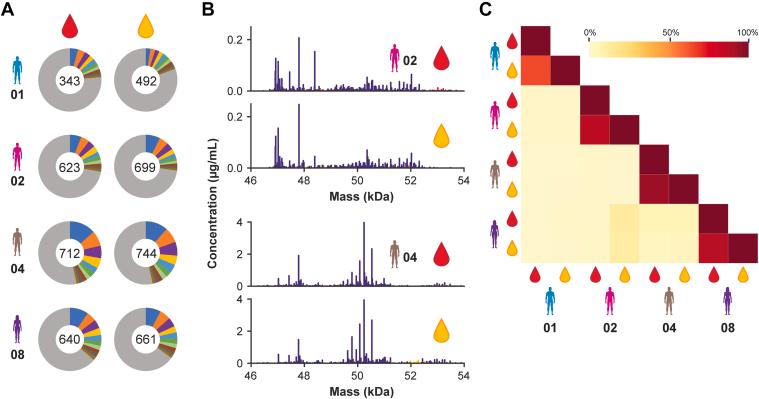
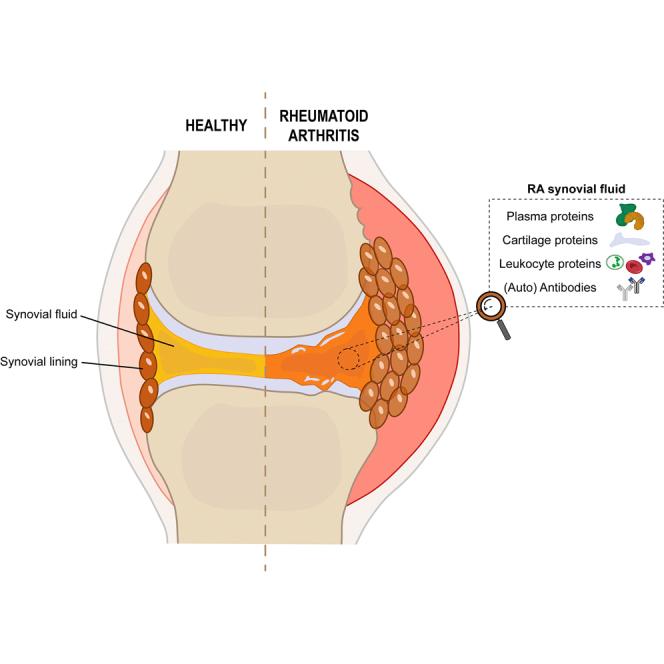
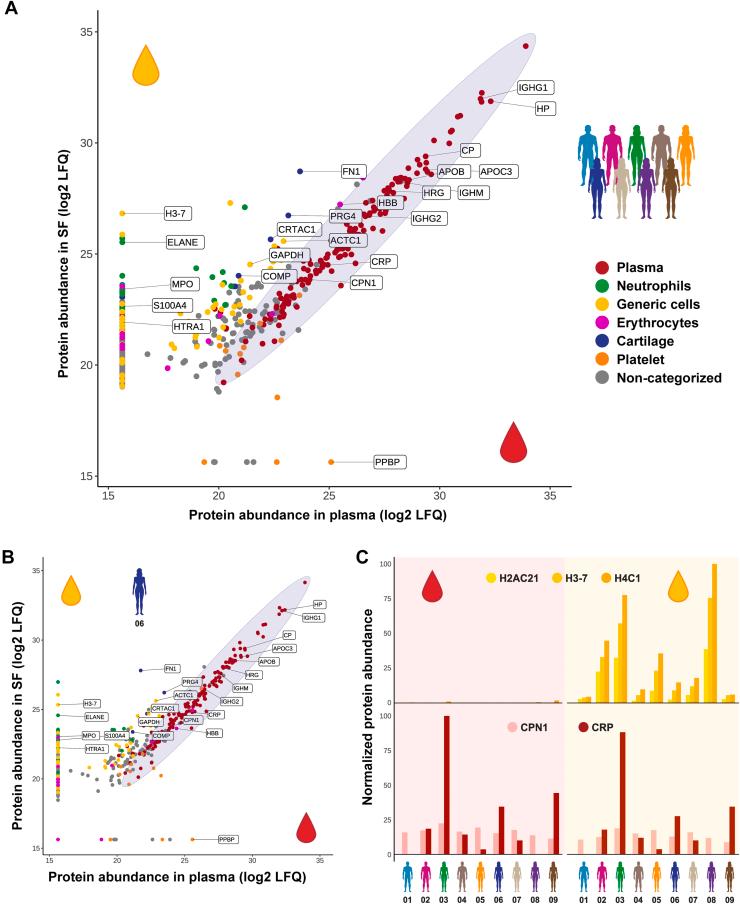
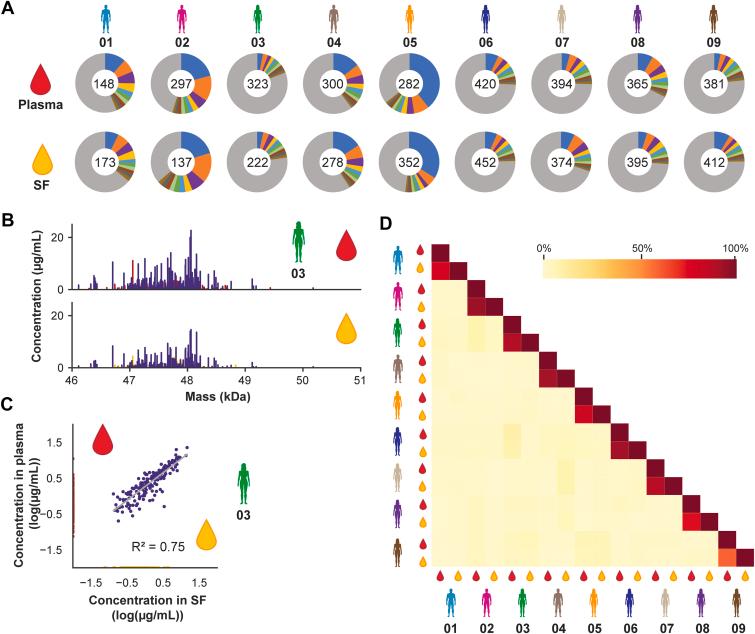
Rheumatoid arthritis (RA) is characterized by synovial hyperplasia and cartilage/bone destruction. RA affects the synovial joints, the synovial lining, and the permeability of the synovium. As the latter is of central relevance for the distribution of systemically delivered therapeutics into synovial fluid (SF), we here assessed the protein composition of paired plasma and SF of patients diagnosed with RA at three distinct levels of depth using mass spectrometric approaches: the "total" proteome, the "total" immunoglobulin G1 (IgG1) antibody repertoire, and the RA-specific anticitrullinated protein IgG1 autoantibody repertoire. The SF proteome was found to be dominated in numbers and concentration by plasma proteins, although we additionally detected several cartilage- and neutrophil-derived proteins of lower abundance. Strikingly, the plasma proteins were not only qualitatively reflected in SF but also quantitatively, independent of their size and/or other biochemical features. Also, the synovial "total" IgG1 and autoreactive anticitrullinated protein antibody IgG1 repertoire highly resembled the IgG1 repertoires detected in plasma within the same patient. Our comprehensive multilayer data thus reveals that the proteome, including the dominant, most abundant (auto)antibody clones, present in SF of RA patients is a direct reflection of the proteome present in blood, spiked by the local (immune) processes within the RA joint. We thus conclude that proteins directly pass from blood into SF of these joints without substantial bias. These findings thereby not only exemplify the use of in-depth multilayer proteome analyses to revisit basic concepts underlying RA pathology and to monitor the local (immune) processes destructive to cartilage but also provide evidence indicating that (protein-based) therapeutics may equally enter SF of swollen joints and that pharmacokinetic analyses of such therapeutics in blood are directly relevant to the synovial compartment.
类风湿性关节炎(RA)的特征是滑膜增生以及软骨/骨破坏。RA会影响滑膜关节、滑膜衬里以及滑膜的通透性。由于滑膜通透性对于全身给药的治疗药物进入滑液(SF)的分布至关重要,我们在此使用质谱方法在三个不同深度水平评估了被诊断为RA的患者配对血浆和SF的蛋白质组成:“总”蛋白质组、“总”免疫球蛋白G1(IgG1)抗体库以及RA特异性抗瓜氨酸化蛋白IgG1自身抗体库。尽管我们还检测到了几种丰度较低的软骨和中性粒细胞衍生蛋白,但发现SF蛋白质组在数量和浓度上以血浆蛋白为主。引人注目的是,血浆蛋白不仅在质量上反映在SF中,而且在数量上也如此,与它们的大小和/或其他生化特征无关。此外,滑膜“总”IgG1和自身反应性抗瓜氨酸化蛋白抗体IgG1库与同一患者血浆中检测到的IgG1库高度相似。因此,我们全面的多层数据表明,RA患者SF中存在的蛋白质组,包括占主导地位、最丰富的(自身)抗体克隆,是血液中存在的蛋白质组的直接反映,并受到RA关节内局部(免疫)过程的影响。我们因此得出结论,蛋白质直接从血液进入这些关节的SF,没有明显偏差。这些发现不仅例证了使用深入的多层蛋白质组分析来重新审视RA病理学的基本概念以及监测对软骨具有破坏性的局部(免疫)过程,还提供了证据表明(基于蛋白质的)治疗药物可能同样进入肿胀关节的SF,并且此类治疗药物在血液中的药代动力学分析与滑膜腔直接相关。


 Zotero 插件