
循环抵抗素水平和RETN基因变异的突变负担可预测台湾人群的长期死亡率。
Circulating resistin levels and mutation burden of the RETN gene variants predict long-term mortality in a Taiwanese population.
作者信息
Hsu Lung-An, Teng Ming-Sheng, Wu Semon, Liao Mei-Siou, Chou Hsin-Hua, Ko Yu-Lin
机构信息
The First Cardiovascular Division, Department of Internal Medicine, Chang Gung Memorial Hospital and Chang Gung University College of Medicine, Taoyuan, Taiwan.
Department of Research, Taipei Tzu Chi Hospital, Buddhist Tzu Chi Medical Foundation, New Taipei City, Taiwan.
出版信息
Sci Rep. 2025 Jan 2;15(1):564. doi: 10.1038/s41598-024-84142-4.
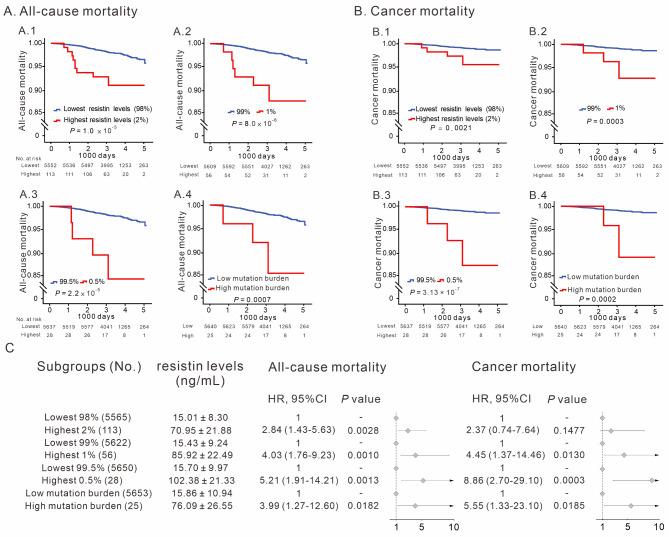
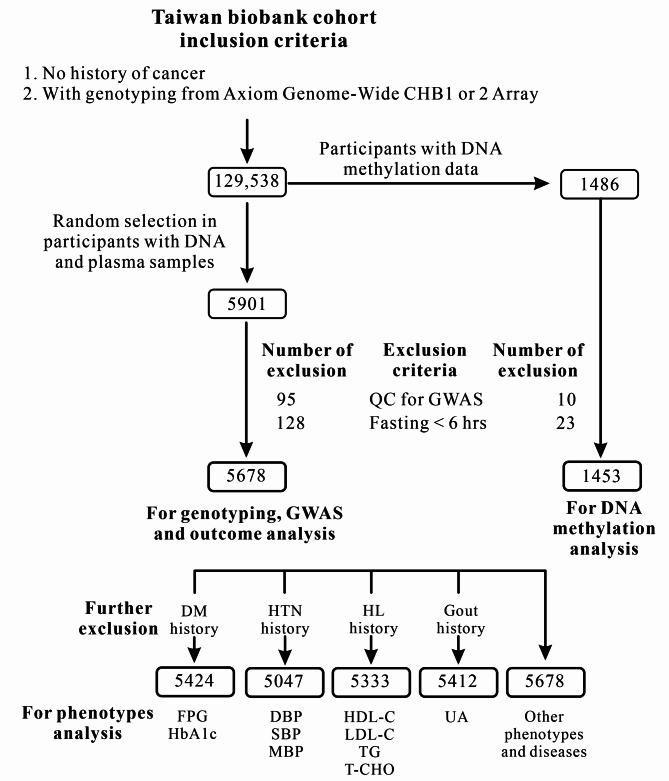
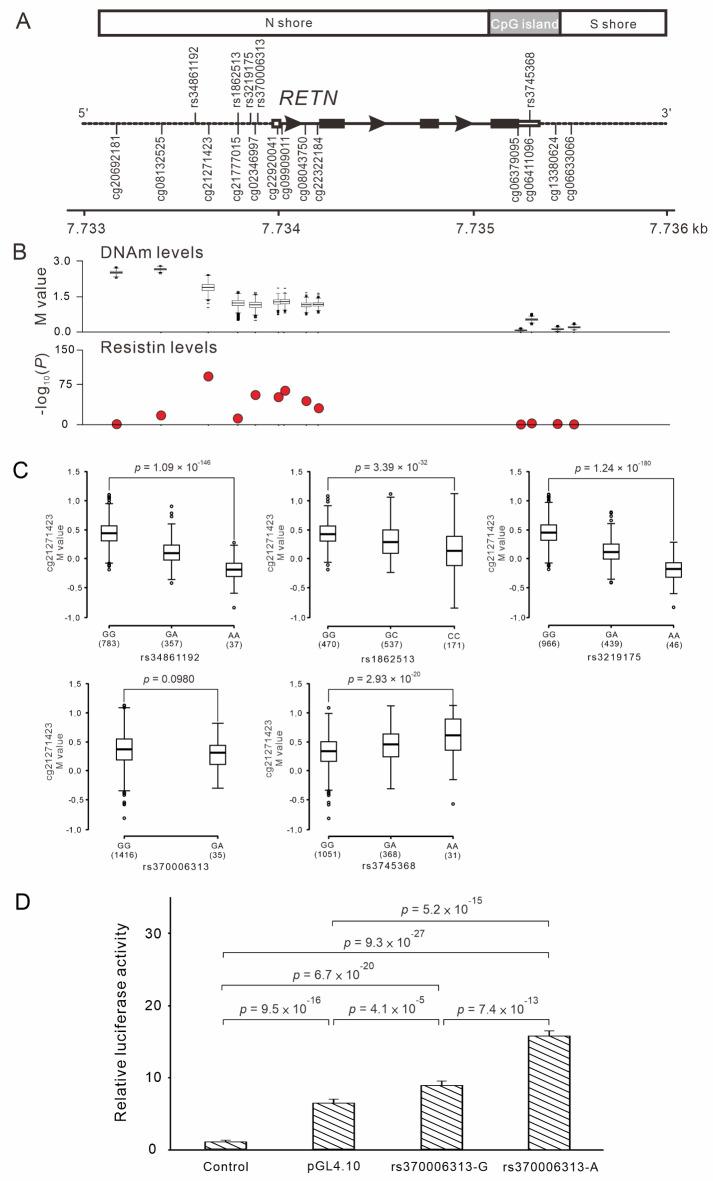
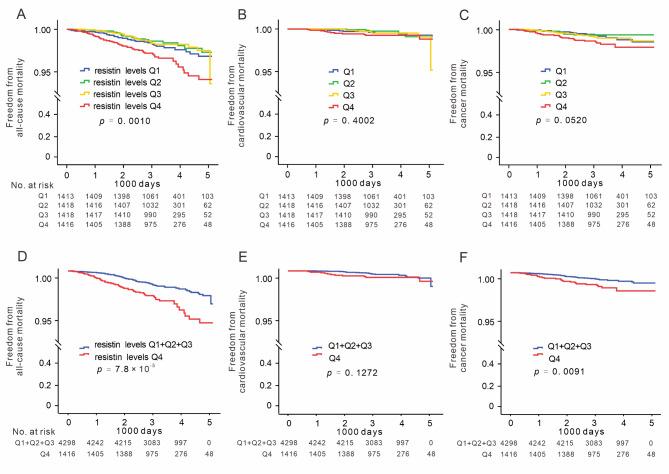
Human resistin is a proinflammatory cytokine involving the development and progression of cancer and cardiovascular diseases. However, prediction of long-term outcome using circulating resistin level and its genetic determinants in a population-based study remain to be explored. After genome-wide association study (GWAS), DNA methylation (DNAm) analysis and functional assays of a RETN rs370006313 variant, we tested whether resistin level and its genetic determinants can be used to determine the long-term outcomes of 5678 Taiwan Biobank (TWB) participants. GWAS and DNAm analysis revealed RETN variants, rs3219175, rs370006313, and rs3745368, and DNAm sites, cg21271423 and cg09909011, independently associated with circulating resistin levels. Functional assays showed rs370006313 variant played a key role in affecting RETN promoter activity, whereas genotypes of rs3219175 and rs3745368, but not rs370006313, exhibited genome-wide significant associations with RETN promoter DNAm levels. Using Kaplan-Meier survival and Cox regression analyses, participants with progressively increasing resistin levels had a higher hazard ratio for all-cause mortality and cancer mortality compared to those with lower resistin levels. Participants with all three RETN variants (high mutation burden) also exhibited significantly higher hazard ratios for all-cause mortality and cancer mortality, at 3.99 and 5.55, respectively, compared to those without a high mutation burden. In conclusion, RETN rs370006313 is a functional variant affecting RETN promoter activity. Elevated circulating resistin levels and a high RETN mutation burden predict all-cause and cancer mortality in TWB participants. Both resistin levels and RETN variants may serve as biomarkers of long-term outcomes in the general Taiwanese populations.
人抵抗素是一种促炎细胞因子,与癌症和心血管疾病的发生发展有关。然而,在一项基于人群的研究中,利用循环抵抗素水平及其基因决定因素预测长期预后仍有待探索。在对RETN rs370006313变异体进行全基因组关联研究(GWAS)、DNA甲基化(DNAm)分析和功能测定后,我们测试了抵抗素水平及其基因决定因素是否可用于确定5678名台湾生物银行(TWB)参与者的长期预后。GWAS和DNAm分析揭示了RETN变异体rs3219175、rs370006313和rs3745368,以及DNAm位点cg21271423和cg09909011,它们与循环抵抗素水平独立相关。功能测定表明,rs370006313变异体在影响RETN启动子活性方面起关键作用,而rs3219175和rs3745368的基因型(而非rs370006313)与RETN启动子DNAm水平呈现全基因组显著关联。使用Kaplan-Meier生存分析和Cox回归分析,与抵抗素水平较低的参与者相比,抵抗素水平逐渐升高的参与者全因死亡率和癌症死亡率的风险比更高。与没有高突变负担的参与者相比,具有所有三种RETN变异体(高突变负担)的参与者全因死亡率和癌症死亡率的风险比也显著更高,分别为3.99和5.55。总之,RETN rs370006313是影响RETN启动子活性的功能性变异体。循环抵抗素水平升高和高RETN突变负担可预测TWB参与者的全因死亡率和癌症死亡率。抵抗素水平和RETN变异体均可作为台湾普通人群长期预后的生物标志物。
 Zotero 插件