
线粒体哺乳动物模型:一种哺乳动物线粒体的基因组规模模型可预测心脏和棕色脂肪组织的代谢。
MitoMAMMAL: a genome scale model of mammalian mitochondria predicts cardiac and BAT metabolism.
作者信息
Chapman Stephen, Brunet Theo, Mourier Arnaud, Habermann Bianca H
机构信息
Aix-Marseille University, CNRS, IBDM UMR7288, Turing Center for Living Systems (CENTURI), Marseille 13009, France.
Department of Biochemistry, Cell and Systems Biology, Institute of Systems, Molecular and Integrative Biology, The University of Liverpool, Liverpool L69 3BX, United Kingdom.
出版信息
Bioinform Adv. 2024 Nov 5;5(1):vbae172. doi: 10.1093/bioadv/vbae172. eCollection 2025.
MOTIVATION
Mitochondria are essential for cellular metabolism and are inherently flexible to allow correct function in a wide range of tissues. Consequently, dysregulated mitochondrial metabolism affects different tissues in different ways leading to challenges in understanding the pathology of mitochondrial diseases. System-level metabolic modelling is useful in studying tissue-specific mitochondrial metabolism, yet despite the mouse being a common model organism in research, no mouse specific mitochondrial metabolic model is currently available.
RESULTS
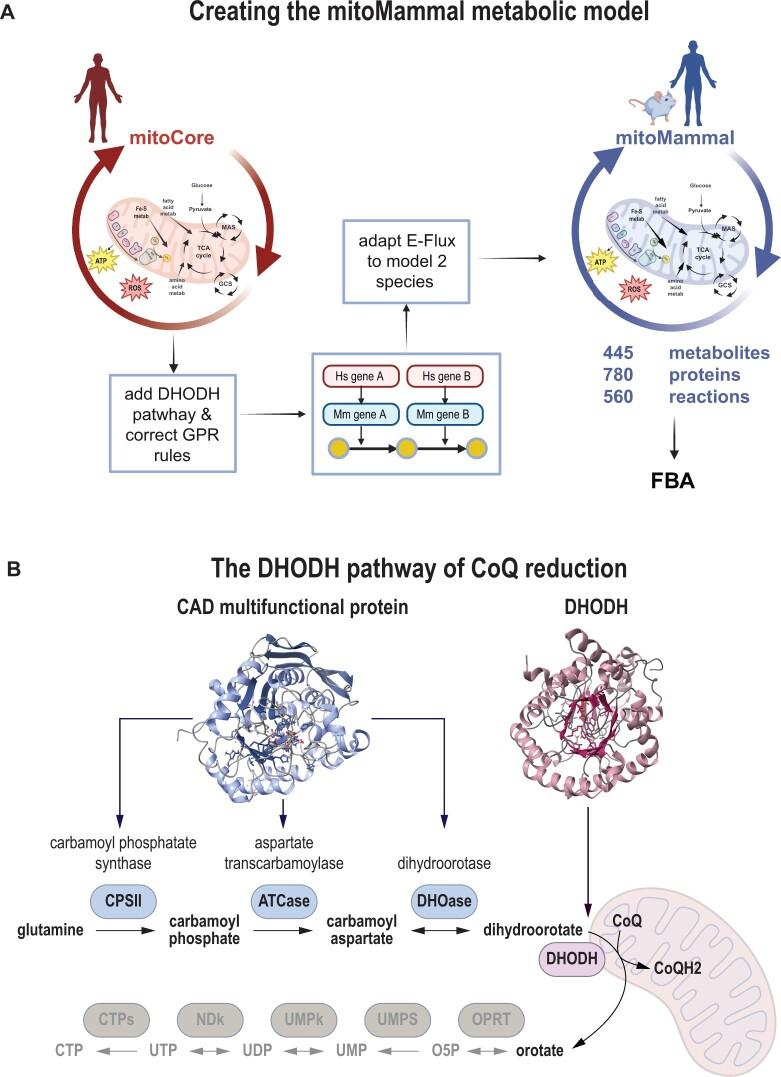
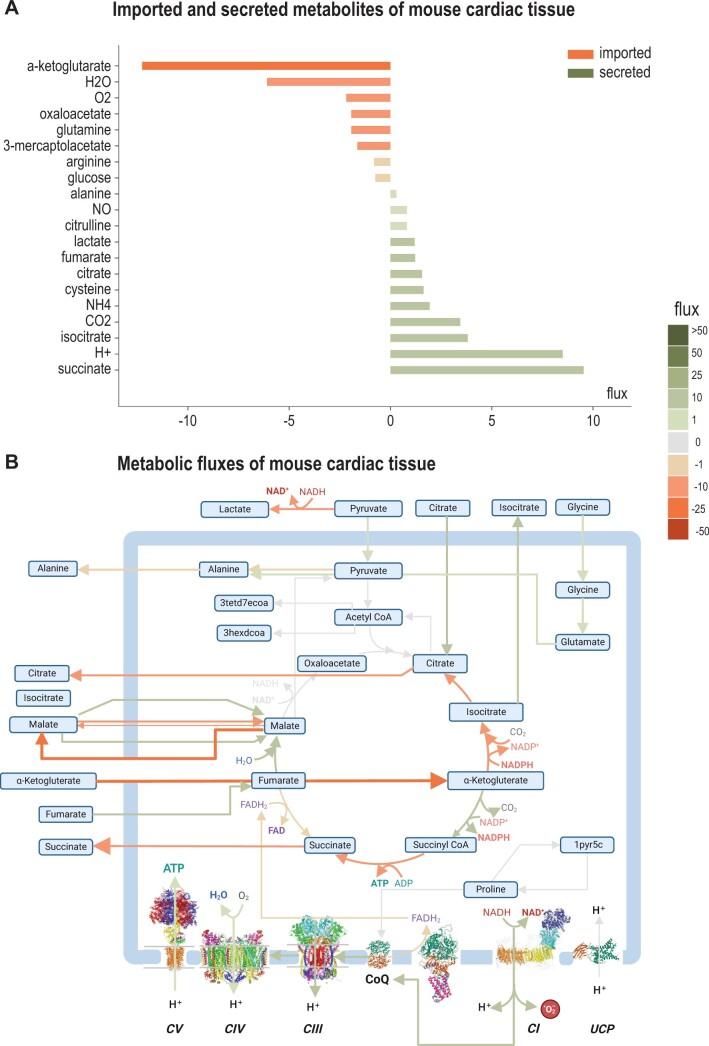
Building upon the similarity between human and mouse mitochondrial metabolism, we present mitoMammal, a genome-scale metabolic model that contains human and mouse specific gene-product reaction rules. MitoMammal is able to model mouse and human mitochondrial metabolism. To demonstrate this, using an adapted E-Flux algorithm, we integrated proteomic data from mitochondria of isolated mouse cardiomyocytes and mouse brown adipocyte tissue, as well as transcriptomic data from in vitro differentiated human brown adipocytes and modelled the context specific metabolism using flux balance analysis. In all three simulations, mitoMammal made mostly accurate, and some novel predictions relating to energy metabolism in the context of cardiomyocytes and brown adipocytes. This demonstrates its usefulness in research in cardiac disease and diabetes in both mouse and human contexts.
AVAILABILITY AND IMPLEMENTATION
The MitoMammal Jupyter Notebook is available at: https://gitlab.com/habermann_lab/mitomammal.
动机
线粒体对于细胞代谢至关重要,并且具有内在的灵活性,以确保在广泛的组织中正常发挥功能。因此,线粒体代谢失调会以不同方式影响不同组织,这给理解线粒体疾病的病理学带来了挑战。系统水平的代谢建模有助于研究组织特异性的线粒体代谢,然而,尽管小鼠是研究中常用的模式生物,但目前尚无小鼠特异性的线粒体代谢模型。
结果
基于人类和小鼠线粒体代谢之间的相似性,我们提出了mitoMammal,这是一个基因组规模的代谢模型,包含人类和小鼠特异性的基因产物反应规则。mitoMammal能够对小鼠和人类的线粒体代谢进行建模。为了证明这一点,我们使用一种改进的E-Flux算法,整合了来自分离的小鼠心肌细胞线粒体和小鼠棕色脂肪组织的蛋白质组学数据,以及来自体外分化的人类棕色脂肪细胞的转录组学数据,并使用通量平衡分析对特定环境下的代谢进行建模。在所有这三个模拟中,mitoMammal做出了大多准确的预测,并且在心肌细胞和棕色脂肪细胞的背景下做出了一些与能量代谢相关的新颖预测。这证明了它在小鼠和人类背景下的心脏病和糖尿病研究中的有用性。
可用性和实现方式
MitoMammal Jupyter Notebook可在以下网址获取:https://gitlab.com/habermann_lab/mitomammal 。



 Zotero 插件