
伊拉克已鉴定的新冠病毒变异株的基因组多样性与进化
Genomic Diversity and Evolution of Identified SARS-CoV-2 Variants in Iraq.
作者信息
Al-Mankhee Ahmed A, Moatasim Yassmin, El Taweel Ahmed, Gomaa Mokhtar, Rabiee Omar A, Gado Marwa M, Barakat Ahmed B, Ali Mohamed A, El-Shesheny Rabeh
机构信息
Al Hussein Teaching Hospital, Al Bat'haa 64011, Thi Qar, Iraq.
Department of Microbiology, Faculty of Science, Ain Shams University, Cairo 11566, Egypt.
出版信息
Pathogens. 2024 Nov 29;13(12):1051. doi: 10.3390/pathogens13121051.
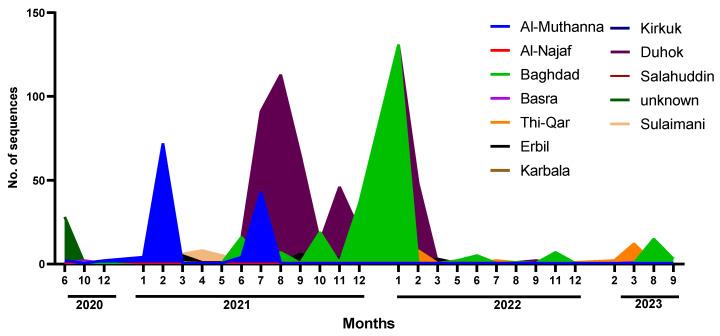
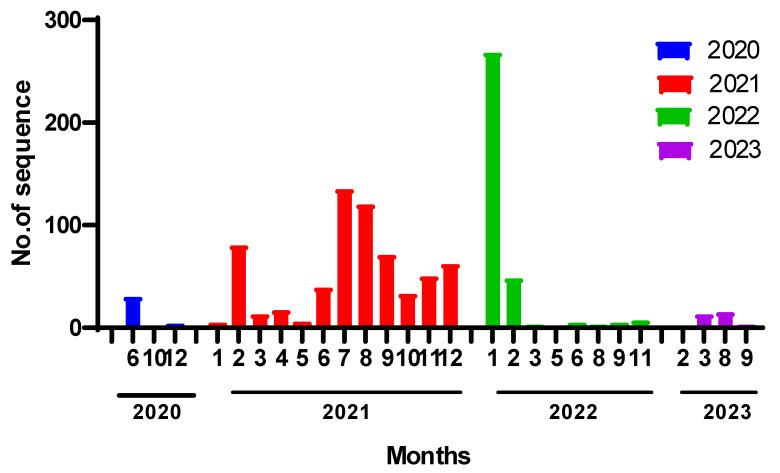
The COVID-19 pandemic caused by the SARS-CoV-2 virus continues to circulate worldwide, causing the deaths of millions of people. The continuous circulation of the virus, its genetic diversity, the emergence of new variants with increased transmissibility, and/or the capacity of the virus to escape from the immune system constitute a major public health concern. In our study, we aimed to characterize SARS-CoV-2 strains in Iraq from the first introduction until the end of 2023, and to identify their variants, lineages, clades, and mutation patterns. All published Iraqi full genome sequences (2020-2023) were obtained from Global Initiative on Sharing All Influenza Data (GISAID) and subjected to molecular characterization along with 19 samples of full genome sequences that were collected during the fifth and sixth waves of the SARS-CoV-2 pandemic in this study. Next-generation sequencing was performed using an Illumina MiSeq system, and phylogenetic analysis was performed for all the Iraqi sequences. Three established global platforms, GISAID, Nextstrain, and PANGO, were used for the classification of isolates into distinct clades, variants, and lineages. Six wave peaks of COVID-19 cases have been identified in Iraq, resulting in approximately 2,400,000 cumulative confirmed cases and more than 25,000 deaths. Our study revealed patterns of circulation and dominance of SARS-CoV-2 clades and their lineages in the pandemic waves in the country.
由严重急性呼吸综合征冠状病毒2(SARS-CoV-2)引起的新型冠状病毒肺炎(COVID-19)大流行仍在全球范围内传播,导致数百万人死亡。病毒的持续传播、其基因多样性、具有更高传播性的新变种的出现和/或病毒逃避免疫系统的能力构成了重大的公共卫生问题。在我们的研究中,我们旨在描述2020年首次引入到2023年底伊拉克的SARS-CoV-2毒株特征,并确定其变种、谱系、进化枝和突变模式。所有已发表的伊拉克全基因组序列(2020 - 2023年)均从全球共享流感数据倡议组织(GISAID)获取,并与本研究中在SARS-CoV-2大流行的第五波和第六波期间收集的19个全基因组序列样本一起进行分子特征分析。使用Illumina MiSeq系统进行下一代测序,并对所有伊拉克序列进行系统发育分析。利用三个成熟的全球平台GISAID、Nextstrain和PANGO将分离株分类为不同的进化枝、变种和谱系。伊拉克已确定出现了六个新型冠状病毒肺炎病例高峰,累计确诊病例约240万例,死亡人数超过2.5万例。我们的研究揭示了该国大流行各波次中SARS-CoV-2进化枝及其谱系的传播模式和优势情况。



 Zotero 插件