
高耐受性和低耐受性虹鳟(Oncorhynchus mykiss)对急性热应激的基因表达差异。
Differences in gene expression between high and low tolerance rainbow trout (Oncorhynchus mykiss) to acute thermal stress.
作者信息
Turner Leah A, Easton Anne A, Ferguson Moira M, Danzmann Roy G
机构信息
Department of Integrative Biology, University of Guelph, Guelph, Ontario, Canada.
Ontario Aquaculture Research Centre, University of Guelph, Elora, Ontario, Canada.
出版信息
PLoS One. 2025 Jan 8;20(1):e0312694. doi: 10.1371/journal.pone.0312694. eCollection 2025.
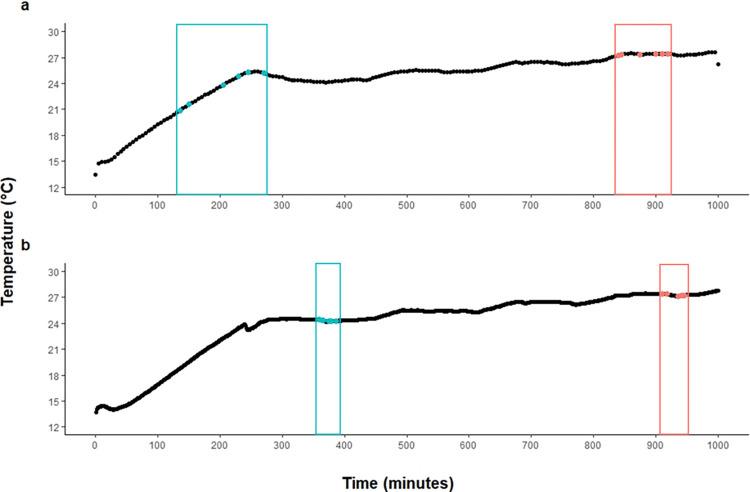
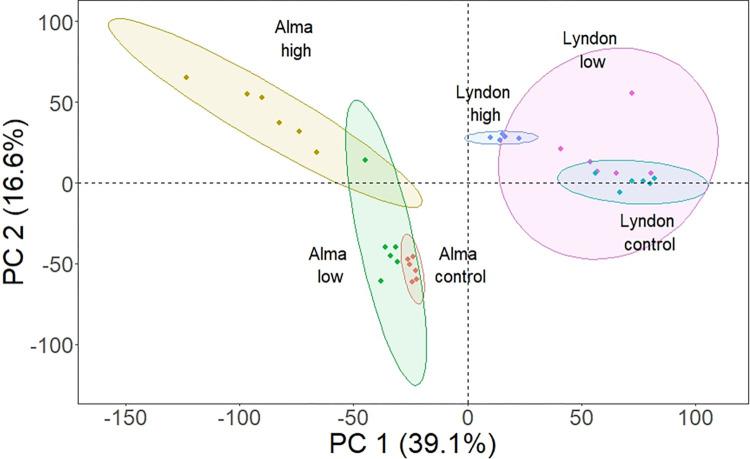
Understanding the mechanisms that underlie the adaptive response of ectotherms to rising temperatures is key to mitigate the effects of climate change. We assessed the molecular and physiological processes that differentiate between rainbow trout (Oncorhynchus mykiss) with high and low tolerance to acute thermal stress. To achieve our goal, we used a critical thermal maximum trial in two strains of rainbow trout to elicit loss of equilibrium responses to identify high and low tolerance fish. We then compared the hepatic transcriptome profiles of high and low tolerance fish relative to untreated controls common to both strains to uncover patterns of differential gene expression and to gain a broad perspective on the interacting gene pathways and functional processes involved. We observed some of the classic responses to increased temperature (e.g., induction of heat shock proteins) but these responses were not the defining factors that differentiated high and low tolerance fish. Instead, high tolerance fish appeared to suppress growth-related functions, enhance certain autophagy components, better regulate neurodegenerative processes, and enhance stress-related protein synthesis, specifically spliceosomal complex activities, mRNA regulation, and protein processing through post-translational processes, relative to low tolerance fish. In contrast, low tolerance fish had higher transcript diversity and demonstrated elevated developmental, cytoskeletal, and morphogenic, as well as lipid and carbohydrate metabolic processes, relative to high tolerance fish. Our results suggest that high tolerance fish engaged in processes that supported the prevention of further damage by enhancing repair pathways, whereas low tolerance fish were more focused on replacing damaged cells and their structures.
了解变温动物对气温上升的适应性反应背后的机制是减轻气候变化影响的关键。我们评估了对急性热应激具有高耐受性和低耐受性的虹鳟(Oncorhynchus mykiss)之间存在差异的分子和生理过程。为实现我们的目标,我们在两个虹鳟品系中进行了临界热最大值试验,以引发平衡反应丧失,从而识别出高耐受性和低耐受性的鱼。然后,我们比较了高耐受性和低耐受性鱼相对于两个品系共有的未处理对照的肝脏转录组图谱,以揭示差异基因表达模式,并全面了解所涉及的相互作用基因途径和功能过程。我们观察到了一些对温度升高的经典反应(例如,热休克蛋白的诱导),但这些反应并不是区分高耐受性和低耐受性鱼的决定性因素。相反,相对于低耐受性鱼,高耐受性鱼似乎抑制了与生长相关的功能,增强了某些自噬成分,更好地调节了神经退行性过程,并增强了与应激相关的蛋白质合成,特别是剪接体复合物活性、mRNA调节以及通过翻译后过程进行的蛋白质加工。相比之下,相对于高耐受性鱼,低耐受性鱼具有更高的转录本多样性,并表现出发育、细胞骨架和形态发生以及脂质和碳水化合物代谢过程的升高。我们的结果表明,高耐受性鱼参与了通过增强修复途径来支持预防进一步损伤的过程,而低耐受性鱼则更专注于替换受损细胞及其结构。

 Zotero 插件