
亚群分离及细胞外囊泡检测的进展:用于液体活检及下游研究
Advances in subpopulation separation and detection of extracellular vesicles: for liquid biopsy and downstream research.
作者信息
Liu Zi-Xiu, Chen Gang, Yu Zi-Li
机构信息
State Key Laboratory of Oral & Maxillofacial Reconstruction and Regeneration, Key Laboratory of Oral Biomedicine Ministry of Education, Hubei Key Laboratory of Stomatology, School & Hospital of Stomatology, Wuhan University, Wuhan, China.
Department of Oral and Maxillofacial Surgery, School and Hospital of Stomatology, Wuhan University, Wuhan, China.
出版信息
Theranostics. 2025 Jan 1;15(3):1135-1155. doi: 10.7150/thno.106459. eCollection 2025.
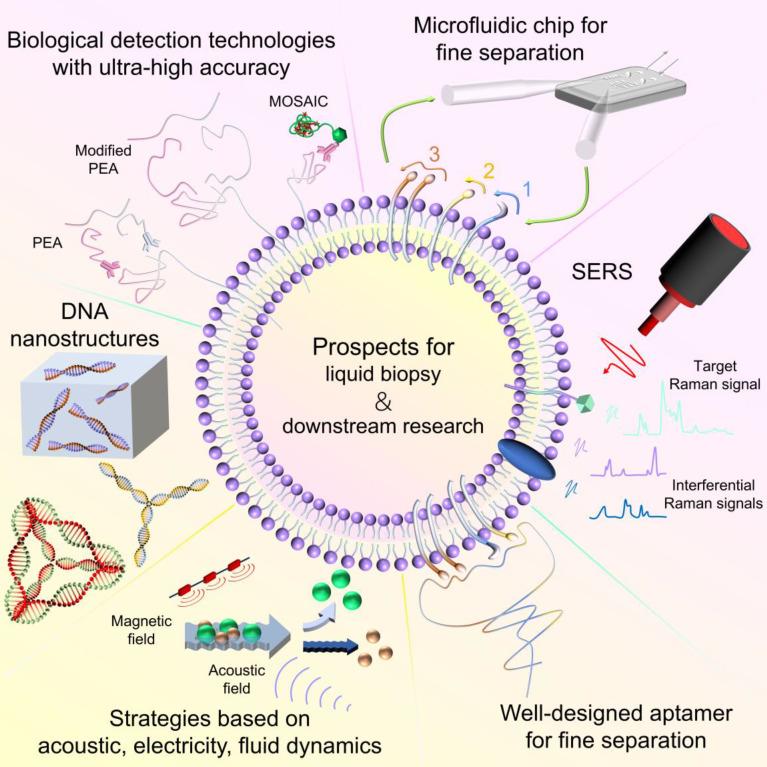
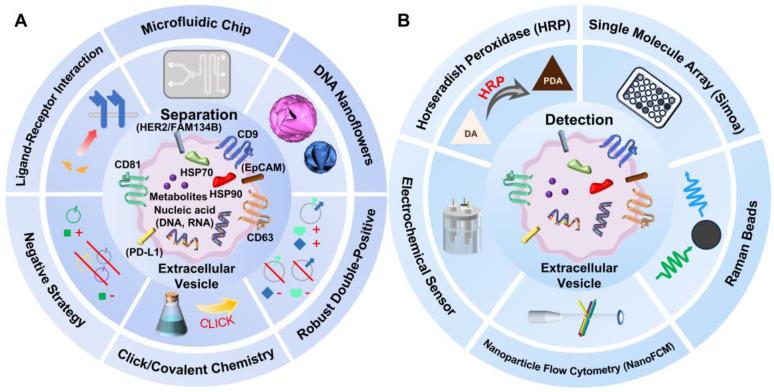
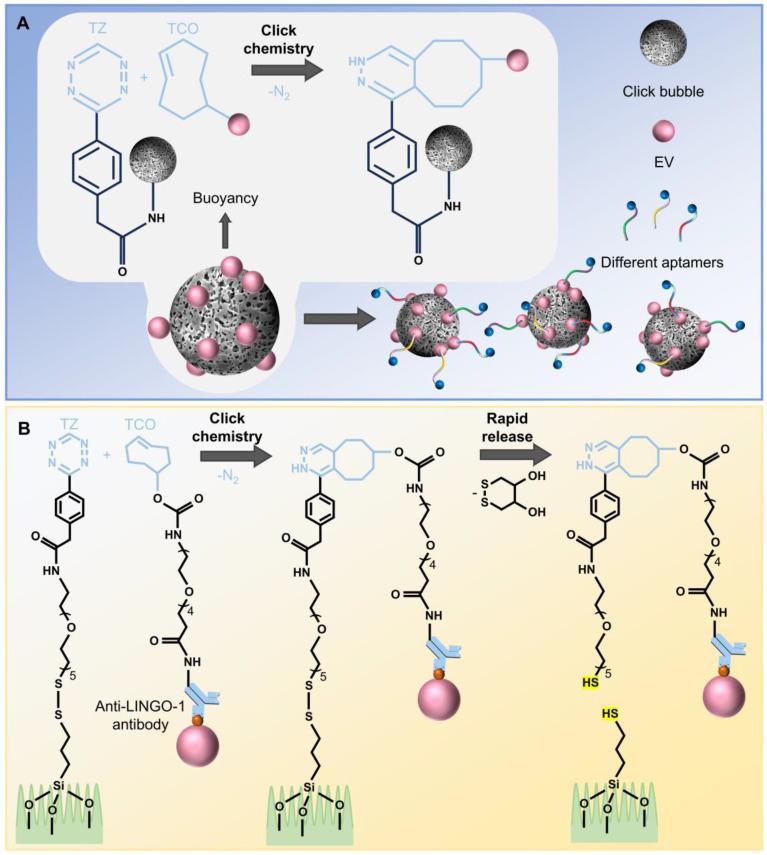
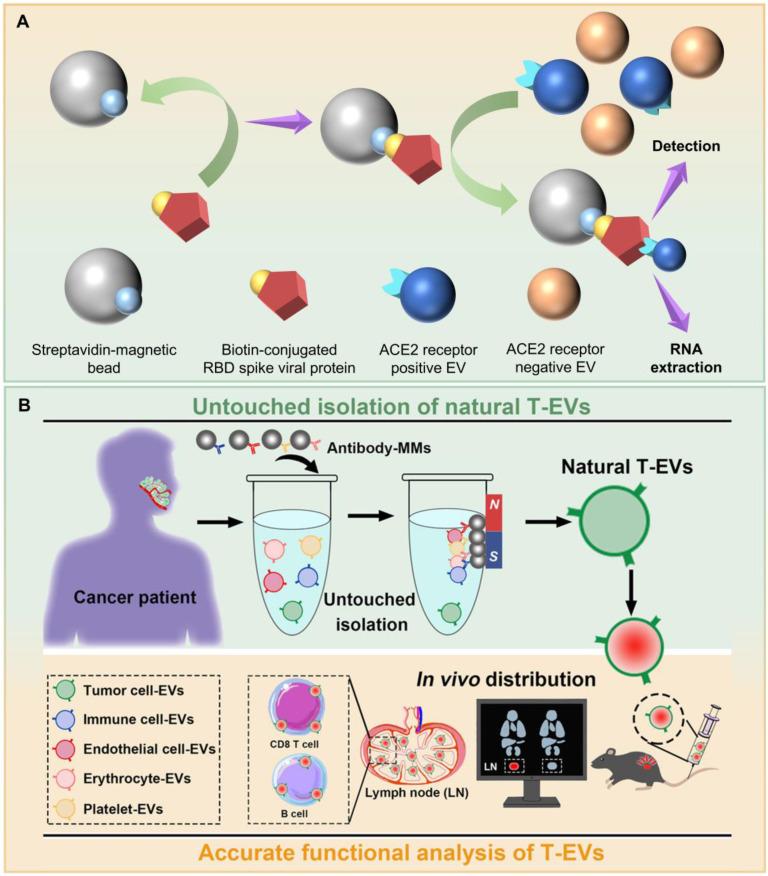
Extracellular vesicles (EVs) are carriers of a diverse array of bioactive molecules, making them valuable clinical tools for liquid biopsy in disease diagnosis and prognosis evaluation. These molecules play critical roles in various physiological and pathological conditions, and effective separation of EVs is essential to achieve these objectives. Due to the high heterogeneity of EVs, particularly with regard to their cargo molecules, merely isolating the general EV population is inadequate for liquid biopsy and biological function studies. Therefore, separating EV subpopulations becomes crucial. Traditional separation methods, such as differential ultracentrifugation and size exclusion chromatography, along with burgeoning techniques like classical microfluidic chips and covalent chemistry, often prove time-consuming, yield low purity, and have limited ability to address cargo heterogeneity. Thus, precise separation of EV subpopulations is of utmost importance. Additionally, detecting subpopulation-specific cargo is vital for validating the effectiveness of separation methods and supporting clinical biopsy applications. However, reviews that focus specifically on detection methods for EV subpopulations are limited. This paper provides a comprehensive overview of the methods for separating and detecting EV subpopulations with surface marker heterogeneity, comparing the advantages and limitations of each technique. Furthermore, it discusses challenges and future prospects for these methods in the context of liquid biopsy and downstream research. Collectively, this review aims to offer innovative insights into the separation and detection of EV subpopulations, guiding researchers to avoid common pitfalls and refine their investigative approaches.
细胞外囊泡(EVs)是多种生物活性分子的载体,使其成为疾病诊断和预后评估中液体活检的重要临床工具。这些分子在各种生理和病理条件下发挥着关键作用,而有效分离EVs对于实现这些目标至关重要。由于EVs具有高度异质性,尤其是其携带的分子,仅分离一般的EV群体不足以进行液体活检和生物学功能研究。因此,分离EV亚群变得至关重要。传统的分离方法,如差速超速离心和尺寸排阻色谱法,以及新兴技术,如经典微流控芯片和共价化学方法,往往耗时、纯度低,且解决分子异质性的能力有限。因此,精确分离EV亚群至关重要。此外,检测亚群特异性携带分子对于验证分离方法的有效性和支持临床活检应用至关重要。然而,专门针对EV亚群检测方法的综述有限。本文全面概述了基于表面标志物异质性分离和检测EV亚群的方法,比较了每种技术的优缺点。此外,还讨论了这些方法在液体活检和下游研究背景下的挑战和未来前景。总体而言,本综述旨在为EV亚群的分离和检测提供创新性见解,指导研究人员避免常见陷阱并完善其研究方法。


 Zotero 插件