
揭示鼻咽癌中的免疫抵抗机制及抗肿瘤免疫反应的新兴靶点:三级淋巴结构
Unveiling immune resistance mechanisms in nasopharyngeal carcinoma and emerging targets for antitumor immune response: tertiary lymphoid structures.
作者信息
Wang Huilin, Zhan Yuting, Luo Jiadi, Wang Weiyuan, Fan Songqing
机构信息
Department of Pathology, The Second Xiangya Hospital, Central South University, Changsha, Hunan, China.
Hunan Clinical Medical Research Center for Cancer Pathogenic Genes Testing and Diagnosis, Changsha, Hunan, 410011, China.
出版信息
J Transl Med. 2025 Jan 9;23(1):38. doi: 10.1186/s12967-024-05880-7.
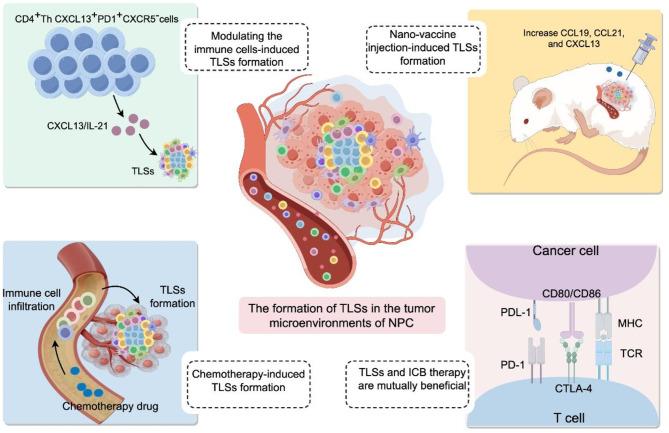
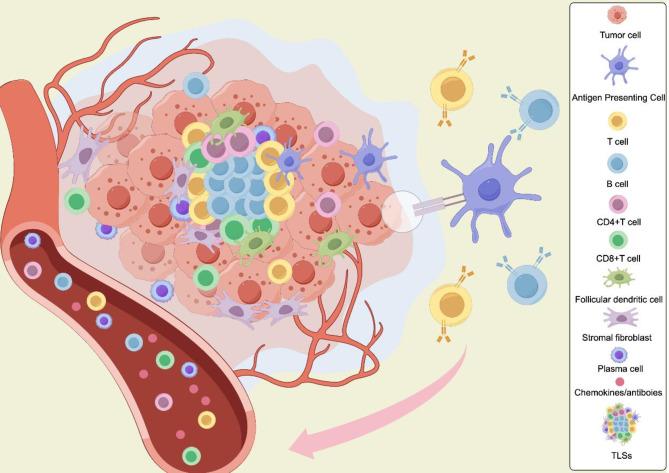
Nasopharyngeal carcinoma (NPC) is a prevalent malignancy in China, commonly associated with undifferentiated cell types and Epstein-Barr virus (EBV) infection. The presence of intense lymphocytic infiltration and elevated expression of programmed cell death ligand 1(PD-L1) in NPC highlights its potential for immunotherapy, yet current treatment outcomes remain suboptimal. In this review, we explore the tumor microenvironment of NPC to better understand the mechanisms of resistance to immunotherapy, evaluate current therapeutic strategies, and pinpoint emerging targets, such as tertiary lymphoid structures (TLSs), that could enhance treatment outcomes and prognostic accuracy. TLSs have demonstrated positive prognostic value in NPC, making them a promising target for future therapies. This review summarizes the key characteristics of TLSs and latest research in the context of NPC. We are optimistic that targeting TLSs could improve immunotherapy outcomes for NPC patients, ultimately leading to more effective treatment strategies and better patient survival.
鼻咽癌(NPC)在中国是一种常见的恶性肿瘤,通常与未分化细胞类型和 Epstein-Barr 病毒(EBV)感染相关。NPC 中强烈的淋巴细胞浸润和程序性细胞死亡配体 1(PD-L1)表达升高突出了其免疫治疗潜力,但目前的治疗效果仍不理想。在本综述中,我们探讨 NPC 的肿瘤微环境,以更好地理解免疫治疗耐药机制,评估当前治疗策略,并确定可能增强治疗效果和预后准确性的新兴靶点,如三级淋巴结构(TLSs)。TLSs 在 NPC 中已显示出阳性预后价值,使其成为未来治疗的一个有希望的靶点。本综述总结了 NPC 背景下 TLSs 的关键特征和最新研究。我们乐观地认为,靶向 TLSs 可以改善 NPC 患者的免疫治疗效果,最终带来更有效的治疗策略和更好的患者生存率。

 Zotero 插件