
有氧运动处方对纤维肌痛疼痛缓解的作用:一项系统评价与荟萃分析
Aerobic Exercise Prescription for Pain Reduction in Fibromyalgia: A Systematic Review and Meta-Analysis.
作者信息
Casanova-Rodríguez David, Ranchal-Sánchez Antonio, Rodríguez Rodrigo Bertoletti, Jurado-Castro Jose Manuel
机构信息
Department of Nursing, Pharmacology and Physiotherapy, Faculty of Medicine and Nursing, University of Cordoba, Cordoba, Spain.
Department of Health Science, Faculty of Health Science, European University Miguel de Cervantes, Valladolid, Spain.
出版信息
Eur J Pain. 2025 Feb;29(2):e4783. doi: 10.1002/ejp.4783.
BACKGROUND AND OBJECTIVE
Fibromyalgia is a condition characterised by disabling levels of pain of varying intensity. Aerobic exercise may play a role in reducing pain in these patients. The aim of this review is to assess the dose of aerobic exercise needed, based on the frequency, intensity, type, time, volume and progression (FITT-VP) model, to obtain clinically relevant reductions in pain.
DATABASES AND DATA TREATMENT
A systematic review and meta-analysis of randomised clinical trials was conducted in the Web of Science (WoS), PEDro, PubMed and Scopus databases, the search having been conducted between July and October of 2023. Risk of bias was assessed with the Cochrane Risk of Bias assessment tool 2.
RESULTS
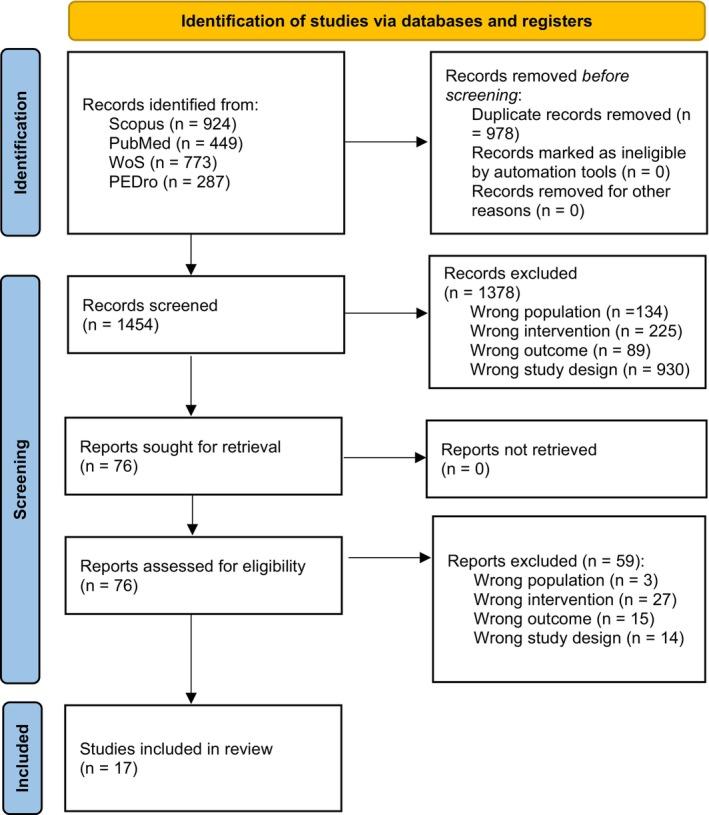
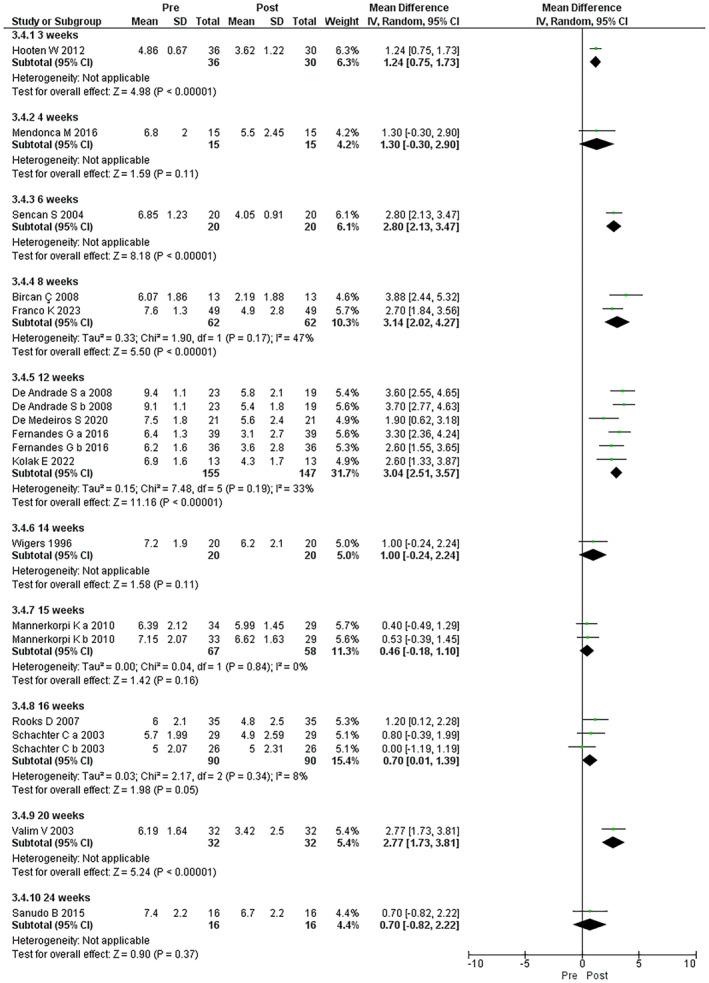
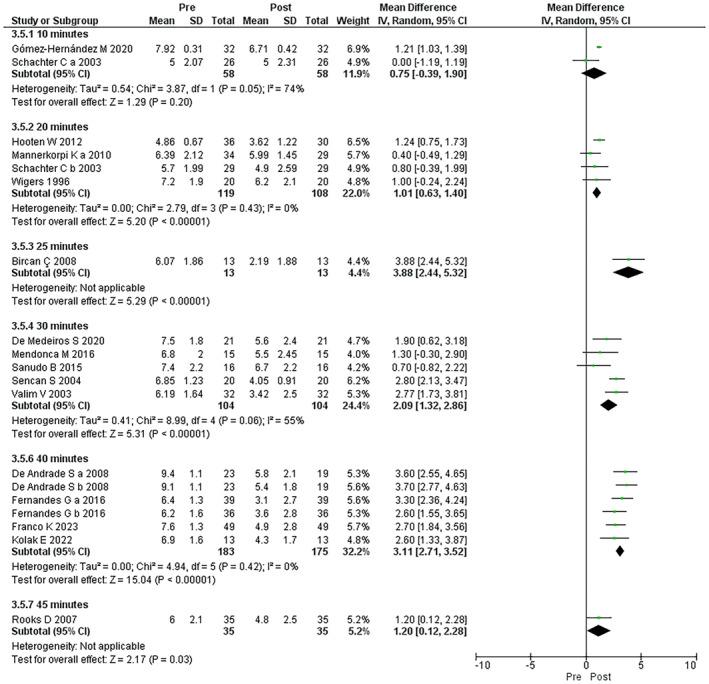
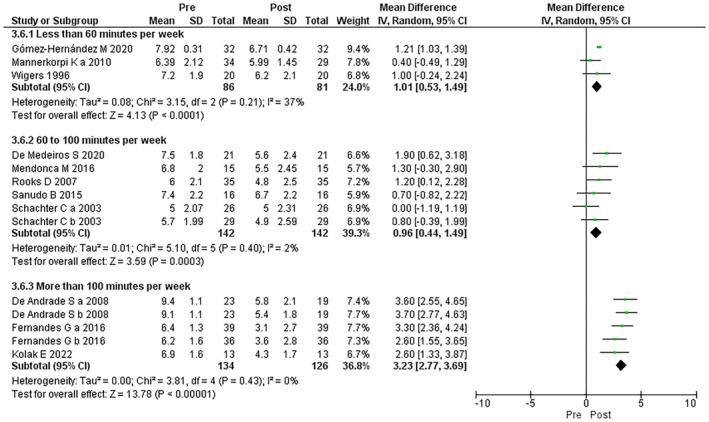
Seventeen studies were included. The risk of bias varied, with six studies showing low risk; five, some concerns; and six, high risk. Aerobic exercise interventions were analysed using the FITT-VP model. Frequency ranged from 1 to 10 times per week, intensity varied from light to vigorous, and the types of exercise included music-based exercise, interval training, pool-based exercise, stationary cycling, swimming and walking. The intervention durations ranged from 3 to 24 weeks, with session lengths ranging from 10 to 45 min. Most of the studies presented significant differences, favouring aerobic exercise (MD -0.49; CI [-0.90, -0.08; p = 0.02]), with moderate to low heterogeneity in subgroup analyses.
CONCLUSIONS
The study findings underscore the efficacy of aerobic exercise in alleviating pain among fibromyalgia patients, advocating for tailored exercise dosing to optimise adherence and outcomes.
SIGNIFICANCE STATEMENT
Individuals with fibromyalgia should engage in aerobic exercises two to three times weekly, for twenty-five to forty minutes in each session, aiming for more than a hundred minutes per week. They should start at low intensity, gradually increasing to higher intensities over six to twelve weeks, for optimal pain management. Exercise types should be selected in collaboration with the patient and based on personal preferences and accessibility, such as walking, and swimming, to ensure long-term adherence to the regimen.
背景与目的
纤维肌痛是一种以不同强度的致残性疼痛为特征的疾病。有氧运动可能在减轻这些患者的疼痛方面发挥作用。本综述的目的是根据频率、强度、类型、时间、运动量和进展(FITT-VP)模型,评估获得临床上有意义的疼痛减轻所需的有氧运动剂量。
数据库与数据处理
在Web of Science(WoS)、PEDro、PubMed和Scopus数据库中对随机临床试验进行了系统综述和荟萃分析,检索时间为2023年7月至10月。使用Cochrane偏倚风险评估工具2评估偏倚风险。
结果
纳入了17项研究。偏倚风险各不相同,6项研究显示低风险;5项有一些担忧;6项为高风险。使用FITT-VP模型分析有氧运动干预措施。频率范围为每周1至10次,强度从轻到剧烈不等,运动类型包括基于音乐的运动、间歇训练、水中运动、固定自行车运动、游泳和步行。干预持续时间为3至24周,每次时长为10至45分钟。大多数研究呈现出显著差异,支持有氧运动(MD -0.49;CI [-0.90, -0.08;p = 0.02]),亚组分析中的异质性为中到低。
结论
研究结果强调了有氧运动在减轻纤维肌痛患者疼痛方面的有效性,提倡进行量身定制的运动剂量以优化依从性和结果。
意义声明
纤维肌痛患者应每周进行两到三次有氧运动,每次25至40分钟,目标是每周超过100分钟。应从低强度开始,在6至12周内逐渐增加到更高强度,以实现最佳的疼痛管理。运动类型应与患者合作选择,基于个人喜好和可及性,如步行和游泳,以确保长期坚持该方案。



 Zotero 插件