
在新冠病毒疾病病理学中,中性粒细胞与血管壁的黏附会损害肺循环。
Neutrophil adhesion to vessel walls impairs pulmonary circulation in COVID-19 pathology.
作者信息
Ueki Hiroshi, Wang I-Hsuan, Kiso Maki, Horie Kenta, Iida Shun, Mine Sohtaro, Ujie Michiko, Hsu Hung-Wei, Wu Chen-Hui Henry, Imai Masaki, Suzuki Tadaki, Kamitani Wataru, Kawakami Eiryo, Kawaoka Yoshihiro
机构信息
Division of Virology, Institute of Medical Science, University of Tokyo, Tokyo, Japan.
Center for Global Viral Diseases, National Center for Global Health and Medicine Research Institute, Tokyo, Japan.
出版信息
Nat Commun. 2025 Jan 13;16(1):455. doi: 10.1038/s41467-024-55272-0.
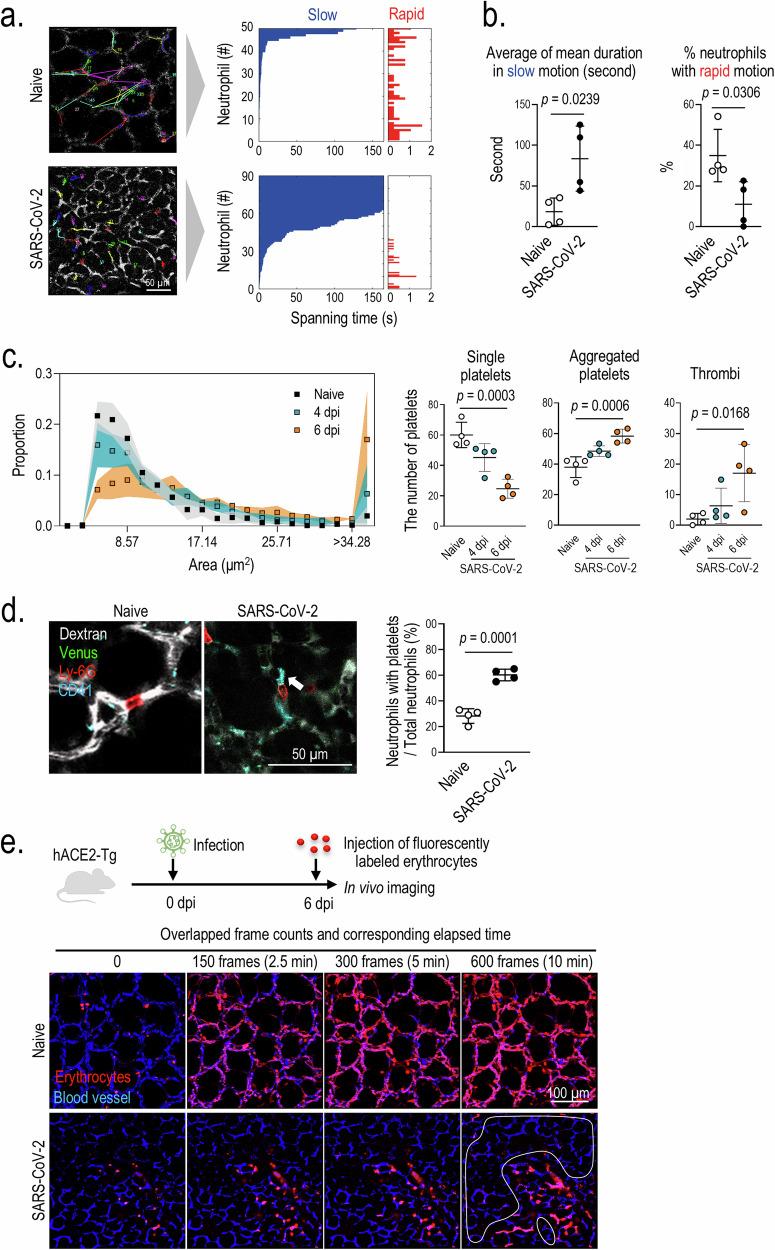
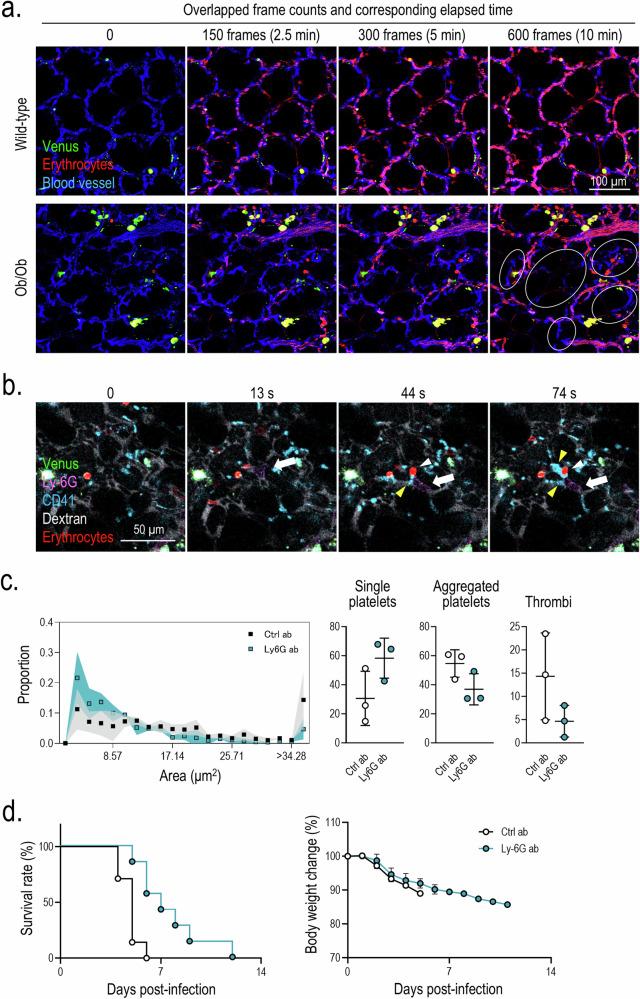
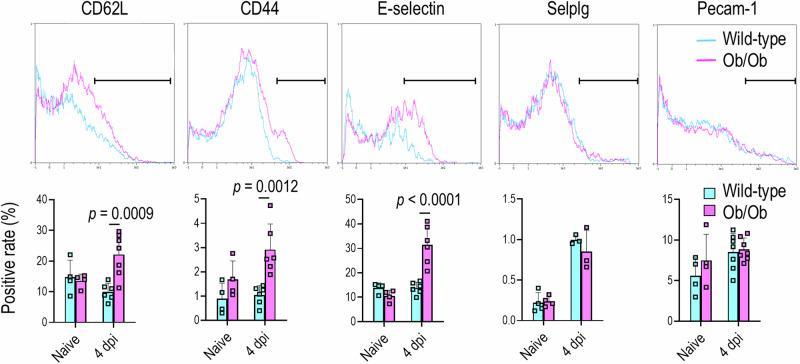
Microthrombus formation is associated with COVID-19 severity; however, the detailed mechanism remains unclear. In this study, we investigated mouse models with severe pneumonia caused by SARS-CoV-2 infection by using our in vivo two-photon imaging system. In the lungs of SARS-CoV-2-infected mice, increased expression of adhesion molecules in intravascular neutrophils prolonged adhesion time to the vessel wall, resulting in platelet aggregation and impaired lung perfusion. Re-analysis of scRNA-seq data from peripheral blood mononuclear cells from COVID-19 cases revealed increased expression levels of CD44 and SELL in neutrophils in severe COVID-19 cases compared to a healthy group, consistent with our observations in the mouse model. These findings suggest that pulmonary perfusion defects caused by neutrophil adhesion to pulmonary vessels contribute to COVID-19 severity.
微血栓形成与新冠病毒疾病(COVID-19)的严重程度相关;然而,具体机制仍不清楚。在本研究中,我们使用体内双光子成像系统研究了由严重急性呼吸综合征冠状病毒2(SARS-CoV-2)感染引起的重症肺炎小鼠模型。在感染SARS-CoV-2的小鼠肺部,血管内中性粒细胞中黏附分子表达增加,延长了其与血管壁的黏附时间,导致血小板聚集和肺灌注受损。对COVID-19病例外周血单个核细胞的单细胞RNA测序(scRNA-seq)数据进行重新分析发现,与健康组相比,重症COVID-19病例中性粒细胞中CD44和淋巴细胞功能相关抗原1(SELL)的表达水平增加,这与我们在小鼠模型中的观察结果一致。这些发现表明,中性粒细胞黏附于肺血管导致的肺灌注缺陷是COVID-19病情严重的原因之一。





 Zotero 插件