
基于石墨相氮化碳/壳聚糖纳米复合材料的抗癌药物氟他胺表面等离子体共振检测
Surface plasmon resonance detection of anti-cancer drug flutamide by graphitic carbon nitride/chitosan nanocomposite.
作者信息
Nasiri Hassan, Abbasian Karim
机构信息
Faculty of Electrical and Computer Engineering, University of Tabriz, Tabriz, Iran.
出版信息
Sci Rep. 2025 Jan 17;15(1):2278. doi: 10.1038/s41598-025-86665-w.
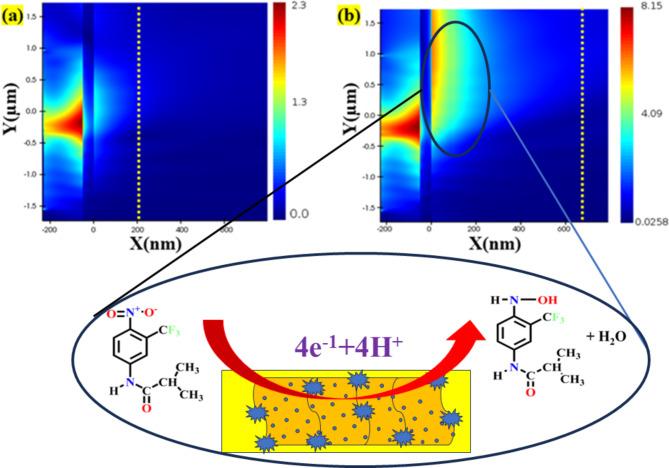
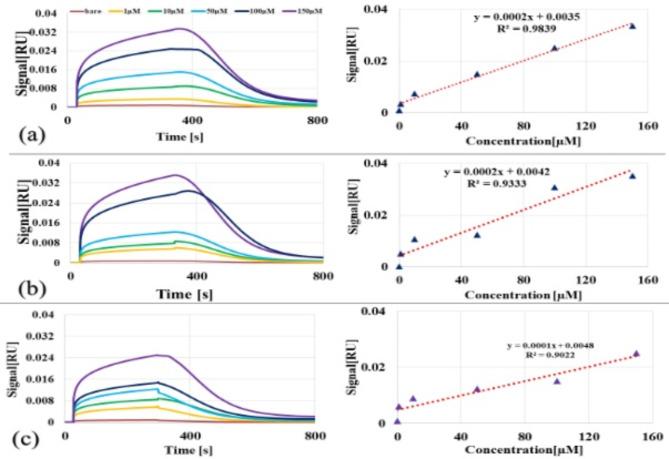
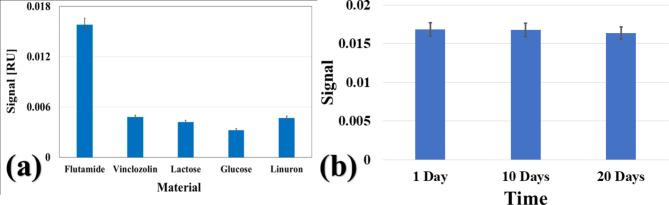
The g-C3N4/CS biosensor was designed, fabricated, and tested using compounds such as glucose, urine, lactose, and flutamide at a molarity of 10 µM, which could demonstrate a high sensitivity of 200 μm-1 for flutamide. Powerful effective medium theory and FDTD simulation were used to predict the most favorable mode and plasmonic properties of a graphite carbon nitride and chitosan nanocomposite. The research also explores the characteristics of surface plasmon resonance exhibited by the nanocomposite as the chitosan content is adjusted. Subsequent simulations are conducted on nanocomposites incorporating a thin layer and a modified gold structure. The intricate simulations ultimately reveal the optimal combination, tested under three different pH conditions (6.2, 7.2, and 8). In acidic conditions, the kinetic profile yielded a K= 3.45 × 10, surpassing the K value of a thin film. The Au significantly outperformed the alternative material. The biosensor demonstrated linear behavior across a wide concentration range from 1 to 150 µM, achieving a detection limit of 120 nM with its high sensitivity.
设计、制备并测试了g-C3N4/CS生物传感器,使用了葡萄糖、尿液、乳糖和氟他胺等化合物,浓度为10 μM,对氟他胺表现出200μm-1的高灵敏度。利用强大的有效介质理论和时域有限差分(FDTD)模拟来预测石墨相氮化碳和壳聚糖纳米复合材料的最有利模式和等离子体特性。该研究还探讨了随着壳聚糖含量的调整,纳米复合材料所表现出的表面等离子体共振特性。随后对包含薄层和改性金结构的纳米复合材料进行了模拟。复杂的模拟最终揭示了在三种不同pH条件(6.2、7.2和8)下测试的最佳组合。在酸性条件下,动力学曲线得出K = 3.45×10,超过了薄膜的K值。金的性能明显优于替代材料。该生物传感器在1至150 μM的宽浓度范围内表现出线性行为,凭借其高灵敏度实现了120 nM的检测限。


 Zotero 插件