
2014年1月至2019年12月,在COVID-19大流行之前,澳大利亚一家儿科转诊医院收治的儿童中呼吸道病毒检测情况。
Respiratory virus detections in children presenting to an Australian paediatric referral hospital pre-COVID-19 pandemic, January 2014 to December 2019.
作者信息
Burrell Rebecca, Saravanos Gemma L, Kesson Alison, Leung Kin-Chuen, Outhred Alex C, Wood Nicholas, Muscatello David, Britton Philip N
机构信息
Sydney Medical School, University of Sydney, Sydney, New South Wales (NSW), Australia.
Centre for Paediatric and Perinatal Infection Research, The Children's Hospital at Westmead, Westmead, NSW, Australia.
出版信息
PLoS One. 2025 Jan 22;20(1):e0313504. doi: 10.1371/journal.pone.0313504. eCollection 2025.
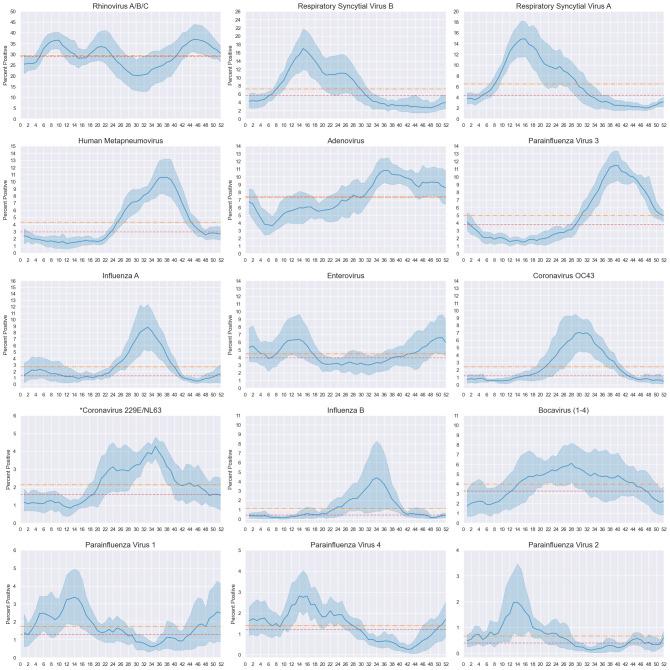
Acute respiratory infections cause significant paediatric morbidity, but for pathogens other than influenza, respiratory syncytial virus (RSV), and SARS-CoV-2, systematic monitoring is not commonly performed. This retrospective analysis of six years of routinely collected respiratory pathogen multiplex PCR testing at a major paediatric hospital in New South Wales Australia, describes the epidemiology, year-round seasonality, and co-detection patterns of 15 viral respiratory pathogens. 32,599 respiratory samples from children aged under 16 years were analysed. Most samples were associated with a hospital admission (24,149, 74.1%) and the median age of sampling was 16 months (IQR 5-53). Viruses were detected in 62.9% (20,510) of samples, with single virus detections occurring in 73.5% (15,082) of positive samples. In instances of single virus detection, rhinovirus was most frequent (5125, 40.6%), followed by RSV-B (1394, 9.2%) and RSV-A (1290, 8.6%). Moderate to strong seasonal strength was observed for most viruses with some notable exceptions. Rhinovirus and enterovirus were detected year-round and low seasonal strength was observed for adenovirus and bocavirus. Biennial seasonal patterns were observed for influenza B and parainfluenza virus 2. Co-detections occurred in 5,428 samples, predominantly with two (4284, 79.0%) or three viruses (904, 16.7%). The most common co-detections were rhinovirus-adenovirus (566, 10.4%), rhinovirus-enterovirus (357, 8.3%), and rhinovirus-RSV-B (337, 7.9%). Ongoing pan-pathogen surveillance, integrating both laboratory and clinical data, is necessary to assist in identification of key pathogens and combination of pathogens to support effective preventative public health strategies and reduce the burden of paediatric respiratory infections.
急性呼吸道感染导致大量儿童发病,但对于除流感、呼吸道合胞病毒(RSV)和严重急性呼吸综合征冠状病毒2(SARS-CoV-2)以外的病原体,通常不会进行系统监测。这项对澳大利亚新南威尔士州一家大型儿童医院六年常规收集的呼吸道病原体多重聚合酶链反应(PCR)检测结果进行的回顾性分析,描述了15种病毒性呼吸道病原体的流行病学、全年季节性以及共同检测模式。对16岁以下儿童的32599份呼吸道样本进行了分析。大多数样本与住院相关(24149份,74.1%),采样的中位年龄为16个月(四分位间距5 - 53)。62.9%(20510份)的样本检测到病毒,73.5%(15082份)的阳性样本检测到单一病毒。在单一病毒检测的情况下,鼻病毒最为常见(5125份,40.6%),其次是呼吸道合胞病毒B型(RSV-B,1394份,9.2%)和呼吸道合胞病毒A型(RSV-A,1290份,8.6%)。大多数病毒观察到中度至强季节性强度,但有一些明显例外。鼻病毒和肠道病毒全年均可检测到,腺病毒和博卡病毒观察到低季节性强度。乙型流感病毒和副流感病毒2型观察到两年一次的季节性模式。5428份样本检测到共同感染,主要是两种病毒(4284份,79.0%)或三种病毒(904份,16.7%)。最常见的共同感染是鼻病毒 - 腺病毒(566份,10.4%)、鼻病毒 - 肠道病毒(357份,8.3%)和鼻病毒 - RSV-B(337份,7.9%)。持续进行整合实验室数据和临床数据的全病原体监测,对于协助识别关键病原体和病原体组合以支持有效的预防性公共卫生策略并减轻儿童呼吸道感染负担是必要的。

 Zotero 插件