
对一株来自孟加拉国的尿路致病性摩根氏摩根菌分离株细菌防御机制的全基因组分析洞察
An insight into the genome-wide analysis of bacterial defense mechanisms in a uropathogenic Morganella morganii isolate from Bangladesh.
作者信息
Al Sium Syed Muktadir, Goswami Barna, Chowdhury Sanjana Fatema, Naser Showti Raheel, Sarkar Mihir Kanti, Faruq Md Jobaid, Habib Md Ahashan, Akter Shahina, Banu Tanjina Akhtar, Sarkar Md Murshed Hasan, Khan Md Salim
机构信息
Bangladesh Council of Scientific and Industrial Research (BCSIR), Dhaka, Bangladesh.
Department of Microbiology, Primeasia University, Dhaka, Bangladesh.
出版信息
PLoS One. 2025 Jan 23;20(1):e0313141. doi: 10.1371/journal.pone.0313141. eCollection 2025.
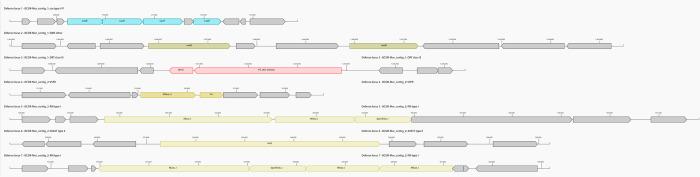
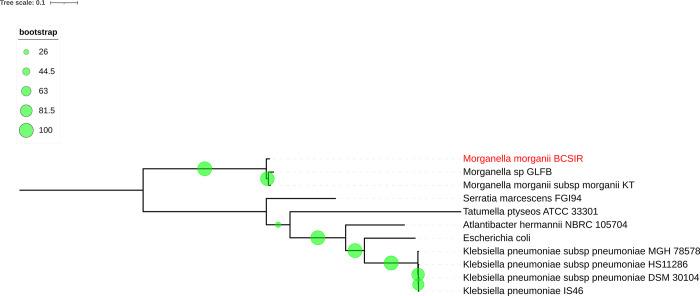
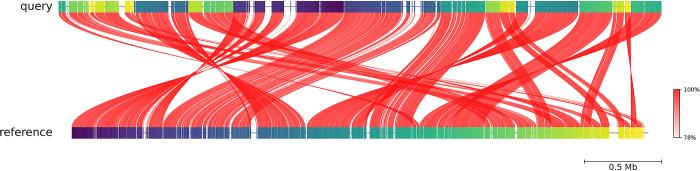
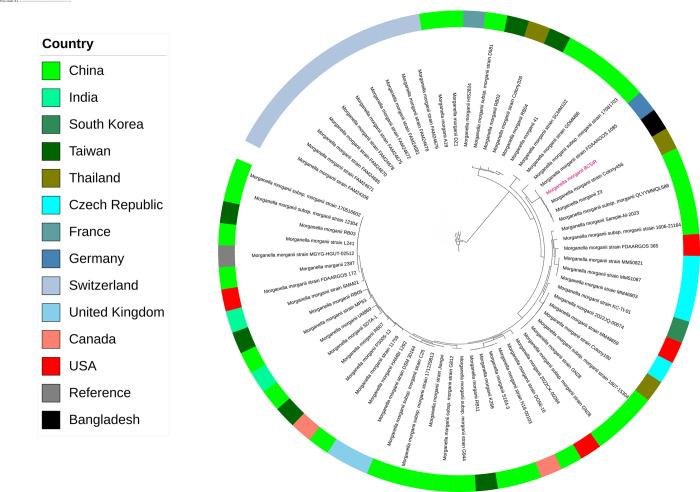
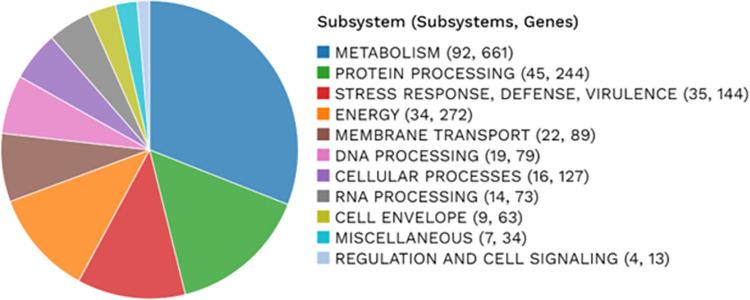
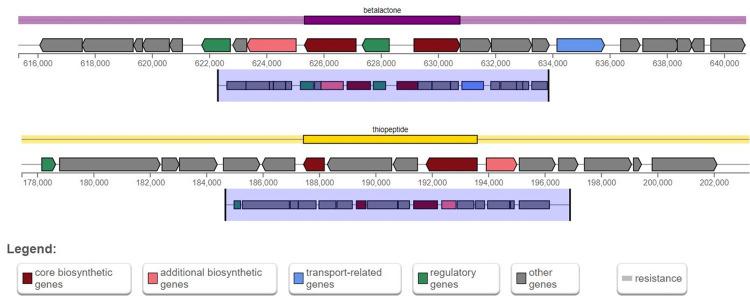
The gram-negative, facultative anaerobic bacterium Morganella morganii is linked to a number of illnesses, including nosocomial infections and urinary tract infections (UTIs). A clinical isolate from a UTI patient in Bangladesh was subjected to high-throughput whole genome sequencing and extensive bioinformatics analysis in order to gather knowledge about the genomic basis of bacterial defenses and pathogenicity in M. morganii. With an average nucleotide identity (ANI) of more than 97% similarity to a reference genome and phylogenetic analysis verified the isolate as M. morganii. Genome annotation identified 3,718 protein-coding sequences, including genes for metabolism, protein processing, stress response, energy, and membrane transport. The presence of biosynthetic gene clusters points to the isolate's ability to create bioactive compounds, including antibiotics. Genomic islands contained genes for metal transporters, stress proteins, toxin proteins, and genes related to horizontal gene transfer. The beta-lactam resistance gene blaDHA was found using antimicrobial resistance (AMR) gene analysis across three databases. The virulence genes kdsA and cheY, which may be involved in chemotaxis and lipopolysaccharide production, were also available in the isolate, suggesting its high pathogenicity. The genome contained mobile genetic components and defense mechanisms, such as restriction modification and CRISPR-Cas systems, indicating the bacterium's ability to defend itself against viral attacks. This thorough investigation sheds important light on M. morganii's pathogenicity and adaptive tactics by revealing its genetic characteristics, AMR, virulence components, and defense mechanisms. For the development of targeted treatments and preventing the onset of resistance in clinical care, it is essential to comprehend these genetic fingerprints.
革兰氏阴性兼性厌氧菌摩根氏摩根菌与多种疾病有关,包括医院感染和尿路感染(UTI)。为了了解摩根氏摩根菌细菌防御和致病性的基因组基础,对一名来自孟加拉国尿路感染患者的临床分离株进行了高通量全基因组测序和广泛的生物信息学分析。与参考基因组的平均核苷酸同一性(ANI)相似度超过97%,系统发育分析证实该分离株为摩根氏摩根菌。基因组注释鉴定出3718个蛋白质编码序列,包括参与代谢、蛋白质加工、应激反应、能量和膜运输的基因。生物合成基因簇的存在表明该分离株能够产生生物活性化合物,包括抗生素。基因组岛包含金属转运蛋白、应激蛋白、毒素蛋白以及与水平基因转移相关的基因。通过在三个数据库中进行抗菌药物耐药性(AMR)基因分析,发现了β-内酰胺耐药基因blaDHA。该分离株中还存在可能参与趋化作用和脂多糖产生的毒力基因kdsA和cheY,表明其具有高致病性。基因组包含移动遗传元件和防御机制,如限制修饰和CRISPR-Cas系统,表明该细菌能够抵御病毒攻击。通过揭示摩根氏摩根菌的遗传特征、AMR、毒力成分和防御机制,这项全面的研究为其致病性和适应策略提供了重要线索。了解这些基因指纹对于开发针对性治疗方法和预防临床护理中耐药性的出现至关重要。


 Zotero 插件