
细菌生物膜的生物化学:对抗生素耐药机制及治疗干预的见解
Biochemistry of Bacterial Biofilm: Insights into Antibiotic Resistance Mechanisms and Therapeutic Intervention.
作者信息
Azeem Kashish, Fatima Sadaf, Ali Asghar, Ubaid Ayesha, Husain Fohad Mabood, Abid Mohammad
机构信息
Medicinal Chemistry Laboratory, Department of Biosciences, Jamia Millia Islamia, Jamia Nagar, New Delhi 110025, India.
Clinical Biochemistry Laboratory, Department of Biochemistry, School of Chemical and Life Science, Jamia Hamdard, New Delhi 110062, India.
出版信息
Life (Basel). 2025 Jan 2;15(1):49. doi: 10.3390/life15010049.
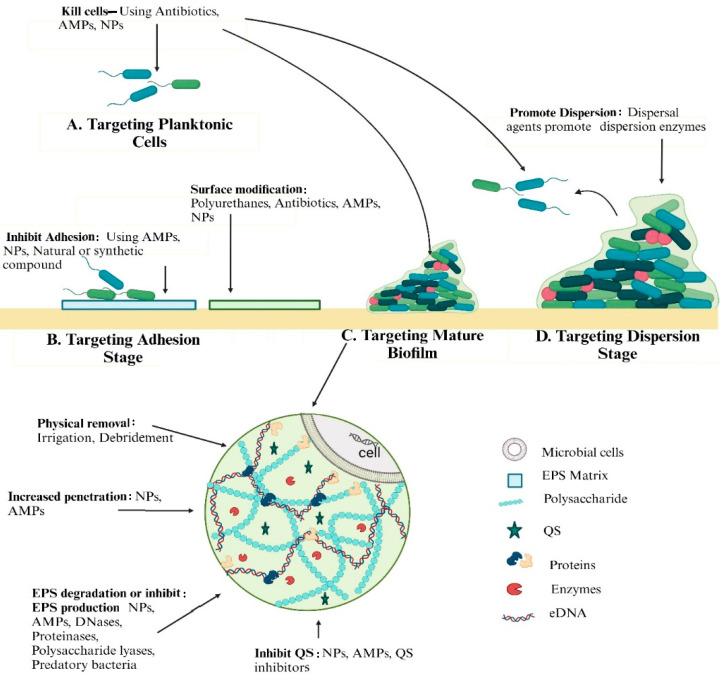
Biofilms, composed of structured communities of bacteria embedded in a self-produced extracellular matrix, pose a significant challenge due to their heightened resistance to antibiotics and immune responses. This review highlights the mechanisms underpinning antibiotic resistance within bacterial biofilms, elucidating the adaptive strategies employed by microorganisms to withstand conventional antimicrobial agents. This encompasses the role of the extracellular matrix, altered gene expression, and the formation of persister cells, contributing to the recalcitrance of biofilms to eradication. A comprehensive understanding of these resistance mechanisms provides a for exploring innovative therapeutic interventions. This study explores promising avenues for future research, emphasizing the necessity of uncovering the specific genetic and phenotypic adaptations occurring within biofilms. The identification of vulnerabilities in biofilm architecture and the elucidation of key biofilm-specific targets emerge as crucial focal points for the development of targeted therapeutic strategies. In addressing the limitations of traditional antibiotics, this review discusses innovative therapeutic approaches. Nanomaterials with inherent antimicrobial properties, quorum-sensing inhibitors disrupting bacterial communication, and bacteriophages as biofilm-specific viral agents are highlighted as potential alternatives. The exploration of combination therapies, involving antimicrobial agents, biofilm-disrupting enzymes, and immunomodulators, is emphasized to enhance the efficacy of existing treatments and overcome biofilm resilience.
生物膜由嵌入自身产生的细胞外基质中的结构化细菌群落组成,由于其对抗生素和免疫反应的抗性增强,构成了重大挑战。本综述强调了细菌生物膜中抗生素抗性的潜在机制,阐明了微生物用来抵御传统抗菌剂的适应性策略。这包括细胞外基质的作用、基因表达的改变以及持留菌的形成,这些都导致了生物膜难以根除。对这些抗性机制的全面理解为探索创新治疗干预措施提供了依据。本研究探索了未来研究的有前景途径,强调了揭示生物膜内发生的特定基因和表型适应性的必要性。生物膜结构中脆弱性的识别以及关键生物膜特异性靶点的阐明成为开发靶向治疗策略的关键重点。在解决传统抗生素的局限性方面,本综述讨论了创新治疗方法。具有固有抗菌特性的纳米材料、破坏细菌通讯的群体感应抑制剂以及作为生物膜特异性病毒制剂的噬菌体被突出作为潜在替代方案。强调探索联合疗法,包括抗菌剂、生物膜破坏酶和免疫调节剂,以提高现有治疗的疗效并克服生物膜的弹性。


 Zotero 插件