
生物膜构成的公共卫生威胁及其控制的创新策略。
Public Health Threats Posed by Biofilms and Innovative Strategies for their Control.
作者信息
Abbas Syed Hamza, Khan Shahzar, Shah Majid, Aslam Jawad, Nawaz Humaira, Ilyas Nadia, Gamaryani Asim, Afridi Saba Qadir, Khan Izaz, Shah Brekhna, Shah Kashmala, Rashid Abdul, Khan Dilawaiz, Khan Samiullah
机构信息
Department of Microbiology, Faculty of Biological Sciences, Quaid-i-Azam University, Islamabad, Pakistan.
Saidu Medical College, Saidu Sharif, Pakistan.
出版信息
Discoveries (Craiova). 2024 Dec 31;12(4):e197. doi: 10.15190/d.2024.16. eCollection 2024 Oct-Dec.
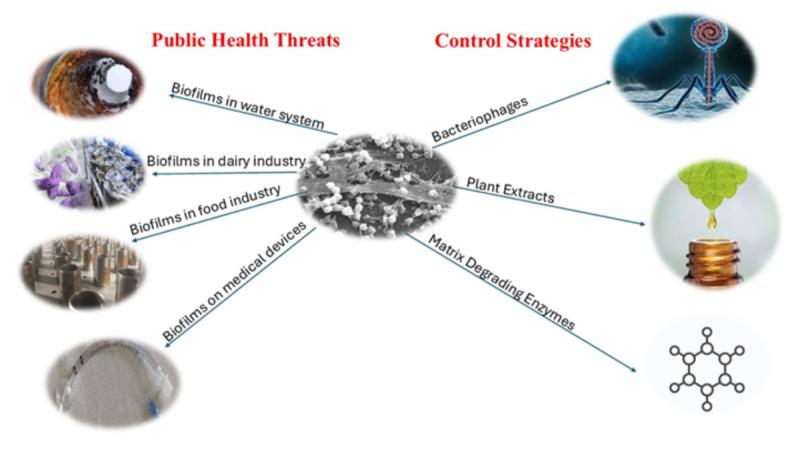
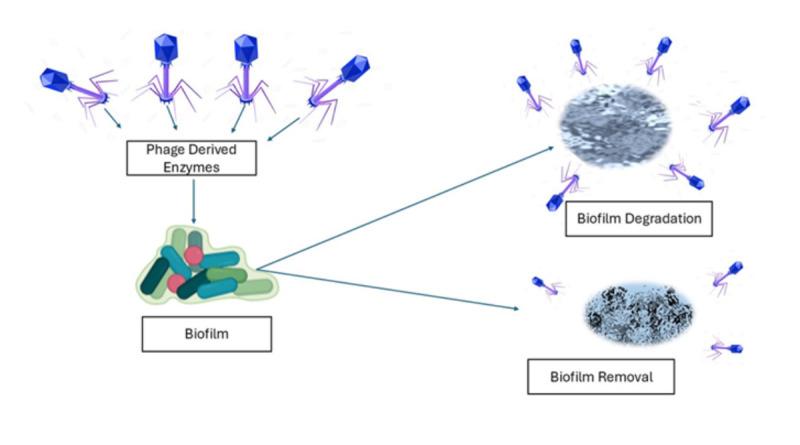
Biofilms are communities of microorganisms that adhere to surfaces within a self-produced protective matrix. The structural complexity of biofilms and their inherent resistance to conventional antimicrobial treatments make them a significant public health challenge. These microbial communities, embedded within a self-produced extracellular matrix, are associated with numerous persistent infections, especially those occurring in healthcare settings where they colonize medical devices and chronic wounds. The effects of biofilms go beyond healthcare environments and persist in water treatment facilities, food processing plants, and nature, in which biofilms aid in pollution and transmission of disease. This review article discusses multifaceted public health complications related to biofilms and the search for existing control strategies, the process of biofilm formation, mechanisms of persistence, and limitations of traditional antimicrobial approaches. Additionally, this article explores new innovative solutions, such as bacteriophage therapy, matrix-degrading enzymes, and quorum sensing inhibitors. The potential of a combination of antimicrobial agents with biofilm-disrupting compounds for the improvement of efficacy is also paid special attention. This review seeks to contribute to these ongoing efforts by presenting an overview of biofilm biology and assessing the efficacy of a variety of possible control strategies. Subsequently, the insights derived from this study may be used to inform future research directions and aid in the development of more effective interventions for biofilm-associated infections and contamination in various settings.
生物膜是微生物群落,它们附着在自身产生的保护性基质内的表面上。生物膜的结构复杂性及其对传统抗菌治疗的固有抗性使其成为重大的公共卫生挑战。这些嵌入自身产生的细胞外基质中的微生物群落与许多持续性感染有关,尤其是在医疗环境中发生的感染,它们会在医疗设备和慢性伤口上定殖。生物膜的影响不仅限于医疗环境,还存在于水处理设施、食品加工厂和自然界中,在这些地方生物膜会助长污染和疾病传播。这篇综述文章讨论了与生物膜相关的多方面公共卫生并发症以及对现有控制策略的探索、生物膜形成过程、持续性机制和传统抗菌方法的局限性。此外,本文还探讨了新的创新解决方案,如噬菌体疗法、基质降解酶和群体感应抑制剂。还特别关注了抗菌剂与生物膜破坏化合物联合使用以提高疗效的潜力。这篇综述旨在通过概述生物膜生物学并评估各种可能的控制策略的疗效,为这些正在进行的努力做出贡献。随后,本研究得出的见解可用于为未来的研究方向提供信息,并有助于开发针对各种环境中与生物膜相关的感染和污染的更有效干预措施。
 Zotero 插件