
一种基于机器学习的新型框架,用于开发疾病进展的复合数字生物标志物。
A novel machine learning based framework for developing composite digital biomarkers of disease progression.
作者信息
Zhai Song, Liaw Andy, Shen Judong, Xu Yuting, Svetnik Vladimir, FitzGerald James J, Antoniades Chrystalina A, Holder Dan, Dockendorf Marissa F, Ren Jie, Baumgartner Richard
机构信息
Biostatistics and Research Decision Sciences, Merck & Co., Inc., Rahway, NJ, United States.
NeuroMetrology Lab, Nuffield Department of Clinical Neurosciences, University of Oxford, Oxford, United Kingdom.
出版信息
Front Digit Health. 2025 Jan 10;6:1500811. doi: 10.3389/fdgth.2024.1500811. eCollection 2024.
BACKGROUND
Current methods of measuring disease progression of neurodegenerative disorders, including Parkinson's disease (PD), largely rely on composite clinical rating scales, which are prone to subjective biases and lack the sensitivity to detect progression signals in a timely manner. Digital health technology (DHT)-derived measures offer potential solutions to provide objective, precise, and sensitive measures that address these limitations. However, the complexity of DHT datasets and the potential to derive numerous digital features that were not previously possible to measure pose challenges, including in selection of the most important digital features and construction of composite digital biomarkers.
METHODS
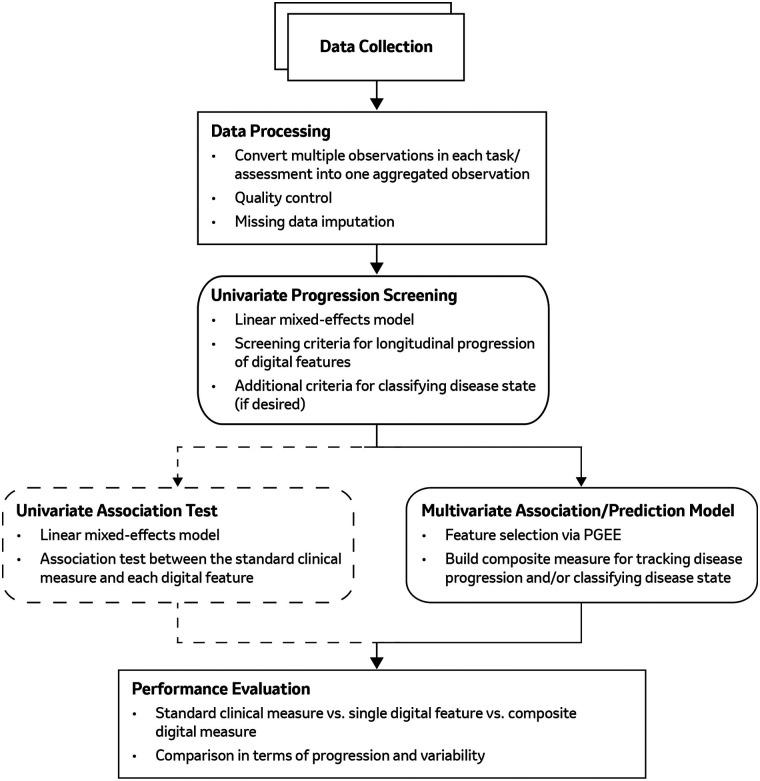
We present a comprehensive machine learning based framework to construct composite digital biomarkers for progression tracking. This framework consists of a marginal (univariate) digital feature screening, a univariate association test, digital feature selection, and subsequent construction of composite (multivariate) digital disease progression biomarkers using Penalized Generalized Estimating Equations (PGEE). As an illustrative example, we applied this framework to data collected from a PD longitudinal observational study. The data consisted of Opal™ sensor-based movement measurements and MDS-UPDRS Part III scores collected at 3-month intervals for 2 years in 30 PD and 10 healthy control participants.
RESULTS
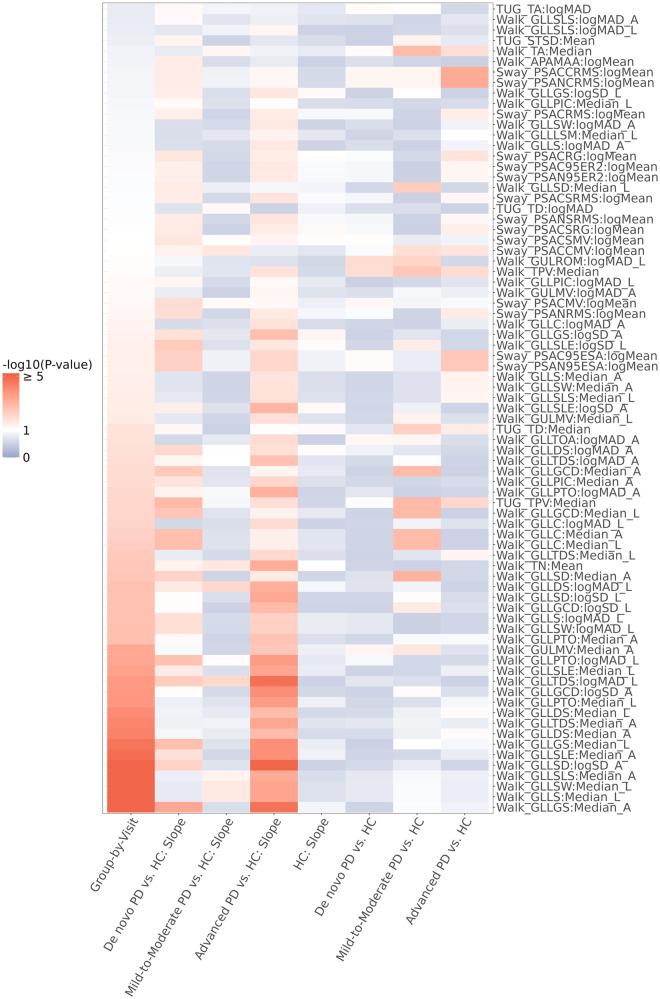
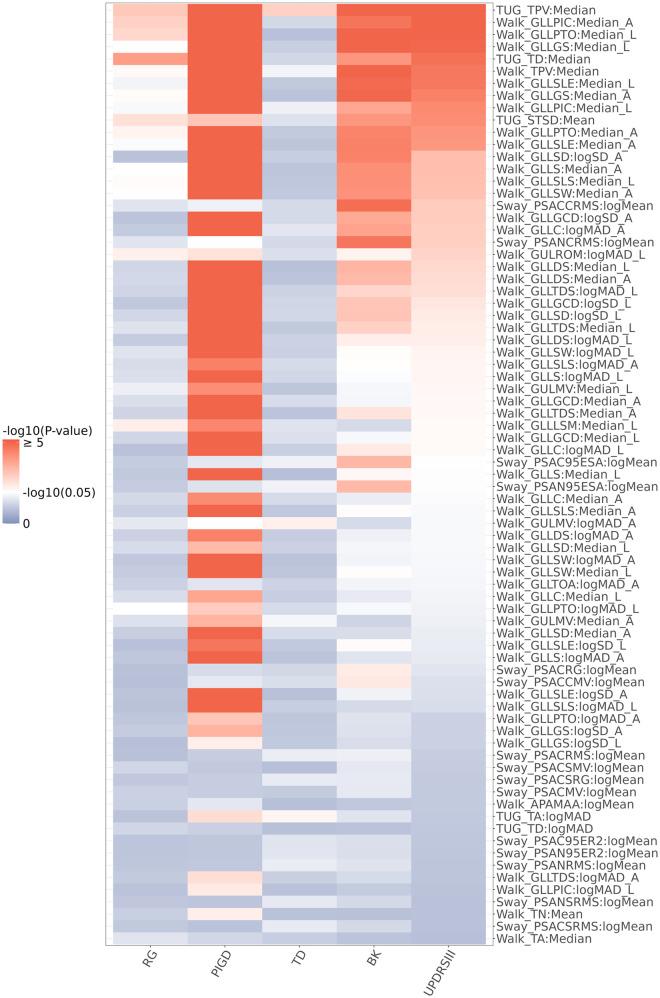
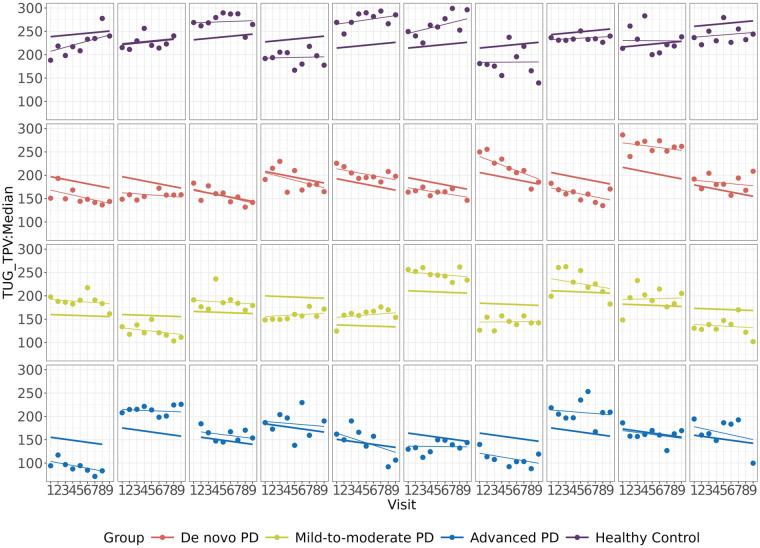
In our illustrative example, 77 out of 235 digital features from the study passed univariate feature screening, with 11 features selected by PGEE to include in construction of the composite digital measure. Compared to MDS-UPDRS Part III, the composite digital measure exhibited a smoother and more significant increasing trend over time in PD groups with less variability, indicating improved ability for tracking disease progression. This composite digital measure also demonstrated the ability to classify between PD and healthy control groups.
CONCLUSION
Measures from DHTs show promise in tracking neurodegenerative disease progression with increased sensitivity and reduced variability as compared to traditional clinical scores. Herein, we present a novel framework and methodology to construct composite digital measure of disease progression from high-dimensional DHT datasets, which may have utility in accelerating the development and application of composite digital biomarkers in drug development.
背景
目前测量包括帕金森病(PD)在内的神经退行性疾病进展的方法,很大程度上依赖于综合临床评分量表,这些量表容易产生主观偏差,且缺乏及时检测进展信号的敏感性。源自数字健康技术(DHT)的测量方法提供了潜在的解决方案,能够提供客观、精确且敏感的测量方法,以解决这些局限性。然而,DHT数据集的复杂性以及衍生出众多以前无法测量的数字特征的可能性带来了挑战,包括选择最重要的数字特征和构建综合数字生物标志物。
方法
我们提出了一个基于机器学习的综合框架,用于构建用于进展跟踪的综合数字生物标志物。该框架包括边缘(单变量)数字特征筛选、单变量关联测试、数字特征选择,以及随后使用惩罚广义估计方程(PGEE)构建综合(多变量)数字疾病进展生物标志物。作为一个示例,我们将此框架应用于从一项PD纵向观察性研究收集的数据。数据包括基于Opal™传感器的运动测量值以及30名PD患者和10名健康对照参与者在2年时间里每隔3个月收集的MDS-UPDRS第三部分评分。
结果
在我们的示例中,该研究的235个数字特征中有77个通过了单变量特征筛选,PGEE选择了11个特征纳入综合数字测量的构建。与MDS-UPDRS第三部分相比,综合数字测量在PD组中随时间呈现出更平滑、更显著的上升趋势,变异性更小,表明其跟踪疾病进展的能力有所提高。这种综合数字测量还展示了区分PD组和健康对照组的能力。
结论
与传统临床评分相比,来自DHT的测量方法在跟踪神经退行性疾病进展方面显示出前景,具有更高的敏感性和更低的变异性。在此,我们提出了一个新颖的框架和方法,用于从高维DHT数据集中构建疾病进展的综合数字测量,这可能有助于加速综合数字生物标志物在药物开发中的开发和应用。


 Zotero 插件