
慢性肾脏病中糖尿病的病理生理学与血管并发症:综述
The Pathophysiology and Vascular Complications of Diabetes in Chronic Kidney Disease: A Comprehensive Review.
作者信息
Hauwanga Wilhelmina N, Abdalhamed Tibyan Y, Ezike Lynda A, Chukwulebe Ifeoma S, Ko Oo Aung, Wilfred Amal, Khan Abdul Rahman Anuz Khan A, Chukwuwike Johnny, Florial Edisond, Lawan Habeebah, Felix Asaju, McBenedict Billy
机构信息
Cardiology, Gaffrée and Guinle University Hospital, Federal University of the State of Rio de Janeiro, Rio de Janeiro, BRA.
Neurosurgery, Federal Fluminense University, Niterói, BRA.
出版信息
Cureus. 2024 Dec 28;16(12):e76498. doi: 10.7759/cureus.76498. eCollection 2024 Dec.
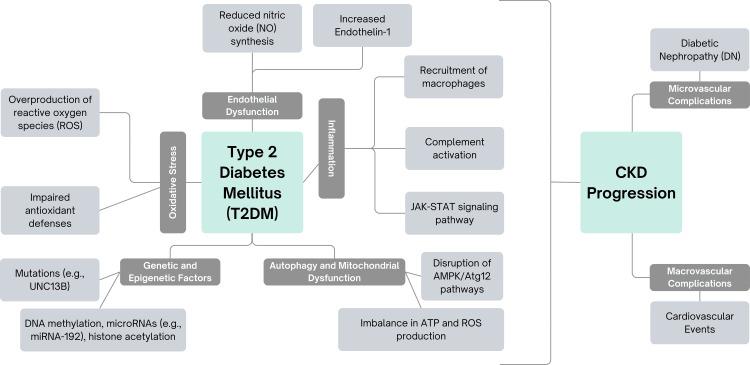
The coexistence of type 2 diabetes mellitus (T2DM) and chronic kidney disease (CKD) represents a significant global health challenge, contributing to substantial morbidity, mortality, and economic burden. T2DM is the leading cause of CKD, and CKD exacerbates diabetes-related complications, creating a bidirectional relationship driven by oxidative stress, inflammation, and endothelial dysfunction. Diabetic kidney disease (DKD), affecting some individuals with T2DM, accelerates progression to end-stage renal disease (ESRD) and increases cardiovascular mortality. Microvascular complications, including nephropathy, retinopathy, and neuropathy, and macrovascular complications, such as coronary artery disease and stroke, are prevalent in this population, further diminishing the quality of life. The pathophysiology underlying these complications is multifaceted. Hyperglycemia-induced oxidative stress and inflammation drive kidney damage and systemic vascular complications, while CKD alters glucose metabolism and antidiabetic drug pharmacokinetics. Endothelial dysfunction exacerbates vascular complications through impaired nitric oxide production and heightened thrombogenicity. Emerging insights into genetic and epigenetic mechanisms, including DNA methylation and mitochondrial dysfunction, have highlighted new therapeutic targets. Management strategies emphasize early screening, glycemic control, and a multidisciplinary approach integrating lifestyle modifications, pharmacotherapy, and patient education. Interventions targeting oxidative stress, inflammation, and endothelial dysfunction have shown promise in mitigating disease progression. Current evidence on the interconnected mechanisms driving DKD and associated vascular complications highlights the critical need for proactive, patient-centered management and further research into innovative diagnostic and therapeutic approaches to address this global health challenge.
2型糖尿病(T2DM)与慢性肾脏病(CKD)并存是一项重大的全球健康挑战,会导致大量发病、死亡和经济负担。T2DM是CKD的主要病因,而CKD会加重糖尿病相关并发症,形成由氧化应激、炎症和内皮功能障碍驱动的双向关系。糖尿病肾病(DKD)影响部分T2DM患者,加速进展至终末期肾病(ESRD)并增加心血管疾病死亡率。微血管并发症,包括肾病、视网膜病变和神经病变,以及大血管并发症,如冠状动脉疾病和中风,在这一人群中很常见,进一步降低了生活质量。这些并发症背后的病理生理学是多方面的。高血糖诱导的氧化应激和炎症会导致肾脏损伤和全身血管并发症,而CKD会改变葡萄糖代谢和抗糖尿病药物的药代动力学。内皮功能障碍通过一氧化氮生成受损和血栓形成增加加剧血管并发症。对遗传和表观遗传机制(包括DNA甲基化和线粒体功能障碍)的新认识突出了新的治疗靶点。管理策略强调早期筛查、血糖控制以及整合生活方式改变、药物治疗和患者教育的多学科方法。针对氧化应激、炎症和内皮功能障碍的干预措施在减轻疾病进展方面已显示出前景。目前关于驱动DKD和相关血管并发症的相互关联机制的证据突出了积极主动、以患者为中心的管理以及进一步研究创新诊断和治疗方法以应对这一全球健康挑战的迫切需求。

 Zotero 插件